
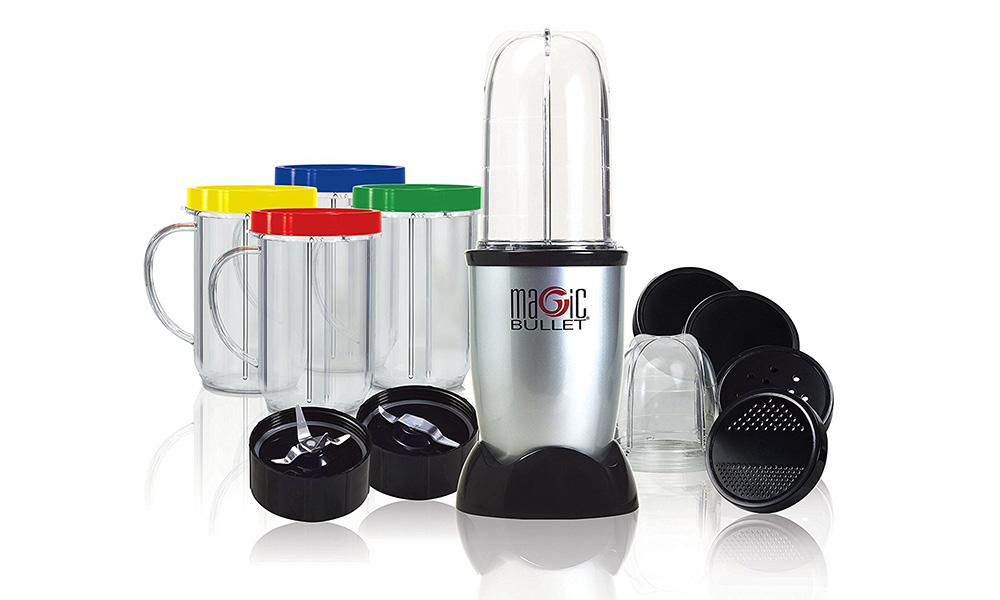
Magic Bullet High-Speed Blender
The Magic Bullet replaces a food processor, blender, and coffee grinder, yet it occupies only the space of a coffee mug. It stays handy on your countertop for instant meals and snacks. There are no buttons to push. Just load the ingredients into the short cup, the tall cup or one of the four mugs. Twist on the cross or flat blade, place the bullet on the power base, and press down - in seconds, you'll have chopped onions, minced garlic, grated cheese, spaghetti sauce, salsa, soup, chicken salad, smoothies, shakes and more. To heat or chill, simply place the magic bullet cup or mug in the microwave, refrigerator or freezer.
- Do virtually any job in the kitchen in 10 seconds or less! Everything from refreshing smoothies and cocktails to mouth-watering desserts and party favorites.
- Make chicken salad, grated cheese, pesto sauce and more.
- Includes 1 high-torque power base, 2 stainless steel blades, 4 party mugs with colored lip rings, 2 shaker-steamer tops, 2 stay-fresh resealable lids, and recipe book.


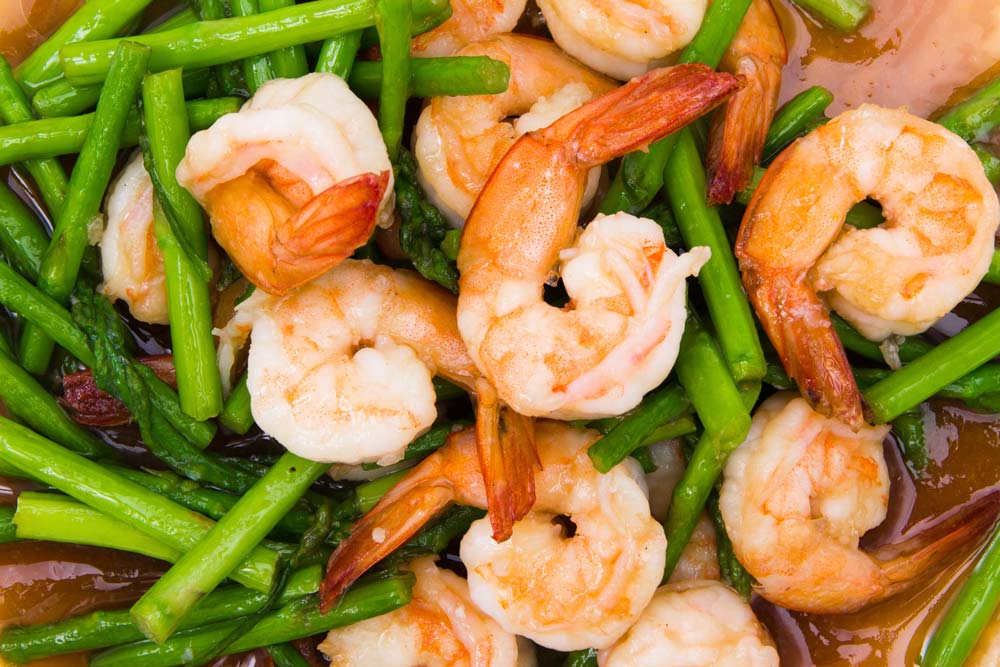
Amy's Simple Stir-Fry
Plan Z Phase: This is a Z2 (ZReduction) recipe. This recipe was created by Amy Z. It’s a very simple stir-fry. It’s really just your Asian veggies with shrimp or chicken added. Super easy, super quick.
Servings: Serves 1
Ingredients:
- 6-8 oz of chicken or shrimp
- 1/3 cup chopped onion
- 1/3 cup chopped celery
- 1/3 cup chopped asparagus
- ¼ cup Braggs Liquid Amino's
Instructions:
Put all ingredients in a saute pan sprayed with olive oil spray over a medium-high heat and keep stirring until the chicken and/or shrimp is cooked through and the veggies are getting a little bit soft. Easy and yummy!
Enjoy!
Cheers,
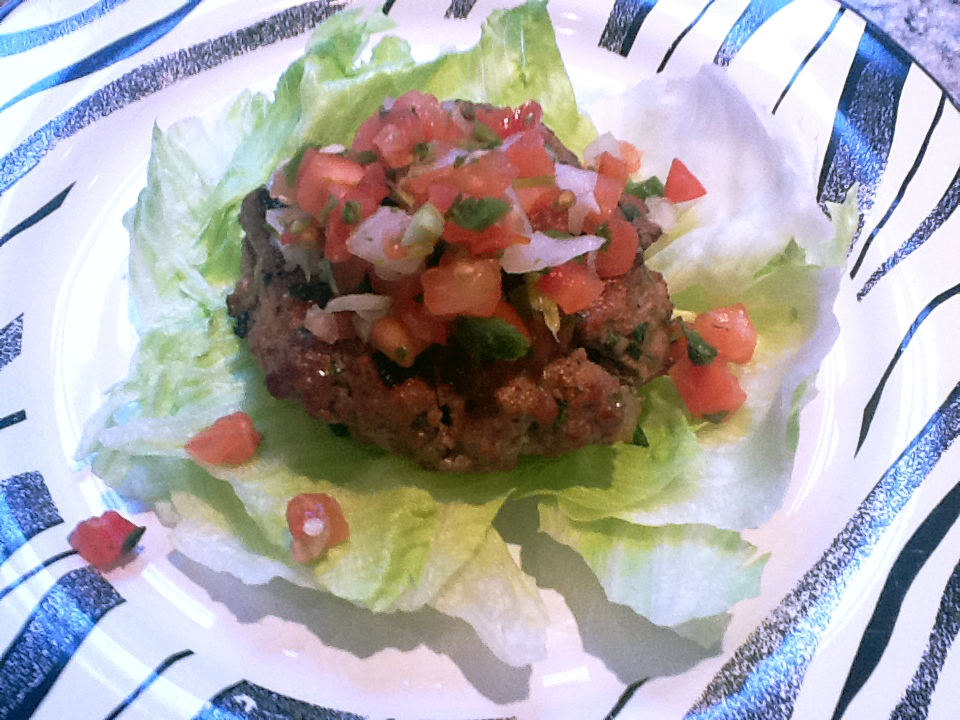
Green Chili Burgers
Plan Z Phase: This is a Z2 (ZReduction) recipe.
Green chili burgers. Big YUM! And SUPER easy!
These might sound a little suspect but they are really a delightful twist on your average hamburger.
Servings: Serves 4, can be doubled easily
Ingredients:
- 1-1/2 pounds of ground sirloin or very lean ground beef. If all you can get is 93/7 go with that. Lean is important.
- 4 Tbl of diced green chilies. They come in a can already diced. Look in the Mexican section. They are very mild but lend a nice flavor.
- 1 tsp of cumin
- 1 tsp of paprika (use regular or smoked)
- 3 Tbl of Worcestershire sauce
- 2 cups of pico de gallo. This is a fresh salsa you can find in the deli. Or you can use a salsa with no sugar. Salsa will have more tomato sauce. Pico de gallo is just freshly chopped onion, tomatoes, cilantro and spices.
- lettuce for garnish
Instructions:
Mix all the sirloin, chilies, cumin, paprika and Worcestershire sauce together in a large bowl. Form the sirloin into four large patties. Grill on your outdoor grill, or inside on your grill pan to your liking. When you remove them from the grill, put the burger on top of lettuce on your plate and top with the pico de gallo. You can have up to a cup of the pico de gallo on top of your burger, or you can use a lesser amount so you can have a pickle on the side, or some celery sticks and slices of cucumber.
Enjoy!
Cheers,
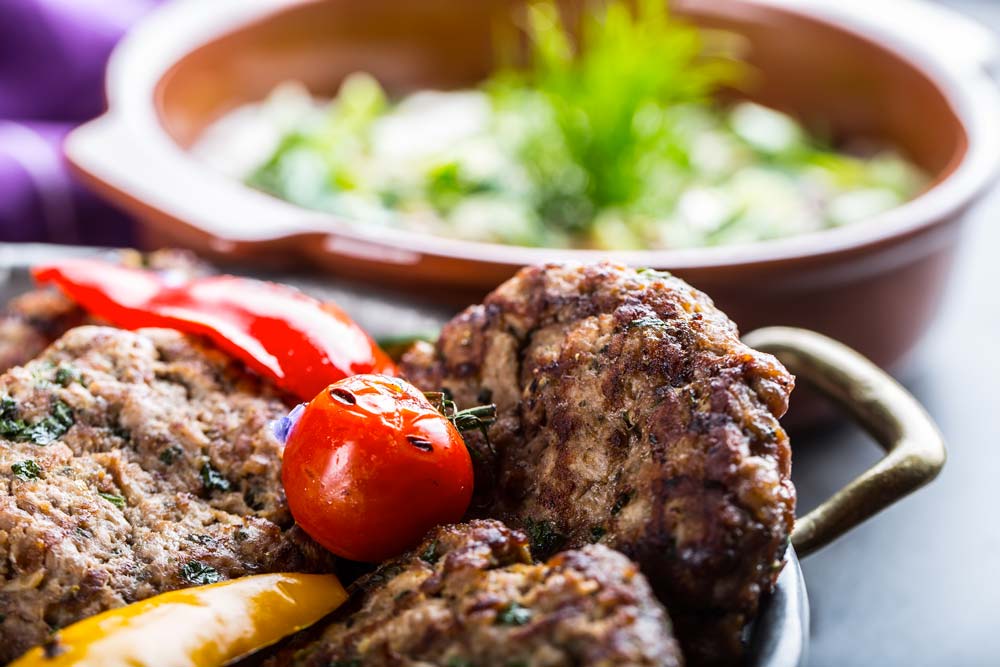
Southwestern Burgers
Plan Z Phase: This is a Z2 (ZReduction) recipe.
Servings: Serves 4
Ingredients:
- 1 small onion, finely chopped
- 1/3 of a red bell pepper finely chopped
- 1/3 of a green bell pepper finely chopped
- 24 oz of ground sirloin
- 2 Tbl of finely minced cilantro
- 1 Tbl of chili powder
- 1 tsp of cumin
- grated sea salt and pepper to taste
Instructions:
Put the ground sirloin and all ingredients in a medium bowl. Mix with your hands until all ingredients are well distributed throughout the meat. Form into 4 patties and grill or broil to your liking.
Garnish and sides:
I served these on top of a mess of grilled onions and topped the burgers with thin slices of jalapeno.
Enjoy!
Cheers,
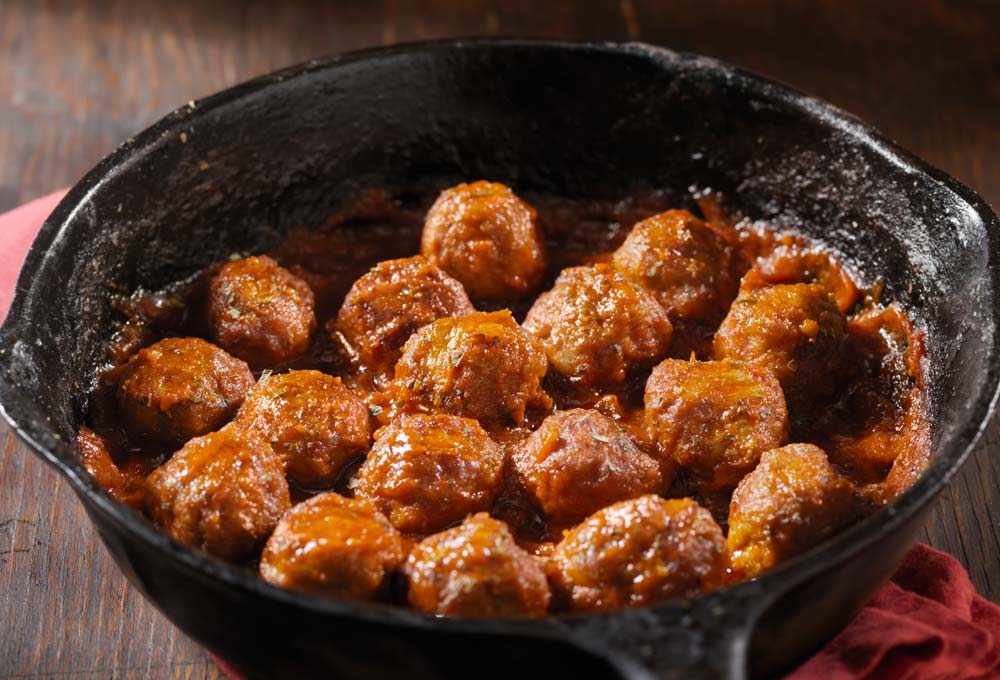
"Spaghetti" and Meatballs
Plan Z Phase: This is a Z2 (ZReduction) recipe.
"'Spaghetti' and meatballs - yes, that's what I said. I think this is my favorite so far!" -- Plan Z dieter Amy.
Servings: Serves 2-4
Ingredients:
Meatballs
- 1 lb sirloin
- ¼ cup minced onion
- 1 tsp garlic (fresh or the kind in the jar)
- 2 Tbl tomato paste (from the small can -- you will use the rest in the sauce)
- 1/2 tsp salt
- ½ tsp pepper
Sauce
- 6 oz can of tomato paste
- 1/8 cup minced onion
- 2 tomatoes (seeded if desired – I left them in), chopped
- 2 tsp garlic
- 1 cup beef broth (less if you like thicker sauce)
- 1 tsp salt
- 2 tsp Italian seasoning
“Spaghetti”
- 1 large Vidalia onion
- 1/2 tsp salt
- olive oil spray
Instructions:
For the meatballs, mix the sirloin, onion, garlic, tomato paste, salt and pepper together with your hands and form into meatballs. 1 lb of meat = 16 oz -- make 16 meatballs and you know how much you are getting!
Bake on a cookie sheet for 20 minutes at 350 degrees.
For the sauce, saute the onions until soft, then your minced onions, chopped tomatoes, garlic, beef broth, salt, remaining tomato paste, and Italian seasoning in a food processor or blender and blend until pureed. Pour into a saucepan and simmer over low for 20 minutes to get flavors melded. You can add more or less of the seasonings to suit your tastes.
For the spaghetti, slice the onion very thin using a mandolin if you have one (makes it easier). Put the onion strings in a large sauté pan sprayed with olive oil spray and add salt. Saute until soft and flimsy like noodles.
Put ¼ of the onions on the plate, top with four meatballs and sauce – enjoy! This will be your meat and vegetable all in one.
Enjoy!
Cheers,
Sloppy Joes
Plan Z Phase: This is a Z2 (ZReduction) recipe submitted by Plan Z dieter JoAnn. Thanks JoAnn!
Servings: Serves 4
Ingredients:
- 1 lb ground sirloin
- 1-1/4 cup chopped onions
- 1-1/4 cup chopped celery
- 1/3 cup water
- 1 tsp paprika
- 1 tsp dry mustard
- 1 tsp chili powder
- 1/2 cup tomato sauce (no sugar)
- 3-4 Tbl tomato paste (no sugar)
- 1/3 cup water (yes, a 2nd time)
- 3 Tbl vinegar (I used white)
- 2 tsp of Truvia
- salt to taste
Instructions:
In non-stick skillet, add 1/3 c water and steam the onions and celery until tender (or consistency you prefer). Move veggies to bowl. Add ground sirloin to skillet and brown, breaking down into smaller chunks.
Return veggies to skillet, add spices. Then add tomato products, water, vinegar, Truvia and salt. Stir to blend and simmer approx 5 minutes. If too thick you can add more water.
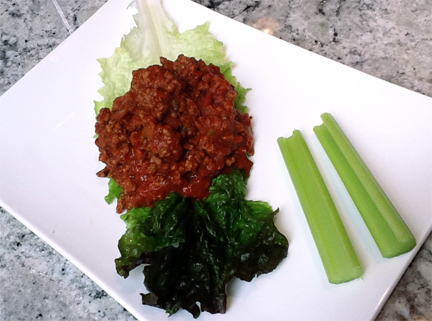
To serve, use Romaine lettuce leaves as your 'bread' to hold the sloppy joes. I also have Melba toast with this meal and put several spoonfuls on them for the crunch. This recipe would be your protein and veggies. Fruit completes this meal. It also travels well.
I like to use the larger lettuce leaves and just put a spoonful on the leaf and then add another spoonful after I'm done eating the first bite. Haven't tried the smaller leaves but would guess that would work as well and probably look a little neater if you are eating with others. Although how neat are sloppy joes?
Enjoy!
Cheers,
Taco Salad
Plan Z Phase: This is a Z2 (ZReduction) recipe contributed by Plan Z dieter Jo-Beth. Taco salad is super easy to make. Super Easy!
Servings: Serves 4
Ingredients:
- 1 lb of lean ground beef
- 1 onion
- 2 tsps of minced garlic (jar is fine for this recipe)
- 1 tsp of cumin
- pepper to taste
- grated sea salt to taste
- olive oil spray
Optional:
- 1/2 cup of salsa with no sugar. (Optional, save a tbls or 2 for final topping)
Instructions:
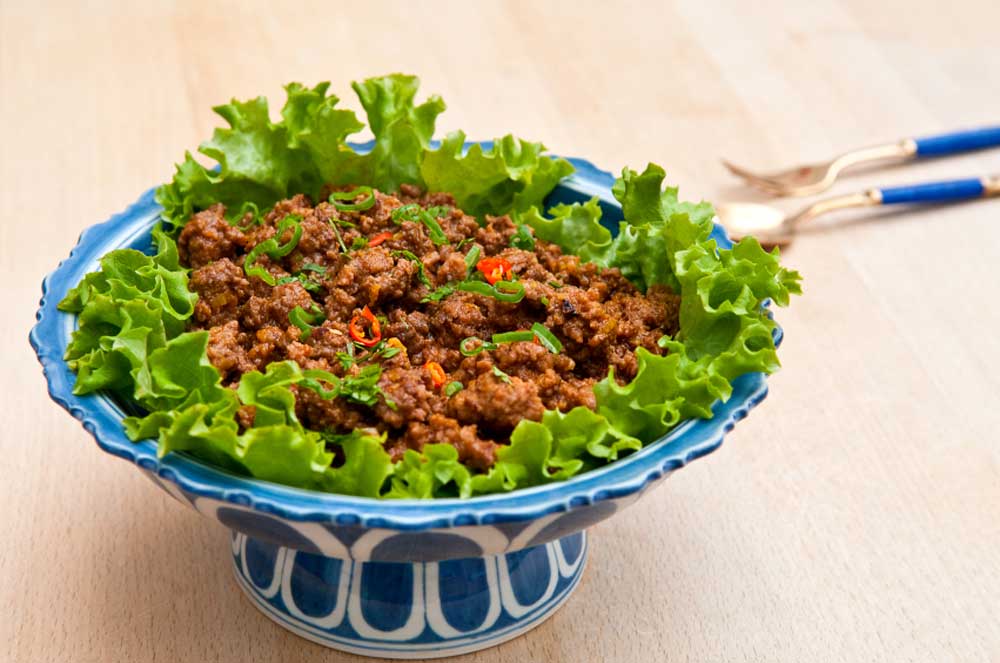
Using a non-stick pan lightly spritz with olive oil spray. Using medium heat, add onion and garlic and sautee until softened. Add beef until no longer pink. Once the beef is done, turn off heat. Now you will add your spices and salsa. Stir in the cumin and the salsa, salt & pepper to taste.
In a big bowl, add a large amount of crunchy salad greens to fully cover the bottom of the bowl. Pour "'Taco meat" over the salad greens. You can add some salsa on top of your taco meat as a "dressing." Serve with Melba crackers on the side.
Enjoy!
Cheers,
Cheddar and Tomato Crustless Quiche
Plan Z Phase: This is a Z3 (ZReboot) recipe.
Servings: Serves 2-4
Ingredients:
- 4 eggs
- 2 cups of whipping cream
- salt and pepper to taste
- a whisp of cayenne (to taste)
- 1-1/2 cups of shredded cheddar cheese
- 2 shallots, minced
- 3 small tomatoes, sliced
Instructions:
Preheat oven to 350 degrees.
In a large bowl add the eggs, whipping cream, S &P and the cayenne. Mix with an electric mixer for one minute to get it really mixed and almost frothy.
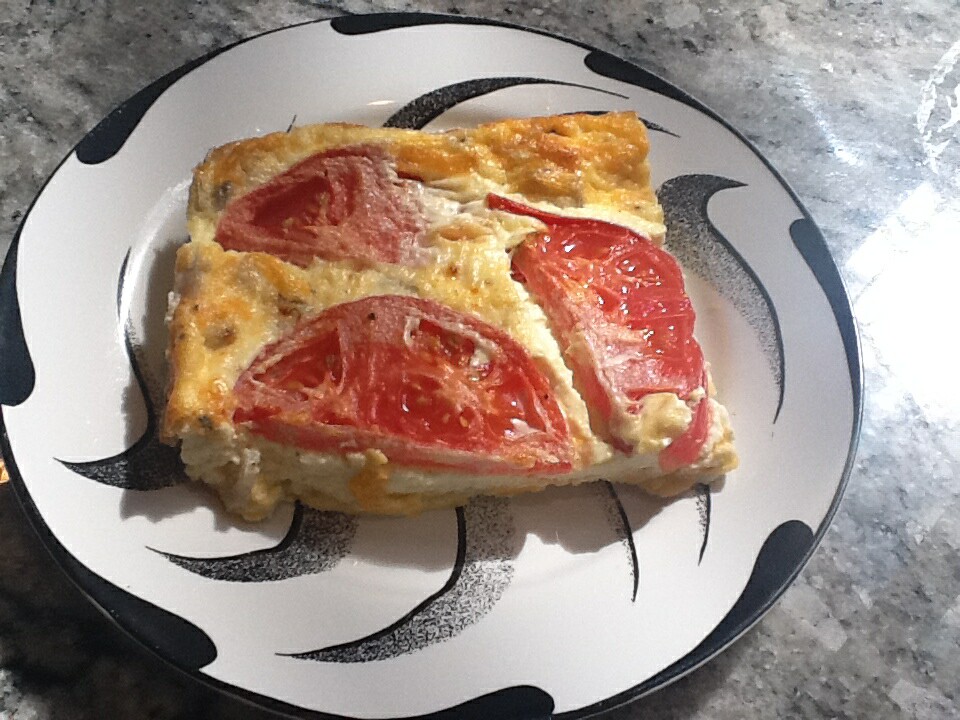
Grease a quiche pan or a 9" x 13" oven proof pan. Put in the shallots and then pour on the cream/egg mixture. Sprinkle the cheese over the liquid. Then top with the tomato slices.
Bake the quiche for 30 – 40 minutes or until the eggs are “set” (no jiggling) and starting to brown on top.
Remove from oven and let sit 5 – 10 minutes before slicing. This helps the quiche set up.
Leftovers can be stored in the refrigerator and re-heated. This makes a quick breakfast, lunch or dinner option.
You can certainly change this up by changing the cheese. You can also use other veggies. If the veggies are crunchy you might want to sauté them first to loosen them up. Things like asparagus will cook without sautéing. Broccoli definitely needs to be sautéed first. For a non-vegetarian version you can add things like pepperoni bits to this dish. Or leftover, cooked meats.
Enjoy!
Cheers,
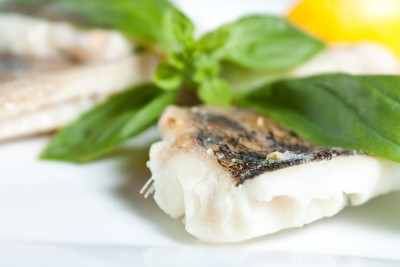
Walleye
Walleye is now ZREduction Approved! Yay, your portion size is 8 oz and you can usually find it at the fish counter of your supermarket or in the frozen fish section. With summer fast approaching this would taste fantastic over a salad or with some simple grilled veggies.
Enjoy!
Cheers,
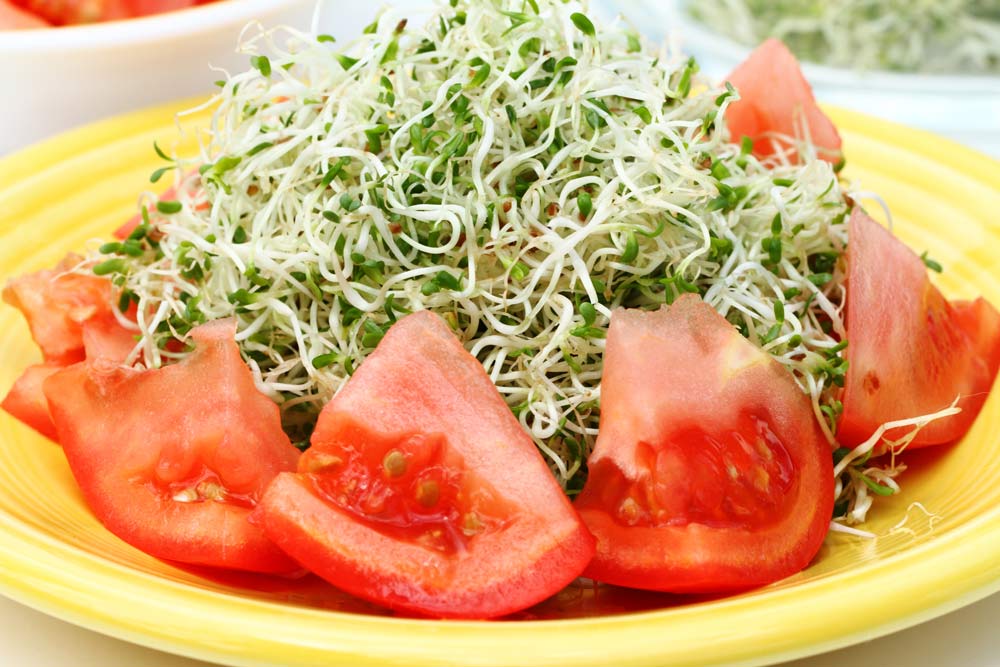
Alfalfa Sprouts
Alfalfa sprouts are now ZReduction approved. Alfalfa sprouts are high in vitamins A, B, C, E, and K, along with an assortment of antioxidants and amino acids. Portion size is unlimited and would make a great addition to any salads or stir-fry.
Enjoy!
Cheers,
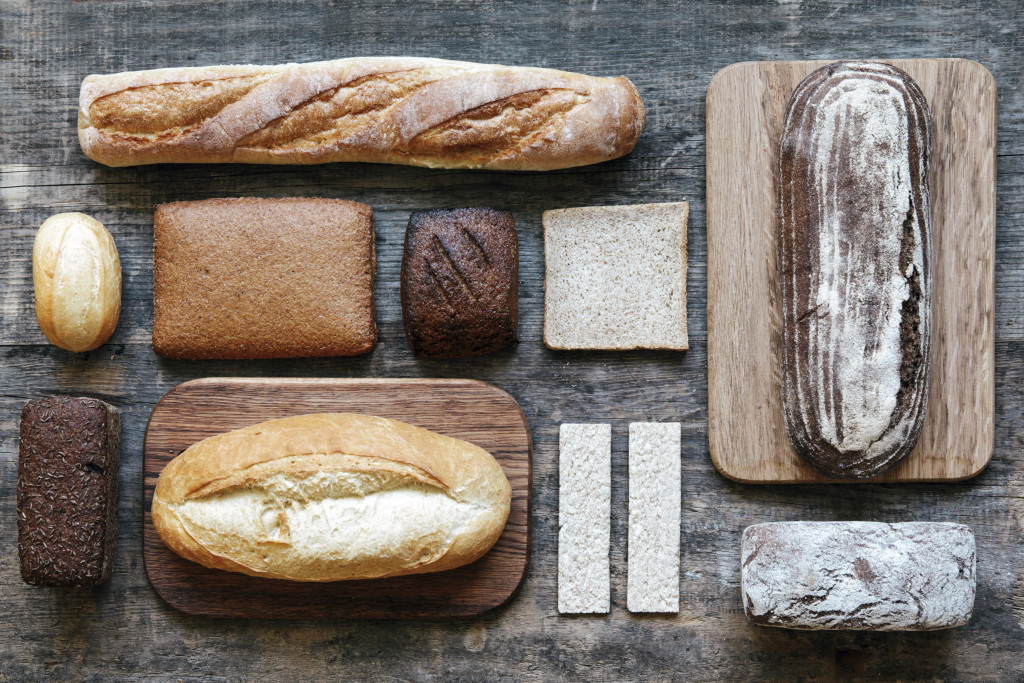
BREAD
I have to tell you I am reluctant to have this discussion. In the four years I've worked to develop Plan Z, the Diet By Zola, I have never brought up the subject of bread and baked goods. I felt like if I ignored the subject it would not come up. Instead, I spent a lot of time laying down the framework for the fact that you don’t need bread, donuts or cupcakes in your life. Or any of the rest of it. And it's true. You can get used to not eating it.
But I know the subject of bread comes up in your home and your offices. It’s like the elephant in the room that will make you feel like an elephant if you eat too much of it.
So before we embark on the subject of bread (and the good versus the evil things about it) I want to define what bread is.
Bread = Sugar = Dessert
If I hammer home anything today this is all I want you to know. Bread is dessert and it has to be treated like a treat. It’s dessert.
Let’s look at the chemistry.
Your liver processes what you eat. It filters out the toxins, converts food into energy and sends the nutrients out to your body for it to use. If there is excess sugar in your diet, that sugar is converted for your body to store as fat. Simple.
By the time your stomach juices break down what you’ve eaten with your fork all your liver sees is the pulpy liquid that’s left. The REAL contents of your food. In that state, your liver can’t tell the difference between a piece of white bread and a Snicker’s bar.
 So depending on how much sugar you eat (and I mean CARBOHYDRATES - bread, pasta, potatoes…they’re all sugar), your liver has to deal with it. Your liver cannot allow all that sugar to pass into your bloodstream; that would be toxic to your body. So when your liver detects excess sugar, it gets its friend the pancreas involved. The pancreas has to tone down the sugar.
How does it do that?
By pumping out insulin into our bloodstream.
All of us are so aware of diabetes we know the pancreas sends out insulin. Insulin stimulates the cells in your body to absorb that sugar and get it out of your blood. That’s its first job. When there is more sugar than your body needs, that insulin has no choice but to tell your body to turn the excess into fat. That’s it's second job.
It isn’t just table sugar that makes you fat. All the carbohydrates you eat have the potential to make you fat because your body breaks all of them down into sugar.
So let’s get back to bread. And the politics and marketing of our food supply.
All of the food marketers, doctors, nutritionists and even the government will tell you that you need carbohydrates to live. Maybe so, but you can get all the carbohydrates you need from the veggies and the fruits you eat. Plus, your body can make carbohydrates. You don't need bread or pasta or potatoes to accomplish the job. You don't need bread to live. It's just a bad habit we picked up a very long time ago. And we convinced ourselves we needed it. We don't.
Whole Wheat vs. White
All the commercials nowadays use phrases like, whole grain, whole wheat… implying that all of that will make you healthy.
I keep telling people there is little difference between whole wheat and white bread. They are both still wheat. They are both still bread. We don’t need either to survive, and the carbohydrates are killers.
So here’s the difference between whole wheat and white bread:
Whole Wheat Bread (standard whole wheat you find in the grocery store)
- Serving size: 1 piece
- 12 grams of carbs per piece
- 2 grams of fiber
- Glycemic index 70
White Bread (standard white bread in the bread aisle)
- Serving size: 1 piece
- 13 grams of carbs per piece
- 1 gram of fiber
- Glycemic index 73
See how little difference there is? See how we get sucked in?
BTW, the Glycemic Index of a Snicker’s Bar is 68.
The caloric content of the Snicker’s Bar is much higher, but the rate of the spike in blood sugar is actually slightly lower. The faster it shoots up the more insulin is produced to process it.
There are low-carb breads like Paleo Bread which is made from either almond or coconut flour. If you HAVE to have bread you can order this. I tried the almond variety right from the bag. I found it gooey. I enjoyed spreading peanut butter on it but not really the bread. I decided my sliced apple was a better vehicle for eating peanut butter. Then I tried the Paleo bread toasted. It worked fine but all I got for satisfaction was some crunch.
There are also recipes out there if you want to make your own low-carb breads.
Truth is, we can eat a meal with a knife and fork. We don’t have to carry it around in a tortilla or eat with our hands in between two pieces of bread. So we don’t need those carbs.
Now that we’ve had this discussion I’ll leave it up to you.
Cheers,
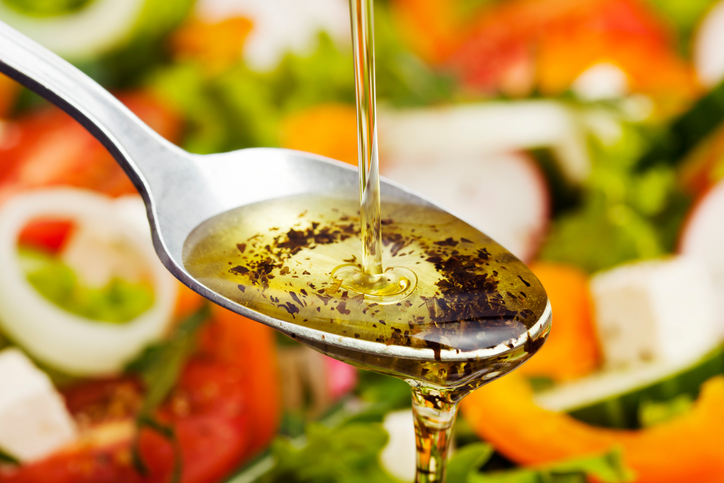
Italian Dressing
Plan Z Phase: This is a Z2 (ZReduction) recipe.
Servings: 4 Servings
Ingredients:
- ¼ cup red wine vinegar
- 3 Tbl olive oil
- 2 Tbl apple cider vinegar
- 1 Tbl lemon juice
- ½ tsp minced onion
- ½ tsp Italian seasoning
- pinch of thyme
- pinch of garlic powder
- 2 pkts of Truvia
- 2 Tbl of fruit pectin
Instructions:
Mix and chill for 30 minutes before serving.
Enjoy!
Cheers,
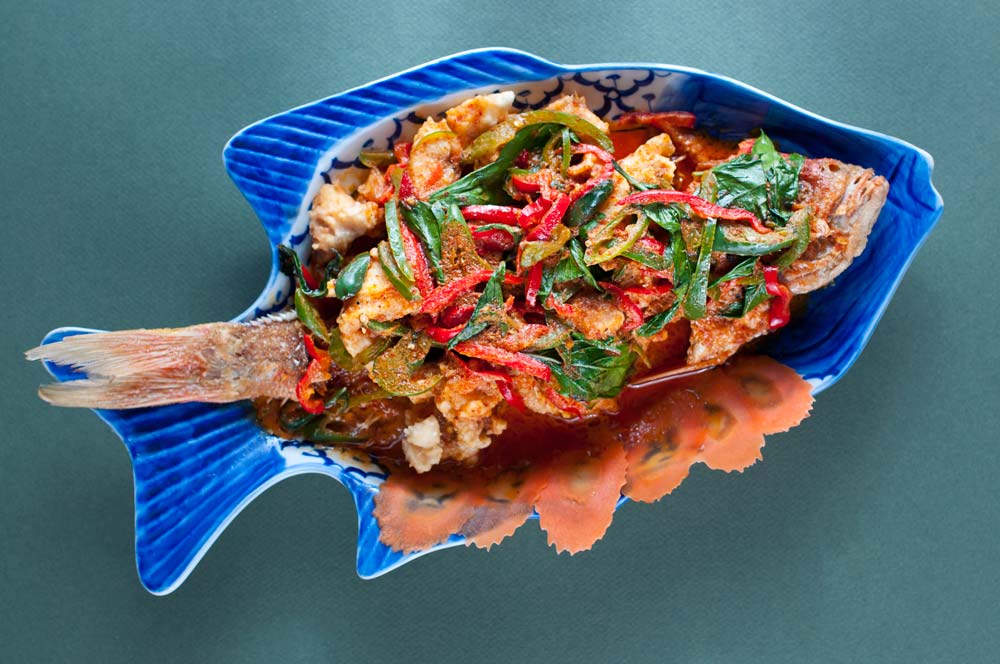
Red Snapper
Red Snapper is now approved! Yay! Your portion size is 8 oz and you can usually find it at the fish counter of your supermarket. With summer fast approaching this would taste fantastic over a salad or with some simple grilled veggies.
Enjoy!
Cheers,
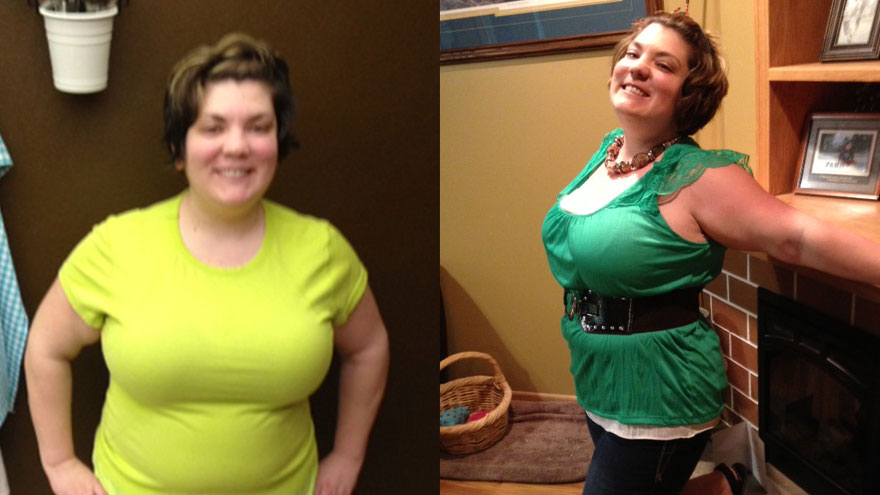
Pastry Chef reaps the benefits of new food habits
Real People Lose Real Weight Real Fast
Listen to successful Plan Z by Zola Insiders describe what it’s like. Chris, our VP of Anger Management talks to our insiders about their successes and their struggles. Our clients inspire us and we hope they will inspire you, too.
Dieter Ashley is a professional pastry chef. She has made some major life adjustments because of her involvement with Plan Z. And she is reaping the benefits. Her story will inform and inspire you toward your own diet success.
Listen to her story below:

Michael Pollan: In Defense of Food Lecture
Michael Pollan’s book, In Defense of Food offers some new ways to think and talk about food.
Pollan’s lecture at Google makes many great points in 59 minutes and 14 seconds. One of them is, “We say we don’t have time to cook, but we have time to watch cooking shows.” He will challenge you to think differently about how and why you eat.
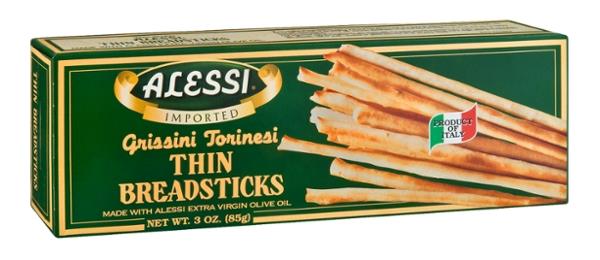
Alessi Thin Grissini Breadsticks
- Zola’s most recommended breadstick product!
- Pack of twelve, 3-ounce bags (total of 36)
- 100% natural and low fat
- Made with extra virgin oil
- Product of Italy
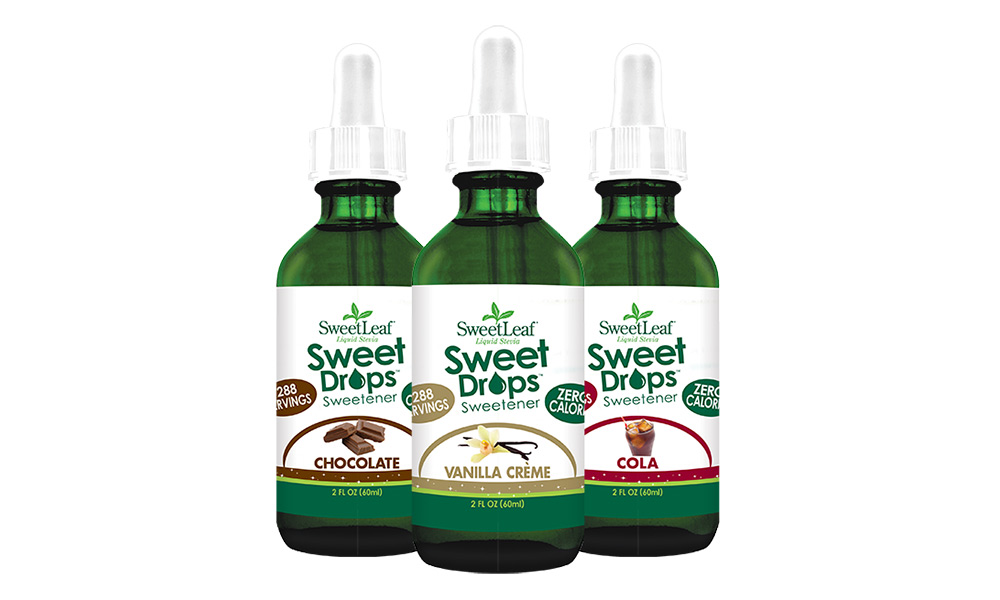
Liquid Stevia by Sweetleaf
Making the world a sweeter place. SweetLeaf is the award-winning stevia brand with zero calories, zero carbs, a non-glycemic response, and NO artificial sweeteners. That’s why it is the most popular stevia brand in the natural foods marketplace. SweetLeaf Stevia Sweetener was the first stevia sweetener to receive GRAS status from the FDA and is the only stevia sweetener to win twenty-five international awards for taste, innovation, and sustainability. From the beginning, SweetLeaf Stevia Sweetener made consumer well-being its number one priority. SweetLeaf products are and continue to be a great alternative for people with diabetes and special nutritional needs. We are committed to providing consumers with the highest-quality, best-tasting stevia sweeteners.
SweetLeaf Stevia Sweetener continues to be a great alternative for people with diabetes and special nutritional needs.
- Tasty and convenient way to flavor water, yogurt, oatmeal, smoothies, coffee, and much more
- Requires no waiting for the sweetener to dissolve, making it perfect for on the go
- Requires no waiting for the sweetener to dissolve, making it perfect for on the go
- Zero calories and Non-Glycemic
- The same delicious SweetLeaf Sweet Drops in 288-serving glass bottles that you know and love
- Refreshed edits to the nutrition facts & ingredient sections that help you make better informed decisions of our products with utmost transparency.

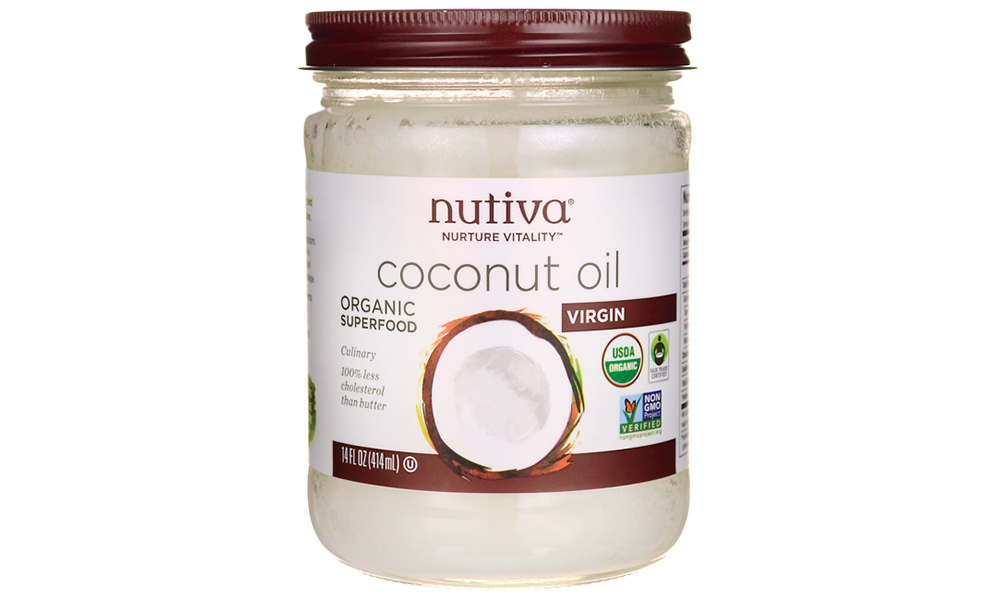
Nutiva Organic Extra Virgin Coconut Oil
Nutiva's Organic Virgin Coconut Oil is made from freshly picked coconut that is cold-pressed within hours of shelling. The light, sweet coconut flavor, and scent will enhance your favorite recipes and is perfect for your body care routine. Always organic and NON-GMO verified, Nutiva's Virgin Coconut Oil is an excellent source of medium chain triglycerides as well as lauric and caprylic acids.
Best Coconut Oil for quality and flavor
- Cold-pressed from fresh coconuts within two hours of chopping; light true-coconut taste, aroma
- No refrigeration required; solid at room temperature and melts at 76 degrees
- 50% Lauric Acid & 62% Medium Chain Triglycerides
- USDA Organic
- Non-GMO
- Virgin & Unrefined
- Non-Hydrogenated
- Cholesterol-Free
Good Calories, Bad Calories: Fats, Carbs, and the Controversial Science of Diet and Health
For decades we have been taught that fat is bad for us, carbohydrates better, and that the key to a healthy weight is eating less and exercising more. Yet despite this advice, we have seen unprecedented epidemics of obesity and diabetes. Taubes argues that the problem lies in refined carbohydrates, like white flour, easily digested starches, and sugars, and that the key to good health is the kind of calories we take in, not the number. Called “a very important book,” by Andrew Weil and …” destined to change the way we think about food,” by Michael Pollan, this groundbreaking book by award-winning science writer Gary Taubes shows us that almost everything we believe about the nature of a healthy diet is wrong.
Why We Get Fat And What To Do About It
An eye-opening, myth-shattering examination of what makes us fat, from acclaimed science writer Gary Taubes.
In his New York Times bestseller, Good Calories, Bad Calories, Taubes argued that our diet’s overemphasis on certain kinds of carbohydrates—not fats and not simply excess calories—has led directly to the obesity epidemic we face today. The result of thorough research, keen insight, and unassailable common sense, Good Calories, Bad Calories immediately stirred controversy and acclaim among academics, journalists, and writers alike. Michael Pollan heralded it as “a vitally important book, destined to change the way we think about food.”
Building upon this critical work in Good Calories, Bad Calories and presenting fresh evidence for his claim, Taubes now revisits the urgent question of what’s making us fat—and how we can change—in this exciting new book. Persuasive, straightforward, and practical, Why We Get Fat makes Taubes’s crucial argument newly accessible to a wider audience.
Taubes reveals the bad nutritional science of the last century, none more damaging or misguided than the “calories-in, calories-out” model of why we get fat, and the good science that has been ignored, especially regarding insulin’s regulation of our fat tissue. He also answers the most persistent questions: Why are some people thin and others fat? What roles do exercise and genetics play in our weight? What foods should we eat, and what foods should we avoid?
Packed with essential information and concluding with an easy-to-follow diet, Why We Get Fat is an invaluable key to our understanding of an international epidemic and a guide to what each of us can do about it.