
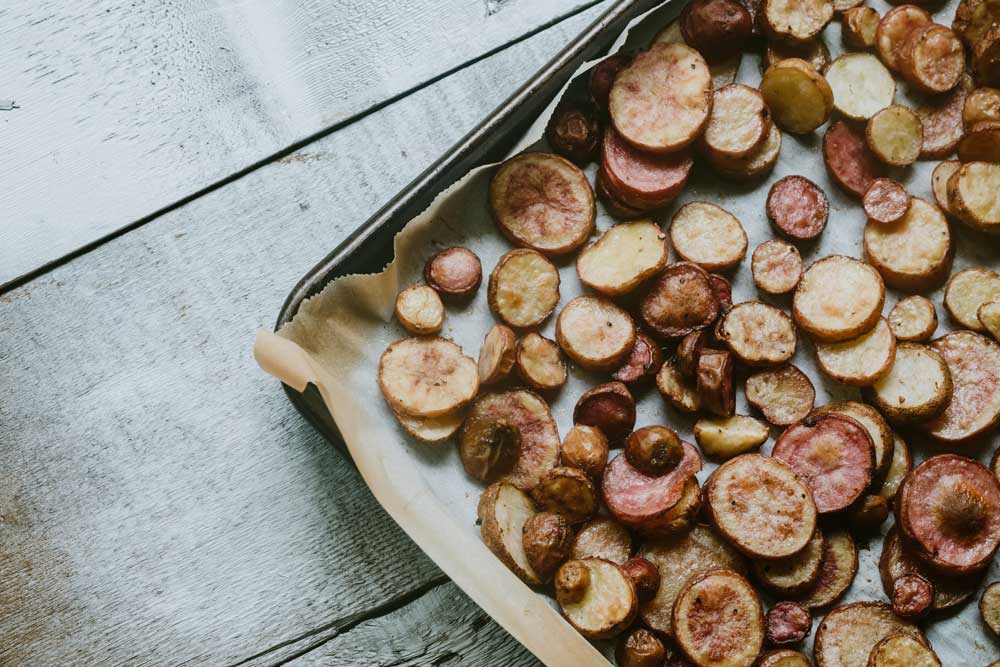
Potatoes and the Glycemic Index
The Glycemic Index is all the rage right now. I am a big fan, but I have a few hints that might vary from what you read in most places.
The Glycemic Index is a measure of a food’s ability to spike your blood sugar. The index goes from 0 – 100+. (Yes, a food can actually score higher than 100. And white sugar is 100 so you know that’s sweet).
I consider any food that scores a GI of 50 or less as healthy (for diet purposes).
The Glycemic Index is more popular in New Zealand and Australia than in the US. They even mention a food’s GI score in TV commercials or on the boxes of things like cereal.
As with most things in America, we cut Big Food too much slack in my opinion. In America, most listings will score foods as low, medium and high. Instead of deeming things that score 50 or less as healthy, 50 – 70 is considered medium. 70+ is high and not recommended or at least eat very little of it and keep it for special occasions.
So, let’s talk potatoes and the Glycemic Index.
Rule of thumb is the smaller (or younger) a potato is the lower the GI (Glycemic Index). Potatoes like fingerlings or small red potatoes (also called C-size) will have a lower GI. So just look for the smallest potatoes offered at your local store.
Larger potatoes have a higher starch content and thus a higher GI. They all score high. And how you cook them matters. Believe it or not, a microwaved russet potato scores a whopping GI of 124! In the old days I used to come home from work and microwave a small russet and put diet margarine on it. I did that because they were low calorie. I was eating a 150 calorie dinner and thought I was doing myself a favor. No wonder I kept getting fatter! I had no clue.
The only large potato exception is a sweet potato but how you cook potatoes matters. A boiled sweet potato will score a GI of 44. That’s good. A baked sweet potato launches to 94. Not good. You now have something that resembles candy.
Mashing your potatoes and making them fluffy can skyrocket the Glycemic Index by as much as 25%. Boiled, baked or mashed white potatoes will always score high.
Adding oil helps. That’s why French fries and potato chips have a lower GI than, let’s say, a baked potato. French fries score 75. That doesn’t make them “good for you.” Don’t fool yourself. If you’re like me and you cut yourself off at 4 or 5 fries rather than eating the whole pile, they can be part of your diet. Just not every day.
Adding fat helps. Real butter, not diet margarine. Cheese helps, too -- even sour cream and bacon bits. Anything with fat slows down the Glycemic Load. Glycemic Load or GL is the rate at which the spiking of blood sugar ensues.
How can you get the lowest score in the GI or GL categories? Make the potatoes ahead of time and chill them until they are completely cold. Then you can heat them back up and have a low(er) GI/GL experience.
What happens is some of the starches in the potatoes become resistant carbs. This process causes the potatoes to digest slower in your system and don’t cause the same blood sugar spike.
So, as often as possible plan your potatoes a day ahead. This is perfect for cooking for dinner parties or holiday celebrations. One less thing to have to deal with on the day of. All you have to do is re-heat. Potato casseroles often taste even better on day 2 so, this is a bonus.
Enjoy potatoes in moderation and use these hints to make healthier choices.
Cheers,

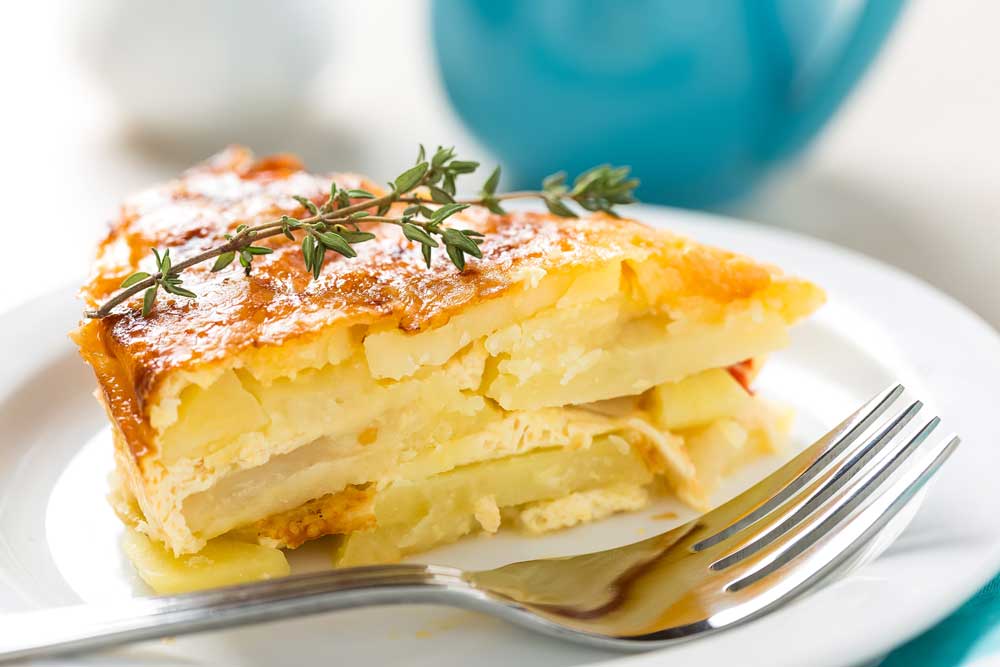
Dauphinoise Potatoes
Don’t let the name intimidate you. This is a wonderful potato casserole!

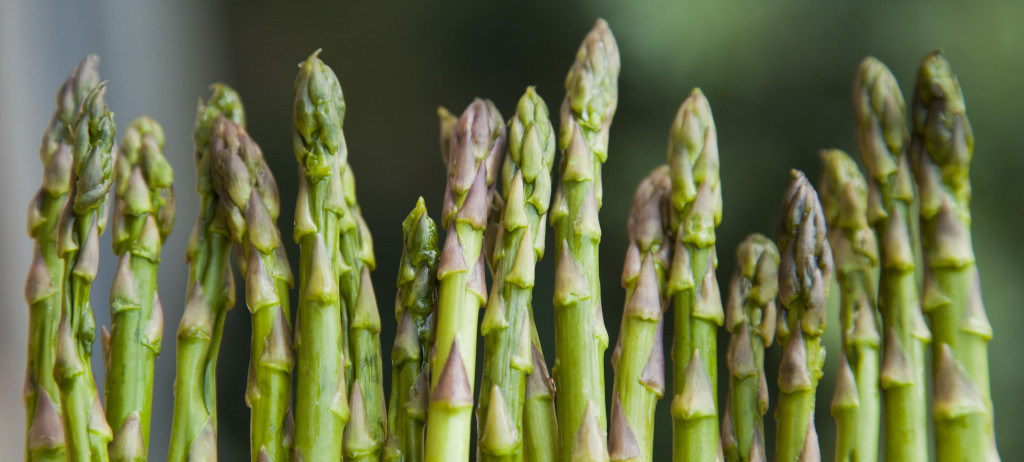
14 Asparagus Tidbits
I planted an asparagus patch once. While doing my research I learned you should not harvest it the first year. I followed those directions and let it mature through the year. I looked forward to the day when I’d be able to pick and eat my own asparagus. Unfortunately, the next spring weeds began encroaching from the cornfield behind my house. I had to till under the part of the garden that had my asparagus. I lost my little asparagus dream.
I gave up my goal of my own asparagus patch but each spring, I still get a hankering for asparagus. My newest recipe is a low carb quiche with a combo of asparagus, mushrooms and Gruyere cheese. BIG YUM!
I thought I’d lay out some fun asparagus trivia for you to chew on. Here are 14 asparagus tidbits.
- Asparagus is one of the only perennial vegetables.
- There are approximately 300 asparagus varieties but only 20 are edible.
- The most common asparagus variety is green in color. Two other edible varieties are white and purple.
- In Europe they call white asparagus “white gold” or “edible ivory” and refer to it as the “royal vegetable.”
- White asparagus is less bitter and much more tender. It’s also more expensive.
- White asparagus is grown under a layer of mulch. That’s why it stays white. I never sees the sun. Otherwise it would turn green.
- Wild asparagus is a species with a long history of use in India and Asia as a botanical medicine.
- Thin asparagus can be eaten without peeling it, but if it’s the fatter asparagus you’ll want to peel it before you cook it.
- Asparagus is 93 percent water.
- In France, asparagus is most often served with Hollandaise sauce.
- The asparagus pee phenomenon is a curious and widely observed occurrence. When you eat asparagus, it can lead to a distinct and sometimes pungent smell in your urine. Do some people have pungent pee or only some people can smell pungent pee? It’s still a mystery.
- Asparagus is reported to show a lowering of disease risk for things like heart disease and Type 2 diabetes. So eat up!
- Asparagus, like other vegetables doesn’t instantly “die” when it’s picked. It still has metabolic activity but it does spoil pretty quickly. It loses its moisture. So that’s why you see it at the grocery store standing in water. Asparagus should be eaten within 48 hours of purchase for best flavor.
- Asparagus is such a big cash crop in California’s Sacramento-San Joaquin River Delta. They have an asparagus festival every year. So does Hart, Michigan. In the Vale of Evesham in Worcestershire, England, they produce more asparagus than any other region in northern Europe. They have a week long asparagus festival and the locals dress up as asparagus and parade around.
Enjoy!
Cheers,
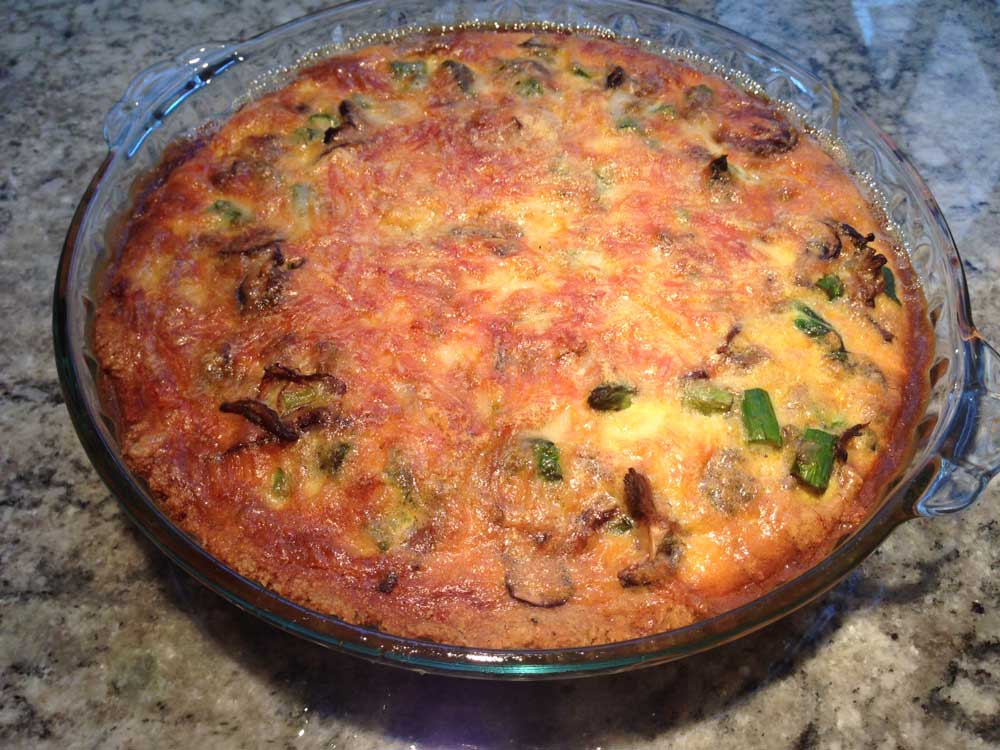
Crustless Quiche and Variations
Plan Z Phase: This is a Z3 (ZReboot) recipe.
Servings: Serves 4 - 6
Ingredients:
For the crust
- 2 cups of super fine ground almond flour
- ½ cup of butter, melted
- ½ tsp of grated sea salt
- 1/8 tsp of pepper (white if you have it)
For the filling
- 1 Tbl of butter
- 1-½ cups of asparagus tips and bits
- 1 bunch of green onions, diced
- 1 cup of sliced mushrooms
- Grated sea salt and pepper to taste
- 3/4 cup of half and half
- 5 large eggs
- 1 pinch of nutmeg
- 1 pinch of cayenne (optional)
- 1 cup of shredded cheese (I used gruyere but you can also use swiss, fontina, white cheddar)
Instructions:
Preheat oven to 350 degrees.
Mix almond flour, butter salt and pepper to form a ball. Gently press the dough into the bottom a bit up the sides of a 9" springform pan (or pie pan, or quiche dish).
Bake the crust for 10 minutes. The crust might get a bit puffy so if it does, gently take a spoon and tamp it back down. Put back in the oven for about 5 -8 more minutes or until it’s lightly brown. Remove from oven.
In a sauté pan, melt the butter. Add the asparagus, onions and mushrooms. Saute on medium high until lightly crisp cooked. The onion will loosen and the mushrooms will give off their liquid. About 6 minutes. They will finish cooking when you bake the quiche.
In a blender or bowl, whisk the half and half, eggs, salt and pepper along with the nutmeg and cayenne.
Transfer the veggies to the pan and spread across the crust. Sprinkle in your cheese. Then pour the whipped egg mixture over the top.
Bake in your oven about 35 minutes. You know your quiche is done when you check it with a knife and the knife comes out clean. Let it cool on the stove/counter for 15 minutes to finish setting up the quiche.
You can serve warm, cold or room temperature.
Variations:
You can use the recipe as a baseline and change up the veggies or other ingredients. Other things I recommend are broccoli bits, cooked bacon bits, pepperoni, bell pepper pieces, fresh spinach shreds, artichoke heart bits, and diced onion of any type. Use your imagination.
Enjoy!
Cheers,
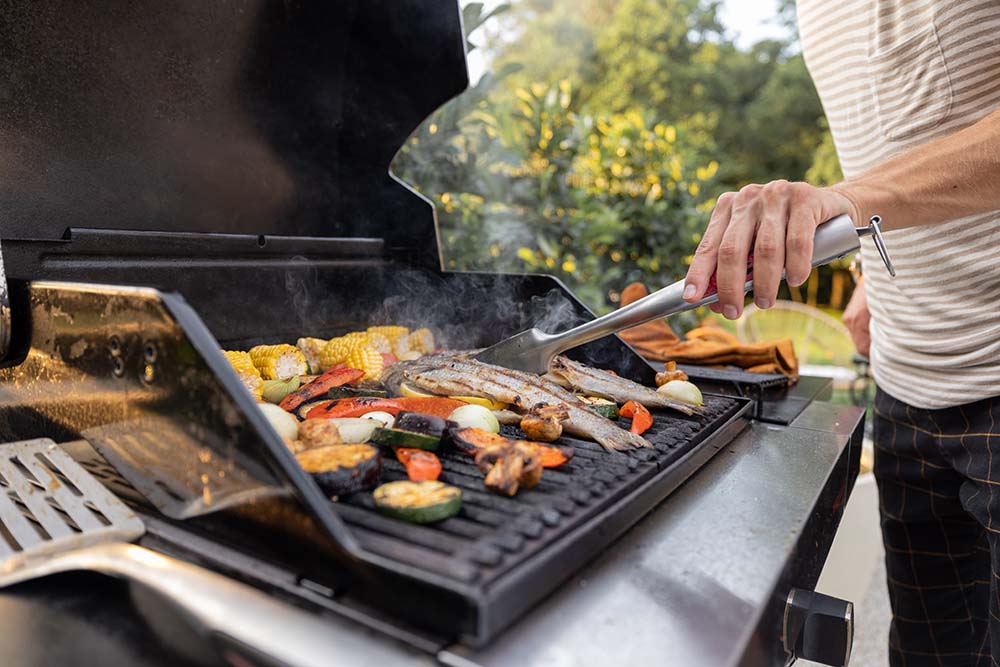
Clean Grillin'
I’ve never been that fond of the grill. I think I can trace it back to when I was about 20 years old. I bought a charcoal grill that came in a box. I had to put it together. Even with perfectly clear directions, it still took me five hours to get that thing ready to cook a hotdog. It wasn’t the most expensive grill so it didn’t last more than one summer, either. I was so disappointed.
I'm also slightly afraid of propane. Now that we have a gas grill, I’m never the one to change the tank. I leave that to my husband.
Ever since I was a little kid I remember the day the grill got cleaned was a big, dirty deal. Now I realize you really shouldn’t wait for a big day to clean the grill. It should be done much more often than that. But as a kid, I can remember my mom getting out the bucket, the big rubber gloves, a hose, and cleaner. I think she even used oven cleaner on the grates. I can still conjure up that smell and see the grit and grease and goo. There was lots of grunting involved in cleaning the grill. It was all a big YUK.
Nowadays we don't use things like smelly chemicals on the grill. So I did a little research on grill cleaning. I found a couple of YouTube clips that had some neat grill cleaning advice.
One of these has hints when you’re the chosen one to do the grilling at a party but you’re not at your own house. Or maybe you’re using a public grill in a park.
Another one is done by our Chicago buddy Lou Manfredini. He’s pretty famous in the do-it-yourselfer world. He owns an Ace Hardware store in the Chicago suburbs and is their spokesperson. He does a Saturday morning “Mr. Fix It” show that I used to listen to as I drove around doing my errands when we lived in Chicago. I learned a lot from Lou.
Now that grilling season is here I hope these things give you the incentive to take good care of your grill. I know I’m going to do a better job with mine.
Cheers,
How to Zolafy a Dessert Recipe
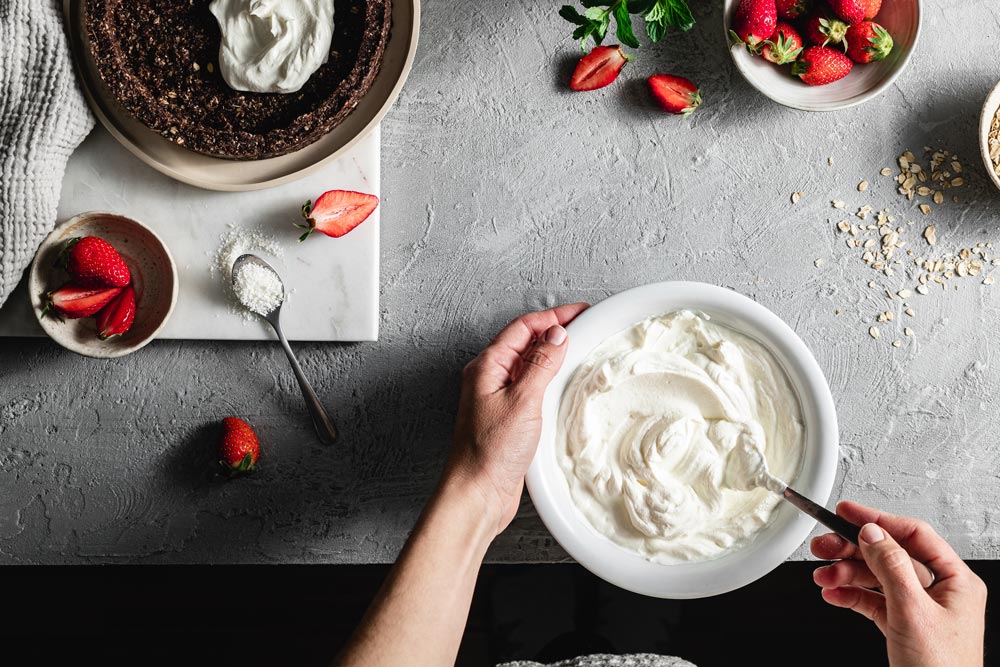
I’m one of the lucky people who can read a recipe and taste it in my head. I hope you are one too, but if you’re not, with a few guiding steps you can still learn how to turn an unhealthy dessert into a healthy food choice.
When you look on the internet (the world’s largest cookbook) these days, you’ll figure out there are duplications of recipes everywhere. Some of them are exact duplications, and some have little tweaks to vary them to the taste or creativity of the cook.
What I do with recipes in my work with Plan Z is make them healthier by reducing the sugar and other carbs, while at the same time, maintaining the flavor. That means you CAN have dessert and still maintain your weight and keep your blood sugar in line.
Today I’m going to outline the process of how I "Zolafy" a dessert recipe in the hopes that I inspire you. Plan Z has over 1,000 recipes now! People tell us all the time that Plan Z doesn’t taste like a diet. And with Plan Z dieters losing an average of 31 pounds in under 50 days, what's not to love?
So let’s get started.
When I'm modifying a dessert recipe the first thing I like to do is review a selection of what I call “inspiration recipes.” That means I get an idea of what I have a hankering for and then I go look at recipes from various sources. I find it’s really a good idea to review at least six recipes before I begin designing my own. It’s important to see what other cooks/bakers are doing. There are enough differences in the recipes and cooking methods that I get enthusiastic about designing a recipe that becomes my own. I don’t want to copy someone else’s hard work.
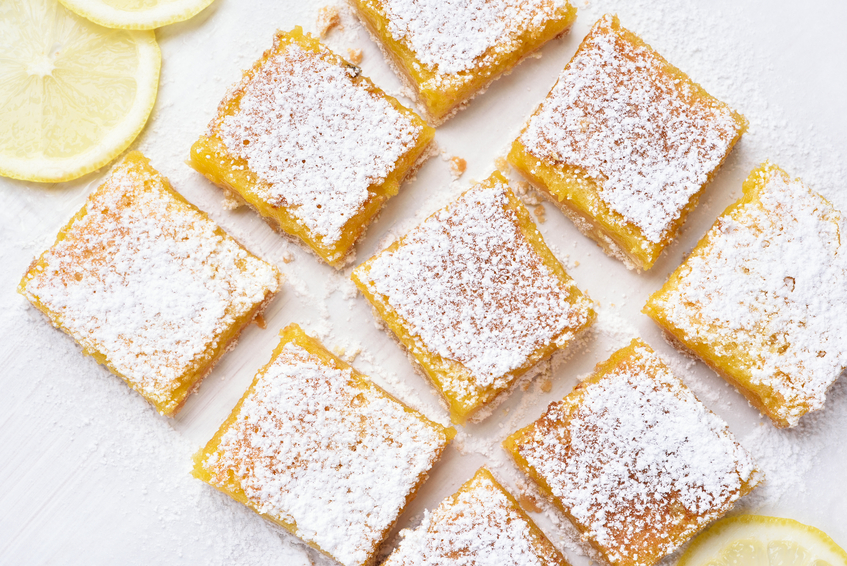
For example, a while ago I got a hankering for lemon bars so I set about thinking about how I can make them low carb, eliminate the sugar and still keep that zippy flavor that a classic lemon bar has.
Lemon bars start off with a crust on the bottom. So the first thing you have to replace is the flour. Flour = fat body = bad. I need to remove the “white stuff.” Good news is there is a new almond meal/flour out that works so much like regular flour you’ll hardly notice regular flour is missing. I love Bob’s Red Mill Super Fine Ground Almond Meal. The other almond meal they offer is decent but the Super Fine one is superior, for sure, for baking.
Next step is to tackle the sugar content. Lemon bars are a sugar bonanza! In my mind, even if I adjust from sugar to a sugar substitute of some kind, the final result is probably going to be too sweet for me. Those of us who cut sugar out of our diet to any great degree have morphed our taste buds. After years of little to no sugar, our tastes are calibrated differently. It’s a natural occurrence in cutting down the amount of sugar we eat. If I have anything from a bakery that’s made from a “regular” recipe it makes my face cringe and I get woozy after I eat it. Waaaaay too sweet. So, I cut back the sweet in my recipes. I do, however, keep in mind that I’m not the only one likely to eat the result. I’d never eat a whole plate of lemon bars, so I have to account for others’ sweet tastes too. That means I cut at least 1/3 or more (usually more) of the sweetness factor. When I taste that recipe in my head I can usually tell how much I can get away with cutting. You many need to experiment to figure out your own sweetness preference.
As sugar substitutes go I have my go-to favorites. They are Swerve and ZSweet. Those two brands are starting to hit stores, but if they are not in your area you can order them online. Swerve even makes a powdered sugar. It makes a delicious frosting. And in this case, a perfect little dusting on the top of the lemon bars. Truth be told, I’d even skip the dusting on the top just to save the money and the extra sweet factor.
Speaking of money, almond flour and sugar substitutes are not cheap. Almond flour is made from almonds…and nuts are expensive. Sugar substitutes that are natural are more expensive to make than the fake stuff so they run a bit more, too. My attitude these days is a dessert like this is something special and not intended to be an everyday treat. Our society just went nuts in the last few decades deciding dessert was a “right” instead of a treat to be treasured. We all got out of control. So maybe the money factor can play in to keep us all a little bit healthier.
Lemon is my husband’s favorite dessert flavor. He absolutely loves this.
I hope you do, too.
Cheers!
Creamy Dreamy Lemon Bars
My husband’s favorite dessert flavor is lemon. These hit his tart meter for sure! They taste divine and have no sugar and no gluten.
Why Resolutions Fail
The football game is over. The score is in the record books. The bets are paid off.
Interesting fact: According to the American Gaming Association, over $23.1 billion was bet on the Super Bowl worldwide. Most of that is illegal betting; the kind that happens in the office pool, the corner bar, or even between fantasy league players.
I can make a bet too, and have pretty good odds.
I bet whatever resolution you set on January 1 is in the books, too. You’ve quit.
Over 50% of Americans make some kind of resolution and for many, the promise made is to lose weight, and for most, it’s a failed attempt before Super Bowl Sunday hits in early February.
Here are three of the biggest reasons people quit a diet:
Hunger: Most people, when starting a diet, will go for the gusto. They think the more they cut calories the faster they will lose. If it’s all about calories in/calories out that might be true, but it’s not. It’s about what you put in your mouth and how your body decides to process it. In the old days, I used to cut calories big time. I’d go down to about 700 calories a day. The bad thing is my body just adapted to the new low. I had no energy but I could live on next to nothing. I’d have half a banana for breakfast. Maybe SlimFast for lunch and then a frozen, diet macaroni meal for dinner. Do you know how unhealthy that is? Here’s a list of the ingredients in SlimFast.
INGREDIENTS: Fat-Free Milk, Sugar, Cocoa (Processed With Alkali), Canola Oil, Fructose, Calcium Caseinate, Gum Arabic, Cellulose Gel, Hydrogenated Soybean Oil, Mono and Diglycerides, Potassium Phosphate, Soybean Lecithin, Cellulose Gum, Carrageenan, Isolated Soy Protein, Artificial Flavor, Maltodextrin, Sucralose and…
You tell me. Who’s kidding who? Sugar is the second ingredient, fructose is another sugar, and even Sucralose is added. That’s an artificial sweetener. No wonder I was hungry 15 minutes after I drank that stuff.
Now I know the two things to eat to curb hunger are protein and fat. Those things stick with you. So if you’re dieting cut the fat, but don’t cut the protein. Eat plenty of veggies along with your protein and you’ll stay full longer.
Cravings: Cravings are hard-wired into our brains. You quit sugar, artificial sweeteners, and artificial flavorings and start eating real, unprocessed foods and your body will eventually be happier and your energy will soar. But not right away. First, you have to get through the cravings.
What do cravings look like? Well, it’s not just “look at a food and want it.” Folks go through all kinds of detoxing. Most get some level of a headache, some get achy, others get increased anxiety or the jitters. Pretty much everyone gets crabby. The physical ramifications can be debilitating. Some get brain fog and can’t think straight. It’s a nightmare.
So if you can’t lock yourself in a padded room until the symptoms pass, you’re going to need help. Thankfully, Plan Z comes with the ZR50 Crave Control spray I invented. These folks are lucky because all of those symptoms are tamped down and all but eliminated, so they can diet comfortably.
Without that, there really isn’t a lot you can do. For those not on Plan Z, here’s what I recommend. These are some of the things I used to do before I started Plan Z.
First of all, I’d start a diet on a weekend. That way I could go curl up in bed and nap my way through some of the side effects. I didn’t have to eat on a schedule so I could come out of my room have a few bites and go back to bed.
You can also try reading, watching a movie (without the popcorn), volunteer in your community (it always makes you feel better to help others), and just plain keep your hands busy. Go ice skating if you enjoy that. Make a list of things you like to do besides eat junk food, and keep that list handy. I know these aren’t all the greatest ideas, but I don’t know any psychologist or MD who has better ideas.
Detoxing should be all but relieved by somewhere between day 7 and 10. The physical part should be over. Now comes the mental part.
Pressure from Friends and Family: No getting around it. Sometimes they are well-meaning, sometimes they are just mean. They tell you they are tired of you being crabby while you’re on that diet so why not just quit. They say you can have a “little piece” of whatever and you’ll be fine.
No, you won’t. You’ll start the sugar hangover all over again.
So cut the social calendar back for a while if you can. You can’t get rid of the relatives who live with you, but you can avoid tempting situations to an extent; at least until you get yourself under control. If your diet is working you’ll be continually motivated by seeing the number go down on the scale. If it’s a slow slog, it’s going to be harder.
For social situations, I suggest you arrive early and leave early, or arrive late and stay a short time. Whichever you choose, grab a beverage fast. Take a big rocks glass and fill it with ice and sparkling water or club soda. Put a lime in it and fool everyone into thinking you’re having a cocktail when you’re not. If you want to be more public about it, volunteer to be the designated driver. Your friends and family will think you’re the hero for that and won’t bug you because you’re not drinking alcohol.
If this list seems a bit on the futile side, you’ll see why most people quit a diet before the Super Bowl. If they made it from January 1 until then, they’ve made it about a month. 4 weeks. Maybe 5 tops. If you’re on one of the standard, popular American diets you’ve lost maybe 5 – 8 pounds by then. Most people can gain that back the week after they quit.
Bummer.
So if you’re looking for a new plan, you’re looking for Plan Z.
Here are my top 7 reasons you want Plan Z instead of any other diet.
1. The ZR50 Crave Control Spray.
That’s exclusive to Plan Z. You don’t have to suffer while you detox and diet. I can help with that. ZR50 Crave Control Spray is patented. It’s all natural. No chemicals. No hormones and it works.
2. Plan Z is guaranteed to work.
Cut your risk. Go with Plan Z. We have TWO guarantees. You can review the diet and even take it to your doctor. If you decide it’s not for you, pack it all up and send it back to get 100% of your money back. Or with guarantee number two you actually get to try the diet for 9 days with little risk. We call it the Skeptic’s Guarantee. Ask for that and we’ll work closely with you to make sure you get on solid ground as you get started. You can prove to yourself this diet is the best one you’ve ever done.
3. No exercise.
Most dieters are thrilled to hear they don’t need to exercise while they are on Plan Z. When you get to the maintenance mode of Plan Z you can exercise all you want and tighten up so you feel great in your new clothes.
4. You lose a lot and you lose it FAST.
The average Plan Z dieter loses 31 pounds in just under 50 days. That’s FAST.
5. The food.
You eat REAL food with Plan Z. No magic shakes. No frozen boxes showing up on your doorstep. There are over 1000 recipes to choose from. You decide what you’re hungry for and you make a quick meal. Your family can eat the same things as you do. I am a food writer. I promise this to be the best-tasting diet on the planet. Hands down.
6. The Education.
There’s a big problem in the dieting industry. They don’t educate you about how you really got fat in the first place. It’s got nothing to do with calories in/calories out. It has everything to do with what you eat and how your body decides to process it. And they don’t teach you anything about how to keep it off. We do. We go to great effort to get you the information vital to your thinner future.
7. Dessert twice a day!
Need I say more? Come on over to Plan Z.
It’s an easy decision.

Brain Gunk
As a youngster, I attended a Catholic grade school. In those days we gathered for morning Mass every day. When I was in second grade I was allowed to receive Communion, but that meant I had to fast for 3 hours in advance. So no breakfast at home for me before I hopped on the bus. Instead, I took my breakfast to school with me.
Just like other children take their lunch to school, I had my little paper bag with my breakfast in it. But unlike other children, I was the lucky child of a mother who put extra time and attention into my breakfast. Most kids took one of those little boxes of cereal out of their bag for breakfast. They munched on Fruit Loops and Lucky Charms. I ate a poached egg.
Remember those little tins that pot pies came in? My mom saved them. She’d make me a poached egg and a wedge of buttered toast. She’d put both inside the little tin and cover it tightly with aluminum foil. It might be an hour or more before Mass was over and I could eat my breakfast but amazingly it was still warm. I loved it.
I was consistently one of the smartest kids in the class. I have my parents to thank for wonderful genes, but I also have my mom to thank for feeding me brain food.
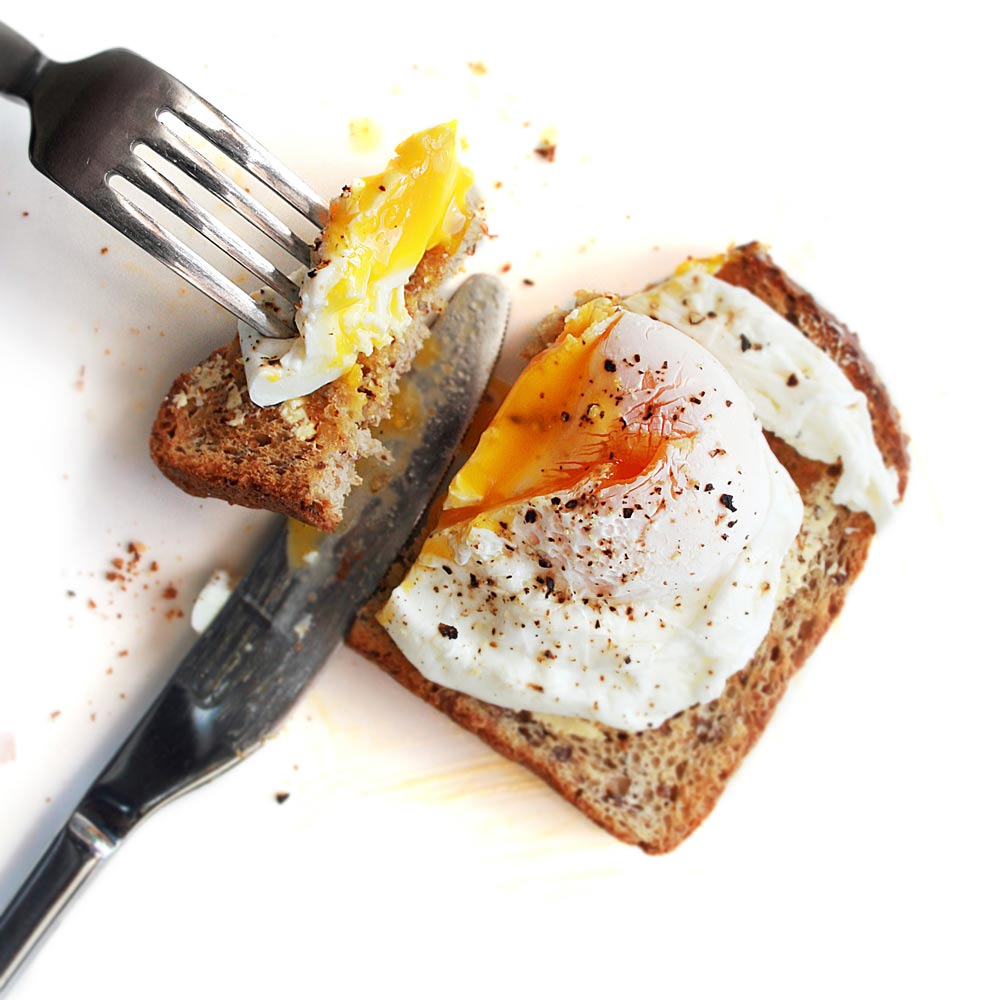
A poached egg is 2% carbs, 63% fat, and 35% protein. Your brain runs on fat. She was feeding me fat and protein that would keep me full and focused until lunch in the school cafeteria. Your brain does not run on Fruit Loops. Fruit Loops just gunk up your brain in the long run.
Now, let’s fast forward to adulthood and look at this connection of brain function as it relates to weight gain.
New studies have been published to show that obesity harms most organs in your body and your brain is no exception. The researchers have also found that getting rid of excess fat actually improves brain function. As reported in Time Magazine, here’s why this matters to us as we age:
Obese men and women are estimated to be about 35% more likely to develop Alzheimer’s compared to people of a normal weight. Some research suggests that body fat ups the number of proteins in the brain that trigger a cascade of events that predispose someone to the disease, and other research in mice has suggested that fat cells release a substance called interleukin 1, which can cause severe inflammation and, in turn, gunk up the brain.
The tests were done on women who had received bariatric surgery but any kind of weight loss will show improvement. These women went through a battery of tests. Interestingly, they performed better on their cognitive function tests—especially in the area of executive function, which is used during planning and organization. The findings suggest that the fat loss reverses the bad effects on the brain.
I find this especially fascinating because I get regular reports from Plan Z dieters that mirror this result of better brain function. They tell me at first that they ‘feel better’. Then they let me know how they are blown away by the fact that they think better, they are more organized and get more done in their day. They not only have more energy as a result of the weight loss but that they think more clearly now. It’s all a result of getting the gunk out of their brains.
Now, let’s go back to school. In a study of 1 million students in New York, results showed that students who ate lunches that did not include artificial flavors, preservatives, and dyes did 14% better on IQ tests than students who ate lunches with these additives. So what are you and the kids having for breakfast, lunch and dinner today…and tomorrow… and forever? It matters.
Cheers,
How your waistline can expose your health risk
It’s that time of year. You go to your doctor for the annual physical. The nurse has weighed you on the way in. Now you’re sitting on the exam table in the horrible paper gown waiting for the doctor to appear.
The doc walks in the door and declares that you're officially obese. Your Body Mass Index (BMI) has been calculated and it’s over 30. You hang your head in shame and your doctor tells you that it’s time you lose some weight. You need to get your BMI under 30 at the very least. If you don’t, you’re at risk for diseases that are associated with obesity. Things like high blood pressure, diabetes and heart problems are lurking in your future. Your heart sinks. The rest of the physical is completed. You get dressed and you walk out the door.
Now what?
You don’t even know how they calculated your BMI so how are you supposed to know when you have gotten it under 30? But I have news. You don’t have to know how to calculate your BMI. That’s complicated and not particularly accurate; especially if you are very tall or very short. There is a better way.
New studies show there's a simple way to calculate if you are at risk for the diseases associated with obesity. It’s the waist-to-height ratio. We all know how tall we are. We can all measure our waistline. All the tools we need are right at hand.
Here’s how it works:
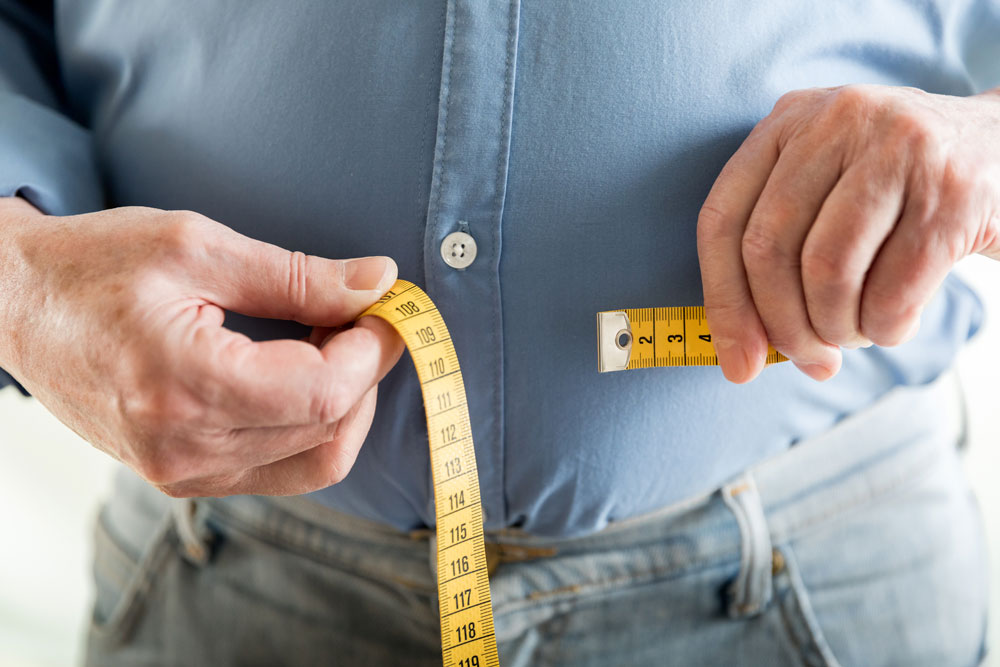
Measure your waistline one inch above your belly button. If you are feeling like cheating, you can even try to suck in your belly a bit. It’s really the stuff you can’t suck in that counts the most in this measurement. Jot that number down. If that number is one-half of your height in inches or less, then you are at a much lower risk for serious health issues that severely overweight people succumb to.
So here’s an example. If you are a 5’6” woman your height in inches is 66. Right? Divide that by two. You want your waistline to be 33 inches or smaller.
If you are a 6’3” guy your height in inches is 75. Divide that by two and strive to hit a goal of a waistline that is 37.5” or less.
Simple math, but very important information. Here’s some scary information. If your waist to height ratio shows your waistline equals 80% of your height, studies show you will live (on average) 17 years less than someone whose waist to height ratio falls at the 50% number. That’s a big deal and a big incentive to keep an eye on your waistline and work to get your waist-to-height ratio on target.
Cheers,
Straight-forward Roasted Turkey
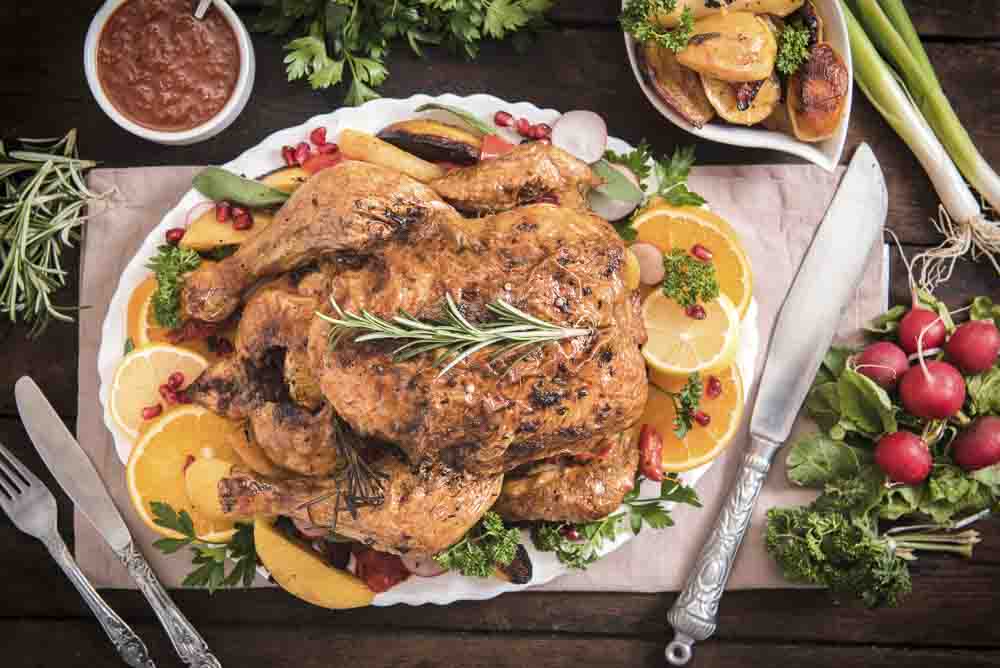
This is a Z2 (ZReduction) recipe. Read this whole recipe before you buy your turkey so you purchase all of the ingredients you will be using. There are lots of options.
Two things to settle on first. How big, fresh or frozen? How big is pretty easy.
A 12 - 15 pound turkey will serve about 13 people.
A 15 - 18 pound turkey will serve about 14 people
A 18 – 22 pound turkey will serve about 20 people.
Simple math. Don’t ever let that one confuse you. And for extra leftovers just get a bigger turkey.
Fresh or frozen is simple. Get fresh whenever you can and if you can afford it. I like to get it from a local butcher when possible and organic is a nice bonus. If you get frozen just make sure you follow the instructions on thawing. Nothing worse than a novice cook who takes the turkey out of the freezer on Thanksgiving morning and then melts down to a puddle of tears because that person just found out they needed to take it out and put it in the refrigerator two days before so it would thaw.
Now you have to decide on what equipment you’ll use to cook the turkey. In the simple department, I say just find an oven-proof pan big enough to hold it. Be careful with those disposable pans. They are very difficult to handle without them buckling and you don't want your turkey to hit the floor. I don’t bother to put it up on a roasting rack. I don’t tie the legs together. I don’t pin the wings down. You can forget all that. Just be sure to take out the giblets. Don’t leave anything in the cavity. You can make all kinds of things with the giblets but in the simple department you can toss them or get worried about what you want to do with them after the turkey is in the oven.
Instructions:
Preheat your oven to 400 degrees.
Rinse the turkey inside and out and pat the outside with paper towels to get the extra moisture off.
Set it in the pan. Breast side up is my preference.
Going for super simple? Just spray the turkey with some olive oil spray or slather olive oil or soft butter across all of the skin. You choose. Spray is the easiest. Then season it with something. It can be as simple as grated sea salt and pepper. Or you can dust it with your favorite meat rub. Some folks insist on salting the inside. I say go for it you want to. But it's not necessary.
With super simple, you can leave the cavity empty. Others swear by putting a few sticks of celery in. They say the celery steams and keeps the turkey moist. I agree. I have done it with chicken. You can also put onion in there or sprigs of fresh herbs like thyme and sage and rosemary. You choose. Or go without. You are not going to eat whatever you put in there anyway. It’s just for the smells/flavors - it might impart into the meat but feel free to default to nothing in the cavity. My favorite is to put a couple of lemons cut into wedges in the turkey and then make a lemon cream gravy to go with it. I’ll give you that recipe too.
Put your turkey on a lower rack; maybe one step up from the bottom, depending on how big your turkey is. You don’t want it hitting the top cooking element. Leave some room.
Roast the turkey at 400 degrees for 30 minutes and then turn the heat down to 325. This is the only thing you have to remember. Set a timer if you have to.
Roast the turkey until it reaches 170 degrees. To figure out how long it will take, just do the math. 15 minutes per pound. 15 pounds of turkey X 15 minutes per pound is 225 minutes or 3 and ¾ hours.
I use an insta-read thermometer toward the end of the cooking time to check it. Stick it in the breast just above the leg so you are checking the thick part of the meat. If you are lucky you might even get a fresh turkey that has a pop-up timer in it for extra help. Frozen turkeys usually have a pop-up timer.
Basting. I baste the turkey with one of those old-fashioned turkey basters once every 30 minutes. Don’t be opening the oven too often or it will take longer to cook the turkey. You can use broth or even water along with the juices the turkey is producing. Make sure there is always a ¼ inch or even a bit more of liquid in the bottom of the pan. Add water or broth if necessary to keep it level and not dry on the bottom of the pan.
You can check on how brown the turkey is getting when you baste it. When it gets to a nice golden color that you like you make a ‘tent’ for your turkey. That just means you take a large piece of aluminum foil and fold it over the top of the turkey and let the ends dangle. That just keeps it from getting darker. When you go back in to baste it again just take the aluminum foil off, baste and put it back on. Simple.
When your turkey has reached the 170 degree point take it out of the oven. I also take it out of the pan and put it on a platter or cutting board to rest.
Let it rest for 20 minutes. While it’s resting I make the gravy and get any other last minute details done.
Then carve the turkey and serve. Don’t get too wigged out about the carving. Perfect slices don’t taste any better than chunks.
And have a Happy Thanksgiving. Concentrate on laughing and telling fun stories with your guests and let the stress melt away.
Enjoy!
Cheers,
The Art of the Antipasti Tray
What's antipasti?
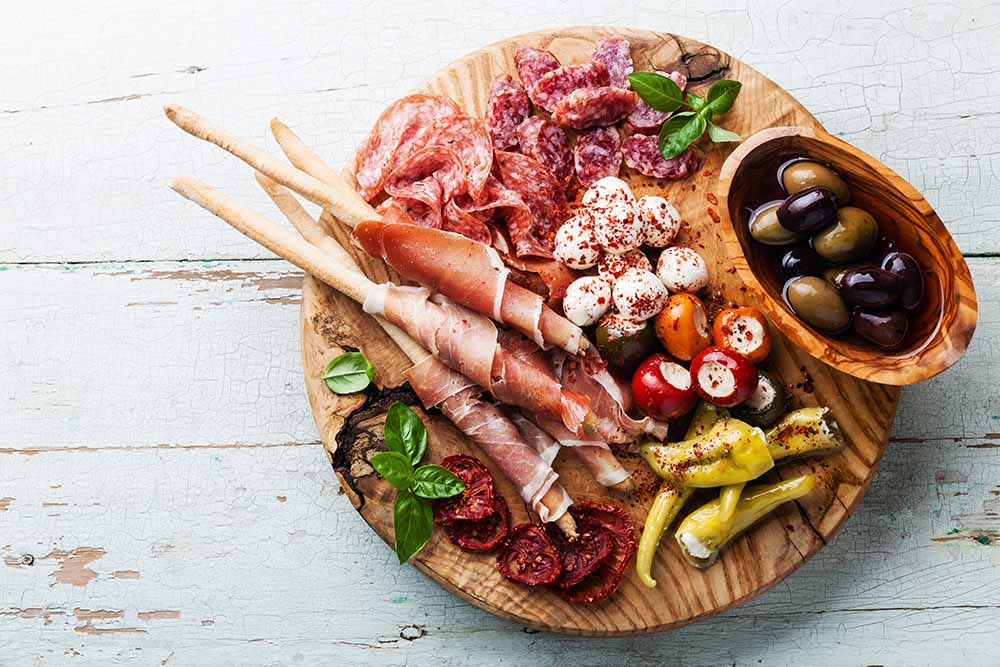
It's an appetizer consisting of an assortment of foods, such as smoked meats, cheese, fish, and vegetables.
Sounds like a low-carb platter of perfection, doesn’t it?
I love to build antipasti platters for small gatherings. They're simple, beautiful, delicious, and often do not require any cooking.
They're also the perfect item to bring to a party.
What's great about them is there's no perfect combination of ingredients. You decide what goes on it. And you can add whatever you'd like.
Here are some basic but tasty ideas of what you can include in an antipasti tray:
- Smoked or cured meats or specialty items venison or boar salami
- Little mozzarella cheese balls marinated in olive oil, red pepper, and Italian herbs
- Roasted or grilled eggplant (or a low carb spread like baba ghanoush)
- Strawberries ( you can sprinkle them with some really good balsamic vinegar for extra oomph)
- Roasted peppers
- Fancy Olives
- Tuna seared with black pepper served sashimi style
- Bacon-wrapped scallops or shrimp
- Raw veggies with any sort of dipping or drizzling sauce
- Grissini breadsticks or raw veggies for crunch
- Zola nuts - YUM
All you need is a pretty platter.
Then, pile on the goodies!
Below is my formula for Antipasti – Zola style.
Use these tips for inspiration when you're picking antipasti items for your party platter.
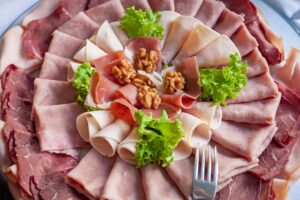
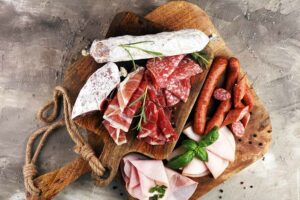
Meats: One traditional choice is prosciutto (a version of Italian ham). You can find this in the deli meat section. Salami is popular, too. There are tons of salami options. You can choose other meats, too. The one thing I ask is that you go to the deli section where humans wait on you. Ask them for the meat selections they either roast in-house or are roasted nearby and made with no preservatives. It's better for you, and it tastes better. It’s usually pretty easy to tell by looking in the case. Sometimes they will even have signage that says “roasted in house.” Choose those meats. Stay out of the section of the store where the sliced meats are in shrink-wrapped heavy plastic. That’s a sure bet they are filled with preservatives.
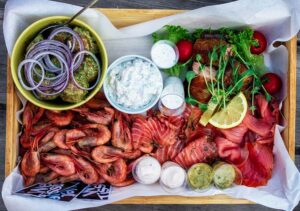
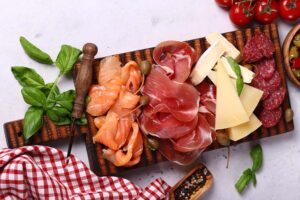
Fish: If you like smoked trout or salmon you can have those on your antipasti tray. You can cook scallops and have a dish of those with toothpick nearby. Or you can even put pickled herring on your tray. Just make sure what you are buying is fresh.
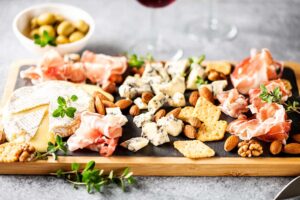
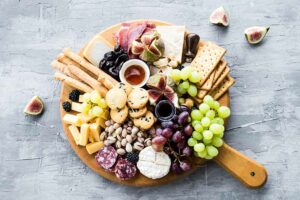
Cheese: You can go crazy with the cheese. Your platter might have a theme with Italian cheese, French cheese, or even American. You can also do an assortment. If you have a lactose sensitivity, you can use cheese made from sheep's milk. Chevre (goat cheese) is a nice option as well. They even have vegan cheeses now that are quite yummy.
If I'm making an antipasti platter for a party I'll cube the cheese so folks can pick up cubes with a little pair of tongs. If I'm having a few friends over for dinner, I might just put 1-2 large cheeses on my platter and let people cut off chunks. You decide.
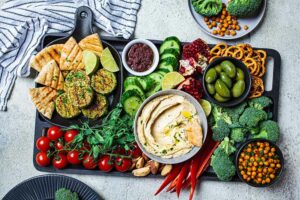
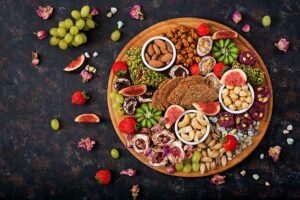
Vegetables: You have three choices here. You can choose your favorite vegetables and serve them raw. Or you can make antipasti veggies. For instance, I marinate my own mushrooms. I just get mushrooms, clean them, and then put oil, vinegar, and spices in the bowl and let them sit in the refrigerator until party time. They get better with a few hours of marinating. You can get as involved in this as you want. We have recipes on the site for various veggies. You can also go the easy route and head to the deli section that has an olive bar. Most grocery stores have them now. There you’ll find marinated artichoke hearts, marinated peppers, olives, and more. They have these little teeny red peppers at my deli that are stuffed with a sweetish cheese. These things taste like dessert to me. Love them. Look for the little marinated onions. Go wild.
Fruit: I often put berries in little bowls (that way they're not touching the meats and cheeses just in case someone's a strict vegetarian or vegan). I'll also use big strawberries with the green heads still on them to distribute color. Or cherries with the stems. Or grapes on the vine (if you're using grapes, don't go overboard - they are very sweet).
Condiments: You can have little ramekins of things like mustards or even exotic chutneys. Be careful that you don’t eat much chutney, it's very sweet! I’ve even done little pots of pate (or slices of it).
Bread: I stay away from the baguettes and large slices of bread but I do toss on a few Melba rounds. People not on the diet love them and those of us who have done a ZReduction just wink at each other. You can also do a little crock of cheese spread (make your own or get a good one) and you can stick grissini breadsticks in it. Cut them in half and stick them in too if you want. Looks like a porcupine that way :)
Display: The art of presenting your antipasti platter is what makes it special. You can go wild with this or very simple. Don’t get worked up about it. I have two options for trays. One is to use a large platter. The size of a turkey platter is a good gauge. Then I put small dishes of the liquid items on there so the juices don’t mingle.
Another option is to use a large cutting board. This works well because when folks cut off pieces of cheese, they are cutting on a board. This looks very country-French or country-Italian.
How you display the items can be simple or fancy. Traditionally the prosciutto is rolled into little cigar shapes. You can roll cheese slices too, in some cases. Here are some more examples of antipasti trays for your inspiration:
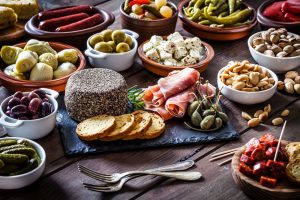
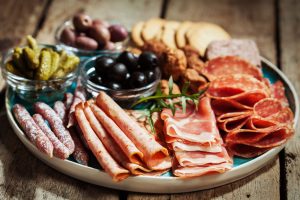
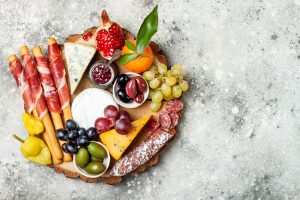
Eat like this, and you'll be able to maintain your weight through the holidays and beyond.
Have questions?
Call us at 800-255-9853 and speak with a coach.
We're here to help you navigate the holidays successfully.
Cheers,
A Sharp Knife Can Save a Finger
My father was an engineer; a smart and precise man who had his weekend rituals. About once a month, I’d find my father at the kitchen table on a weekend afternoon sharpening the kitchen knives.
He’d have a sharpening stone in front of him set on a spread of newspaper print. He had a little can of oil that looked like a miniature version of the oil can used to loosen up the Tin Man in the Wizard of Oz, and he’d have an assortment of knives. From paring knife to carving knife, he’d sharpen them all. It took him probably an hour to do six knives.
He’d squirt a strip of oil across the stone. He’d spread that oil out in a thin layer and begin methodically sweeping the blade of the knife along the stone. Back and forth. Back and forth. Top tip to bottom edge where the blade meets the handle. That motion would sharpen both sides of the blade. The idea was to keep the knife at the perfect angle so the edge got sharpened without scraping away too much of the blade. My father was a whiz at it. A regular wizard of knives.
When I asked him why he sharpened the knives so often he came back with an answer. He told me, “A sharp knife is a safe knife.”
That seemed counter-intuitive. Sharp knives cut more easily than dull knives. Right? Sharp knives seem dangerous.
Not really.
A sharp knife is much safer. Most kitchen accidents happen in restaurants (where knife-wielding is a constant activity) with a dull knife. The extra exertion it takes to cut through a piece of food with a dull blade is what causes accidents. The force might cause the food to move and the blade comes down harder than expected, jumping off course. If your finger is in the way… OUCH. Blood’s next.
You see it in the cooking shows. Some guy is nervous. He has an accident with his knife and ends up with a medic patching him up and then he has to wear an awkward kitchen glove that slows him down in his prep. That usually means disqualification.
In the home kitchen, it might mean a trip to the emergency room.
How do I decide when it’s time to sharpen my knives? It’s when my knife doesn’t immediately flow through the skin of a tomato.
That seems counter-intuitive too. A tomato? The tomato skin is quite thin. A piece of meat is much denser. So why would you not decide to sharpen a knife when it gets more difficult to cut the meat?
The answer lies in the tomato. Tomatoes are round. When you are slicing a tomato it’s easy to have the blade slide off the side if it doesn’t smoothly move through the skin with ease. It’s easier to cut yourself slicing a tomato than just about anything else. And when you dice tomatoes, if the little bits are not being cut cleanly as you go, the tendency is to hack at them. More opportunity for an accident.
My father taught me how to sharpen knives on his stone when I was old enough to take the care needed and the dexterity to get the angle right on the blade. He was a good instructor.
As I grew older and started working in restaurants, I was taught how to sharpen knives with what they call a steel. That’s a long cylinder that you hold in one hand while you stroke the knife across it with your other hand. Chefs who are good at it make it look like knife ballet. Most restaurants with line cooks don’t leave the knife sharpening to the cooks. They use a knife exchange program. Newly sharpened knives are delivered to the restaurant once a week and the dull ones are shipped off to be sharpened and exchanged again the next week. I’ve worked in places like that too. It’s a pretty sharp idea.
In my kitchen as a young adult, I was more interested in cooking for dinner parties than taking the time to sharpen knives, so I bought an electric knife sharpener. That thing never quite did the job.
My preference now is to take my knives to a professional knife sharpening shop. The task is so inexpensive to have done it’s worth it. Trouble is when I moved to Chattanooga 4 years ago I could not find a shop that sharpened knives!
That problem has just been solved! I found a new place that is part gift shop/cooking store and they sharpen knives! The owner’s son is a knife sharpening expert and is taking care of all the chefs in town who need their knives sharpened and now, me too! Yahoo!
When my father passed away I inherited his favorite knife. It’s big enough for big carving jobs; more than a paring knife. I don’t use it often. I keep it more for the sentimental reasons than for action in my kitchen. I’ve had it sharpened a couple of times, but not many. When you look at the knife you can see it’s been sharpened hundreds, if not thousands, of times. The blade has worn down as a result of all of the sharpening. (I tried to illustrate in the picture how the blade might have looked when it was new).
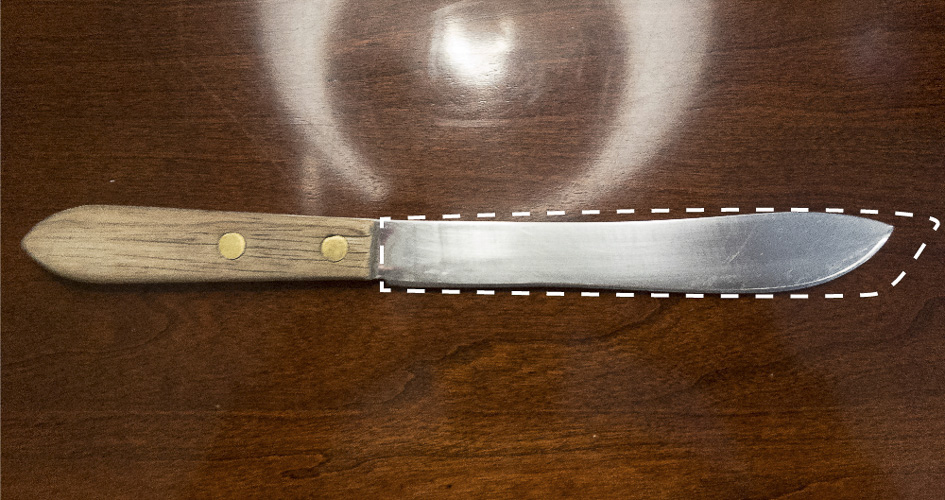
I never asked my father how he came to be in possession of that knife. For all, I know it had been my grandparents’ knife or even their parents. That knife has seen a lot of time in a kitchen and a lot of time sweeping across the sharpening stone. Now, it’s in knife retirement.
Cheers,
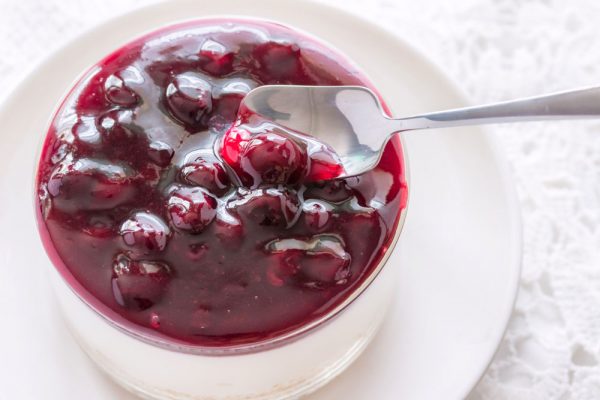
Patriotic Cherries
Plan Z Phase: This is a Z2 (ZReduction) recipe.
Important: Be sure to buy the cherries that are packed in water and not the ones packed in syrup. You are looking for pie cherries. They are called Montmorency cherries. Bing cherries and Queen Anne Cherries are much more sugary and much higher carb. To make this dish “patriotic’ all you need to do is add blueberries and you have a red and blue dessert. You don’t need to feel left out of the holiday celebration just because you’re on a diet. Yours will be just as colorful and tasty as anything else being served.
Servings: Serving size 1/2 cup, cooked
Ingredients:
- 2 cans of TART (Montmorency) cherries packed in WATER only (you can also use fresh or frozen Montmorency cherries)
- ½ cup of fresh blueberries
- 2 Tbl of cornstarch dissolved in ¼ cup of water
- 2 tsp of organic vanilla
- 4 tsp Truvia
- ½ – 1 tsp of almond flavoring
Instructions:
Put the ingredients in a pan and bring to a low boil, stirring often. If you use fresh cherries you’ll need to add a cup of water to make up for the liquid in the can. Boil at a slow bubble until the cornstarch kicks in and you get a thick sauce. Stir often. Just like pie filling in a can. Tastes just like the pie filling. The sauce will continue to thicken as it cools. The color will be paler because you will not be pouring in a bunch of red dye. You don’t need those chemicals in your system.
Enjoy!
Cheers,
The Most Frustrating Thing About Exercise
I’m in my car headed to the grocery store to buy food for dinner. That’s what I do. I buy fresh food. I eat very little processed food, so I buy food fairly often to make my meals.
On this particular day, it was a madhouse. The grocery store parking lot shares spaces with the health club in the same complex. It was jammed with cars and people jockeying to get their cars parked. I wanted to get a space so I could grocery shop. Seems everyone else was trying to go to the health club.
A guy gets out of his car next to mine; the same time as I’m getting out.
I look over at him. He’s of average height, probably 30 pounds overweight. He’s got a brand new duffle bag slung over his arm and pristine, new running shoes on his feet. I can tell where he’s going. I also know I can really depress him if he reads this blog post. He’s just bought a new health club membership, has his resolution to lose weight and get in shape. I’m about to lay out the evidence that this new resolution isn’t really going to go all that well. The information I’m about to share comes from the National Institutes of Health. These are supposed to be our nation’s gurus on weight loss and overall health. Their mission is to look out for our best health interests.
They designed a little computer program. It’s called the Body Weight Planner. What you do is enter your vitals, (height, weight etc.). Input the kind of exercise you are willing to do and then put in your lower weight goal and it will tell you how long it will take to get to your goal.
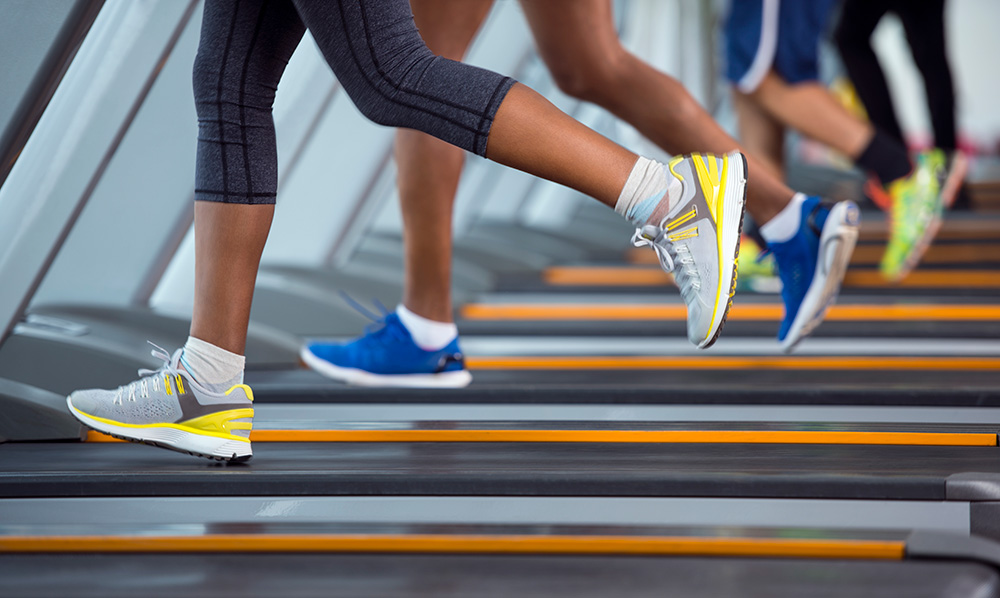
Here’s data on a guy who’s 200 pounds and is willing to run for a full 60 minutes on a treadmill four days a week. Four days a week for an hour each time sounds pretty impressive doesn’t it? Almost like a dedicated athlete of sorts.

Well, here’s the final analysis. The Body Weight Planner says if he does that regularly, he’ll lose 5 pounds in a month. If the guy has 30 pounds to lose that’s six months of full dedication to lose that 30 pounds. What are the odds he’ll make it to his goal? Just think about it.
Even the guy at the NIH who designed the program says that if that man eats more than they recommend, his weight loss will suffer. And statistics show that this level of exercise is going to make him hungrier. The guy from the NIH also says if our workout guy rests too much while recovering from his running routine... that will slow down his weight loss, too. Most folks head to the sofa to watch TV after a workout like that. You’re understandably tired!
This hypothetical guy has 30 pounds to lose. Most of America has a lot more than that to lose. This kind of data is absolutely depressing to a person who has over 100 pounds to lose. Do the math. Five pounds a month. 20 months (almost two years) of full dedication, four days a week, four hours a week on the treadmill to meet that goal. Ugh. There's got to be another way.
So don’t let anyone tell you it’s all just calories in and calories out. Don't let anyone tell you that if you just get off your fat fanny and go to the health club you’re going to lose that weight with any kind of speed.
No wonder people quit their diet and exercise plan by the time the Super Bowl rolls around. We are a society of people who want results and we want them NOW.
Cheers!
Boxing Day
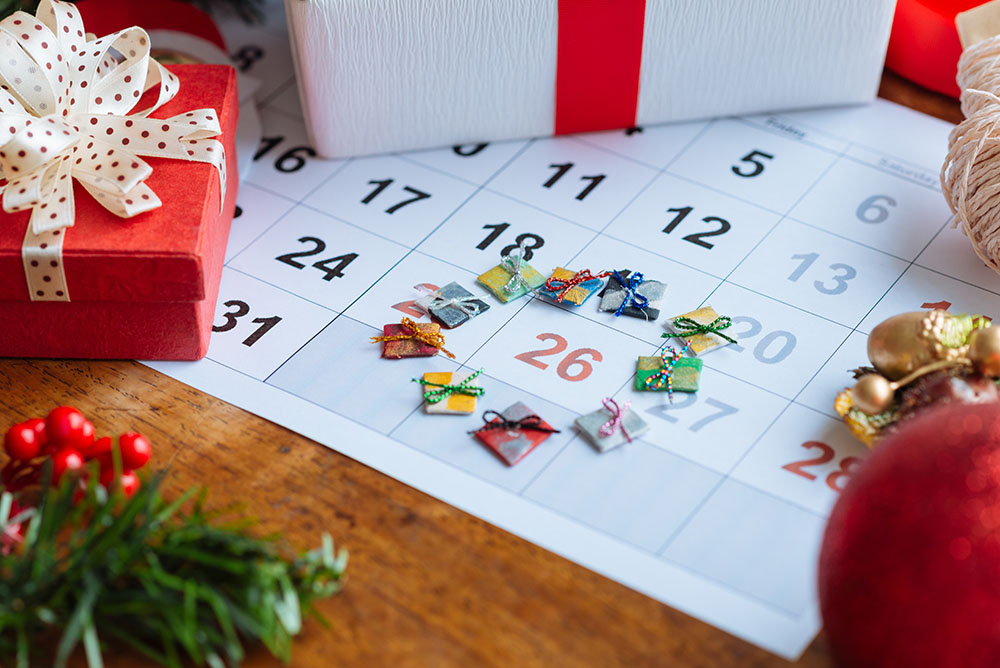
Today is Boxing Day. December 26.
This holiday has nothing to do with a boxing ring or leather gloves. It has everything to do with celebrating.
In Great Britain and all across the Commonwealth countries they celebrate Boxing Day. That means Canada, Australia, and many more.
So why does Boxing Day exist?
Well, in the “old days” servants were required to make the food and serve their employers on Christmas Day. They didn’t get a holiday off like the wealthier folks.
In a bit of generosity, the Upper Class decided that the servants deserved their own holiday, so they gave them the day after Christmas off work.
So where does the box come in?
Tradition has it that the heads of the household would fill a box with gifts, bonuses, and even leftover food from the big holiday for the servants to take home or travel with to visit family.
That’s the meaning of Boxing Day.
I have friends in some of those other countries who continue on the tradition with the boxes. Some of them do sort of a round robin where they visit several friends and exchange small boxes. Some I know go around the neighborhood and sneak up onto a porch and leave a little box. And some have one more party after the party from the day before.
They have each made it their own.
Like many employers, I have given the day after Christmas off work too for our staff. I didn’t want them to have to travel on Christmas to be at work the next day. That’s my tradition.
Happy Boxing Day!

Flashes of Christmas Past
Most of my memories of Christmas Past are happy ones. In actuality they were not always happy, but I choose to focus on the happy ones. That’s just my way.
I can almost smell the standing rib roast in the oven. The baked potatoes and the acorn squash hollowed out and filled with butter. I can see the glittering dining room table. As I got old enough, my mother let me decorate the table. I loved that. She let me get out some of the good plates and the fancy silver too. She taught me what fork went where and I found every excuse I could come up with to use extra forks and spoons. Candles too. The table was lit with a festive romance.
I can hear the crackling fire in the living room. When they came up with those extra bits you could put in the fireplace that gave off colored flames, my parents let us put those in the fire. The Christmas tree was on the opposite side of the room from the fireplace. The tree was always surrounded with gifts. We never went without. I’ll never forget the year my grandmother died as Christmas approached. My mother went all out that year with gift-buying. I think it was her way of mourning the loss of her mother. She spoiled us all rotten.
There was usually at least one cat curled up by the fire. They loved that toasty fur feel. My mother let us wrap a box of crunchy cat food each year and hide it amongst the gifts. The cats probably thought that was tantamount to torture but at least one year I remember our cat victorious in her search and she ripped the gift wrap off that box and pawed madly, trying to get at the contents. That was Christmas Eve entertainment at its best.
I was walking through a Target store the other day and had a Christmas flashback. There were footy pajamas hanging on the rack. We always wore footy pajamas on Christmas Eve. There are tons of family photos showing all the kids posing on the staircase in our pajamas. We opened our gifts after Midnight Mass so we all donned our jammies as we opened our gifts. We had to. It was off to bed for us after the maddening frenzy of gift opening. We could get back up in the morning and play with everything we opened. We’d still have our footy pajamas on then too, until Mom came down and ordered us up to our bedrooms to dress for the day.
Christmas Eve was always my favorite. To this day, it’s the anticipation I adore most.
Little Green Orbs
Truth be told, the first four decades of my life I HATED Brussels sprouts.
I thought they smelled bad and tasted even worse.
Until one day…
Actually, it was evening. I had taken my whole staff out for a fancy Christmas dinner. There I was, surrounded by about two dozen people who cared about me and respected me. We all ordered our dinner and the dishes were arriving at our table.
I don’t remember what I ordered as my entrée but I distinctly remember that the side dish that came with my meal was a substantial pile of Brussels sprouts. In my mind I turned up my nose. I would plan to eat my entrée but I was not touching those cut up little blobs of green nastiness.
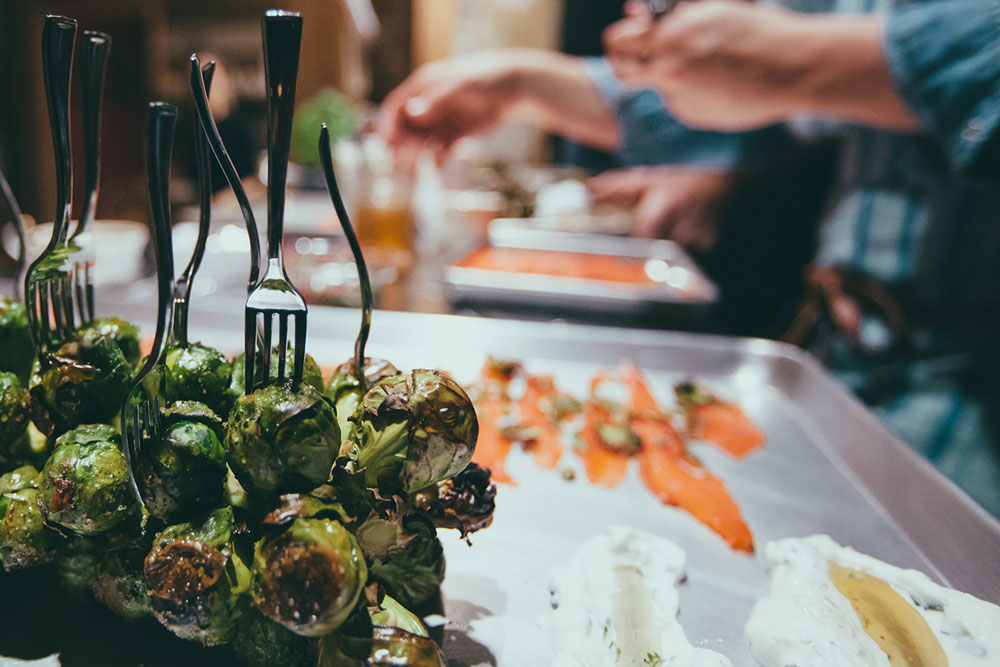
As time passed, I was about finished with the entrée I had ordered and I was a bit bored with having only that, and frankly, I was still hungry. So I thought the worst I could do is bite into one and discreetly spit it back out. My employees might look at me askance, but I could risk that. So I dug in. I stabbed one half of a small Brussels sprout onto my fork and I inspected it. The color wasn’t the bright green I had experienced before. This one had some crusty edges to it that were a darker color. It also had some sort of glaze on it. I closed my eyes and put it in my mouth, preparing for my gag reflex to kick in.
Instead I opened my eyes with a jolt of surprise! What was this in my mouth!
This little green orb tasted GREAT. I was shocked out of my socks!
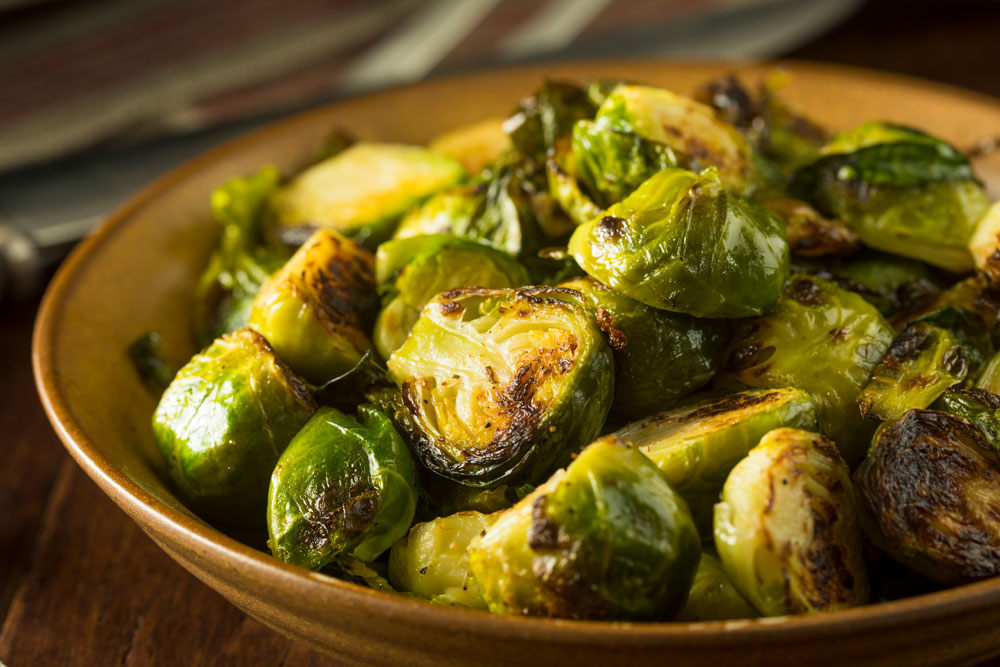
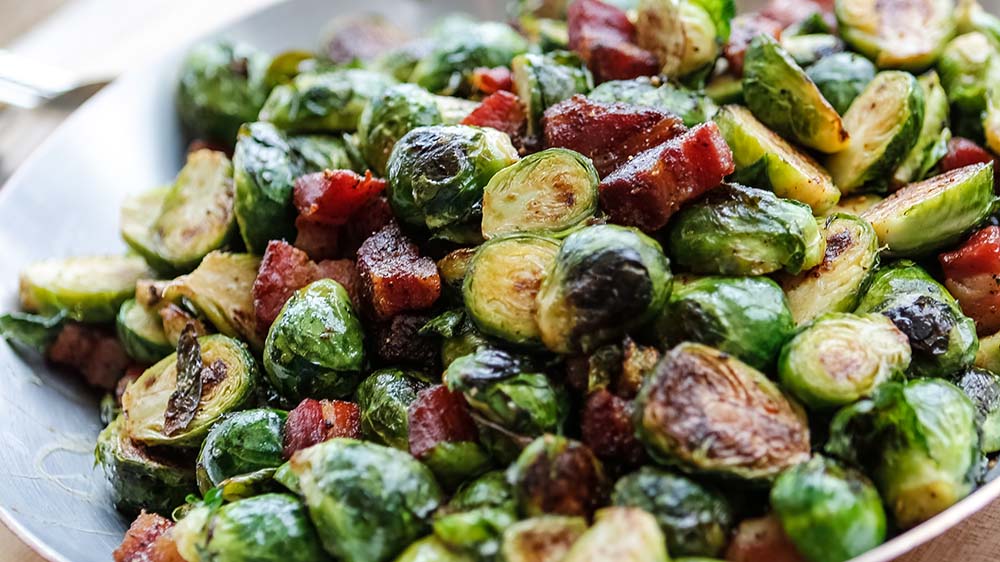
I asked the waitress to bring me back a menu. I wanted to see what the description was for the delightful side dish I was eating. Turns out the Brussels sprouts before me were roasted and caramelized. That was it! The way they were cooked is what made them fantastic. To this day, I always roast my Brussels sprouts now. I find all kinds of ways to coat them or put little bits of extra things in them. I have even added minced pepperoni or dried cranberries. BIG YUM!
I’m so glad I took a risk at 40+ years old and put something in my mouth that I was sure was going to be foul and turned out to be fantastic. It’s never too late to discover new goodness.
Here are a few Brussels sprouts recipes that I now love:
Big YUM!
Cheers,
Cinnamon Pear Infused Water
Plan Z Phase: This is a Z3 (ZReboot) recipe.
When you're dieting, one of the things we recommend is that you increase your water consumption. It makes a huge difference. Dieters who drink 100-125 oz of water per day lose 30% more weight than those who drink less than 70 oz.
There's good science behind this, too. Studies show that when your body unlocks the stingy fat, that it needs a ready vehicle to flush it out of your system. That’s where the water comes in. But for many, water is boring - so here's a great way to jazz it up. I discovered cinnamon water in Costa Rica. I came back to my room after dinner one night and there was a pitcher of water by my bedside. But instead of it being flavored with the usual lemon slices, it was flavored with cinnamon.
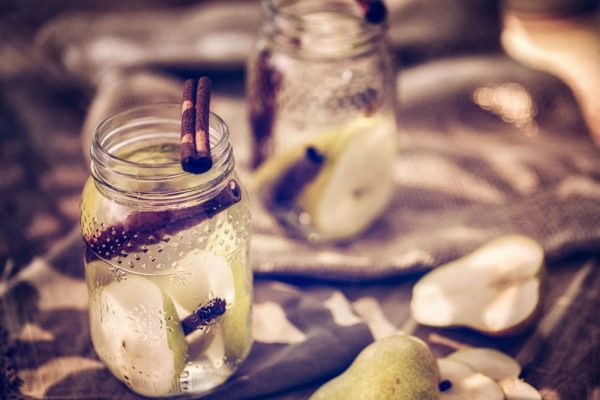
Cinnamon water has a flavor reminiscent of a snicker-doodle or an oatmeal cinnamon cookie. Try adding pear slices – it makes a wonderful summer treat.
Servings: Serves 1
Ingredients:
- water
- a cinnamon stick
- a pear, freshly sliced
Instructions:
Cut about a 1” long piece of cinnamon stick. Then cut that piece again the long way.
Put the cinnamon pieces and pear into a pitcher and pour up to 30 oz of water over.
As the cinnamon steeps, it will pick up the flavor of the cinnamon and give you cinnamon water.
Hint: you’ll get more flavor if you put the pitcher in the sun.
Beats iced tea for me! When you finish the 30 oz, just pour more ice and water over and the process will begin again.
You can even take the cinnamon out and let it dry for reuse.
Enjoy!
Cheers,
Let's Have a Snack...Or Not!
When I was 9 years old I was given permission to make my own favorite snack of the summer. It was called Jello 1- 2 -3.
Strawberry was my favorite. I liked all three layers. Foam on top, sauce in the middle and jelly-jammy on the bottom. Truth be told, the sauce was really my favorite and the jelly-jammy was really just Jell-O. The science of dessert. Jell-O excelled that year. They excelled in marketing too. Foam, sauce and jelly-jammy. It was all just a ploy.
As much as I loved Jello 1-2-3, my mom only let me make it about once a week. Was that because our pocket book was tight? Or was it because my mom was controlling my snack intake? Probably both.
These days, snacking has become an epidemic. This 2010 article was written by a mother desperate to get her point across that childhood obesity isn’t the kid’s fault. It's a parent/school/community problem.
Our food culture has changed quite a lot over the decades. As a kid, when I finished up a game of organized summer softball put on by the city recreation department, I wasn’t taken to McDonald’s to celebrate. I walked home.
After school, there were usually some snacks in our pantry but if there weren’t, I didn’t go complaining to my mom.
Why? Because I already knew what her answer would be -- “Go outside and play til dinner.”
So that's what I did.
No kids brought treats to school to celebrate their birthday. We got a carton of milk each day at our desk. We didn’t get anything to eat with it. Our meals were served in the cafeteria. We couldn't have any food at our desk.
On Valentine’s Day we passed out little cardboard Valentines. There were no candy hearts involved.
Was I deprived? Did I have bad dreams because snacking was not part of our culture when I was growing up? No.
I had plenty of dessert. Our parents let us run after the ice cream truck (back then it was called the Dilly Wagon). Sometimes we had money to buy ice cream. Sometimes we just ran after the truck.
I got a cake on my birthday. My mom even let me pick the flavor of the cake and the color of the frosting roses that would be on top.
She also let me make chocolate chip cookies starting at age 6. I made them most weekends during the winter.
And yet I didn’t snack nearly as much as kids do these days. I didn’t have a weight problem as a young child and at 12, when I thought I had a weight problem, I didn’t, really. I was a normal 12 year old who had a misguided perception that "super-thin" was in.
Read this article that includes some statistics related to how bad our childhood obesity problem is and for extra credit and a face full of scariness, watch Chef Jamie Oliver’s TED Talk on what the kids get to eat at school and beyond. It’s frightening.
But there's hope. When savvy adults change what kids eat, the improvements are dramatic.
Here's some inspiring food for thought:
Psychologist Stephen Ceci writes about an experiment showing how eliminating processed food positively effects IQ:
Cheers,

What's Wrong With Soy?
https://www.youtube.com/watch?v=xz9axfcIsYs
I remember when Zola and I would buy Garden Burgers. We thought they were the healthy alternative to hamburgers. There was usually some soy milk in our refrigerator. Often, I’d have lunch at the Thai restaurant around the corner. Pad Thai with tofu was one of my favorites.
Those days are long gone.
Zola and I are off of soy. We recommend you to get off of soy and soy products. Dr. Eric Berg has some strong opinions and dire warnings about eating soy.
Watch this 3-minute video to get his take.
We hope you have discovered our favorite brand of coconut milk. Unsweetened almond milk is also a good alternative.
Soy is genetically modified and highly estrogenic. It’s bad for your thyroid and your digestion to boot.
Maddening isn’t it?
But maddening in a healthy way, don’t you think?
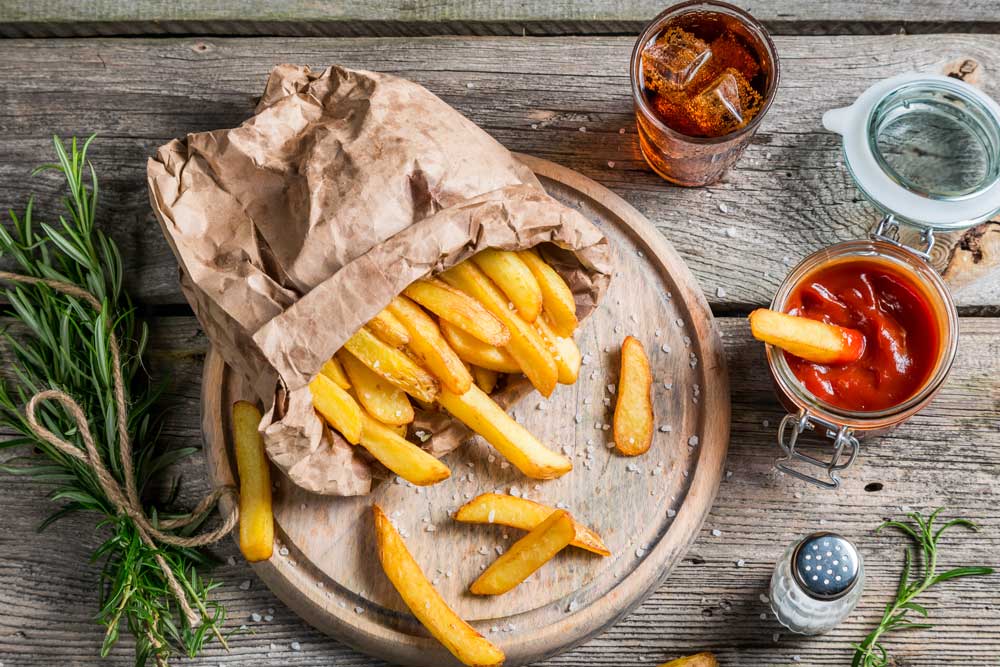
How to Eat French Fries
A low carb instruction manual.
When you go low carb, the first thing they tell you to do is to cut out all the white stuff. The pasta, the bread and the potatoes are the first to go.
I agree with all that.
A few years ago, I dubbed myself The Queen of Four Fries.
And I have perfected that talent without it hitting my waistline.
This is all supposed to be tongue-in-cheek, (in other words, entertaining) but buried in here, too, are pieces of advice that can come in handy (especially when applied to eating French fries).
First, we need a definition of one French fry. I call it a classic cut fry, fresh cut or frozen, 4 – 5 inches long. That’s 15 – 20 inches of French fries if you lay them end to end. That sounds like plenty doesn’t it? Compare that to the huge pile they usually deliver on your plate when you order in a restaurant.
This isn’t shoestring fries, or waffle fries or even steak fries. You’ll have to adapt the visual and the math to convert to those shapes.
So now that we have established portion size, let’s talk about how to eat them.
There’s actually a technique involved.
I have been observing people eating fries for some time now.
There are those who reach into the container with their fingers acting like pincher tools who grab a cluster of fries and jam the whole thing in their mouth. This is most often observed at fast food locations or places that sell skinny fries, but not always.
Then there are those who take one long fry, bite part of it and then immediately push the too long fry into their mouth. Sometimes the mass is so hot and so much that they have to take a gulp of their drink. You don’t really get a lot of enjoyment from a fry when you approach eating them like they are going out of style. Believe me. They are not going out of style.
I’ll admit, in my old days I fell victim to the bad habit of eating fries both of those ways. I’ve changed.
So how to do I eat four fries and get satisfaction without waistline creep?
Here’s how I do it.
I select one fry from the pile. In order to do this, I might even rearrange the fries on my plate looking for one that looks particularly tasty and is done to my liking. I like my fries a little more on the done side – browner.
I pick up my fry between two fingers and a take a bite about one inch long. Then I actually put that fry down on the pile and chew what’s in my mouth. Maybe I drink something or have a bite of whatever else I’m eating. Then I take another bite about the same size. See what’s going on here? I’m tasting my delicious fries and getting the full experience. I’m not inhaling them!
I never eat all four fries in succession. Nope. The protein and veggies take center stage. The fries are a little bonus.
If you’re temped to want to keep going back in and eat more just pick through the pile looking for the ones that are shorter. Much shorter. Those are the little crispy bits. You can have four crispy bits and that equals one fry.
Now for the ketchup. That stuff is a sugar laden nightmare. Dip. Don’t dunk. Just put a bit of ketchup on the tip of the fry for the ketchup experience. I never clean out the ketchup ramekin. It always looks like I never even used it when I’m done.
Better yet, dip your fries in 1000 Island salad dressing. It has half the carbs of ketchup. I just order some on the side. They always give it to me. No charge.
An order of fries according to Fat Secret’s diet site is 10 fries (yeah, right). The classic cut ones will set you back 16 grams of carbs. If you eat four you are under 8. My husband allows himself five fries. That’s his rule for himself. He’s taller than me.
Just in summary I’ll tell you another quick story:
I used to try to order four fries. It’s only worked once. One fry cook actually counted out four fries and they arrived on my plate just as I asked. Never again. Every other cook always piles them on and leaves the discipline to me.
When I am finished eating and I have that massive pile of fries still sitting on my plate I have had to learn to let go of the guilt. I usually put my paper napkin on top of the fries to let the waitperson know I am finished. I might even push my plate away from me a bit or set it to the side. That’s my signal to myself that I’m not going back in there for more. I’m done and satisfied. Besides, I've spent too much time and effort to lose weight.
Loads of French fries = weight gain, and I'm not going back.
Cheers,