
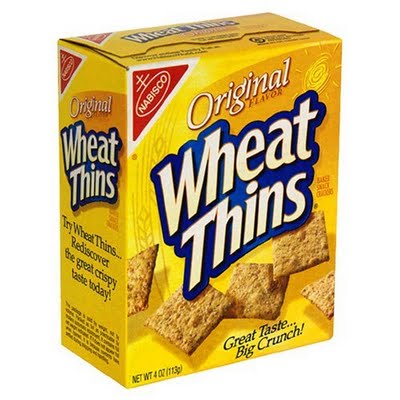
Wheat Thins
Discover the toasted 100 percent whole grain crunch of Nabisco Original Wheat Thins Snacks. These wheat snacks have 21 grams of whole grain per 31-gram serving. They have no high fructose corn syrup and are toasted instead of fried for an even healthier treat. Enjoy these Wheat Thins Whole Grain Snacks at home, in the car or anywhere you want to have a bite-sized snack on ZReduction that can keep you fueled for the day.
Nabisco Wheat Thins Original Snacks:
- Great taste! Now with 100% whole grain
- No high fructose corn syrup
- 16 oz Nabisco Snacks are always toasted, never fried
- Family size!
- 21 grams of whole grain per 31-gram serving
Note: These crackers have sugar in them, but the small amount of sugar in the few crackers you will eat is not enough to stall your weight loss. Unfortunately, there's sugar in almost everything these days.
Serving Size: 4 crackers
Enjoy!
Cheers,

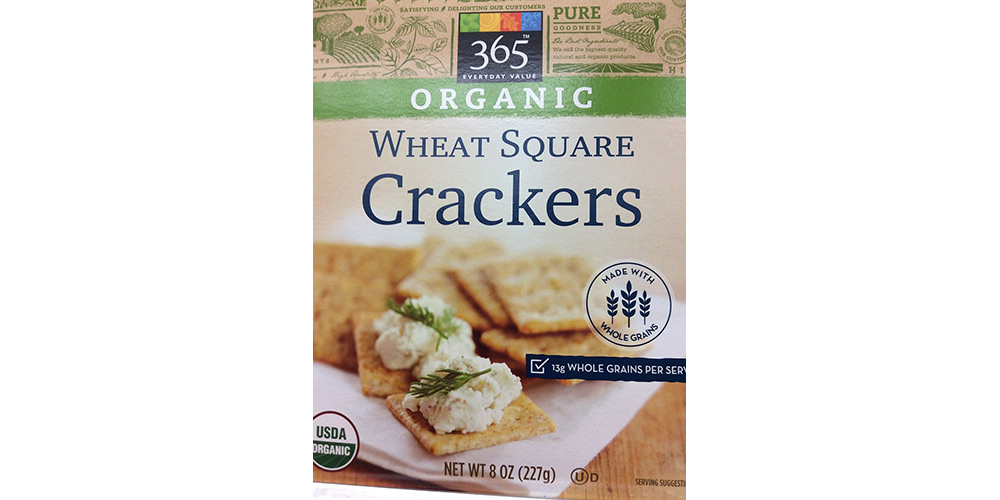
365 Organic Wheat Square Crackers
These bite-sized Organic Wheat Square Crackers are thin, crisp and full of flavor. They're baked with organic whole wheat flour and seasoned with salt and just enough cane sugar to coax the natural sweetness of wheat into the foreground. Simple and versatile, these crackers are great for snacking and lunch boxes and are excellent with spicy, savory dips.
Note: These crackers have sugar in them, but the small amount of sugar in the few crackers you will eat is not enough to stall your weight loss on ZReduction. Unfortunately, there's sugar in almost everything these days. This is one of the better crackers out there.
Serving Size: 5 crackers
Enjoy!
Cheers,
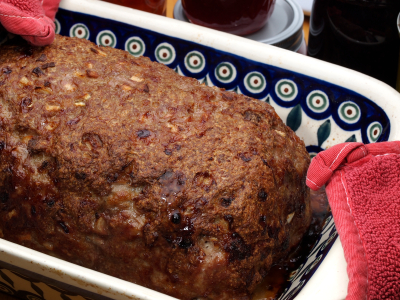
Kickin Chicken Meatloaf
Plan Z Phase: This is a Z3 (ZReboot) recipe. Get ready to 'kick' up your dinner with this recipe from Dieter Rebecca. She used a combination of ground chicken and Italian sausage for an extra boost of flavor. She said it was kind of a fluke because she had to cook up the ground chicken in her fridge. Turns out though, she created a unique and delicious version of this American classic.
Servings: Serves 4-6. Cut in 1" slices. One serving is one slice.
Ingredients:
- 1 pound of ground chicken
- 1 pound of Italian sausage
- 1/2 cup of diced onion
- 1 egg
- 1/4 cup ground Melba toast (I used sea salt flavor)
- 1 tsp mustard
- 1 tsp black pepper
- 2 Tbsp Worcestershire sauce
- 1 tsp oregano
- grated sea salt, to taste
- olive oil spray
Instructions:
Preheat oven to 350 degrees.
Put your ground chicken and Italian sausage in a big bowl. Add the onion, egg, ground Melba toast, black pepper, Worcestershire sauce, oregano, and salt.
Now, it's time to roll up your sleeves! Get your hands in there and mix everything until nicely combined.
Grease a loaf pan with olive oil spray. Transfer your meatloaf mixture to the pan. Spread everything out evenly. You can shape your meatloaf in different ways. I like to make mine higher in the middle than at the ends. But, it is your choice.
Bake in the oven at 350 degrees for 1 hour. After 1 hour take your meatloaf out of the oven. There will probably be a lot of oil in the pan, so be careful. Let the loaf cool for 10 minutes before slicing. You should be able to get around six 1" slices from the loaf.
You can serve a slice of the meatloaf with 1 cup of French cut green beans lightly sauteed in garlic and butter on the side. This will be your veggie portion.
Enjoy!
Cheers,
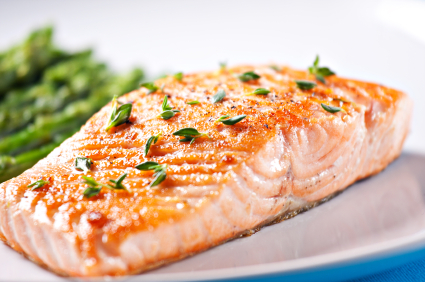
Steamed Salmon with Asparagus, Snow Peas, and Spinach
Plan Z Phase: This is a Z2 (ZReduction) recipe. Thanks to Dieter Brian of WVJS Breakfast Bunch for sending us his take on a simple spring salmon recipe.
Servings: Serves 2
Ingredients:
- 2 6-8 oz salmon fillets
- 1 cup asparagus, cut into bite-size pieces
- 1/2 cup snow peas
- 1/2 cup onion, sliced
- 2 Tbl of lemon juice
- 1 Tbl vinegar. You can play around with different types. White wine, champagne, and balsamic are all good options
- 1 sprig of fresh dill weed (fresh will work best for this recipe, but if you cannot find fresh substitute 1 tsp of dried dill weed)
- olive oil spray
- grated sea salt and pepper
- 1 cup of spinach
Instructions:
Press salmon fillets between paper towels to make sure they are dry. Season with salt and pepper. Spray both sides liberally with olive oil spray
Set a non-stick pan to medium high-heat. When the pan is nice and hot lay the salmon skin-side-down. Reduce heat to medium-low. Cook salmon until skin is nice and crisp. 5-6 minutes. Remove salmon fillets from the pan.
To the skillet add the asparagus, snow peas, and sliced onion. Place the salmon skin-side-up on top of the veggies. Lay the dill weed on top of the salmon. Cover everything with fresh spinach.
Add a Tbl of vinegar and 2 Tbl of lemon juice to the pan and cover. Steam for 10 minutes.
WOW! Big Yum!
Cheers,
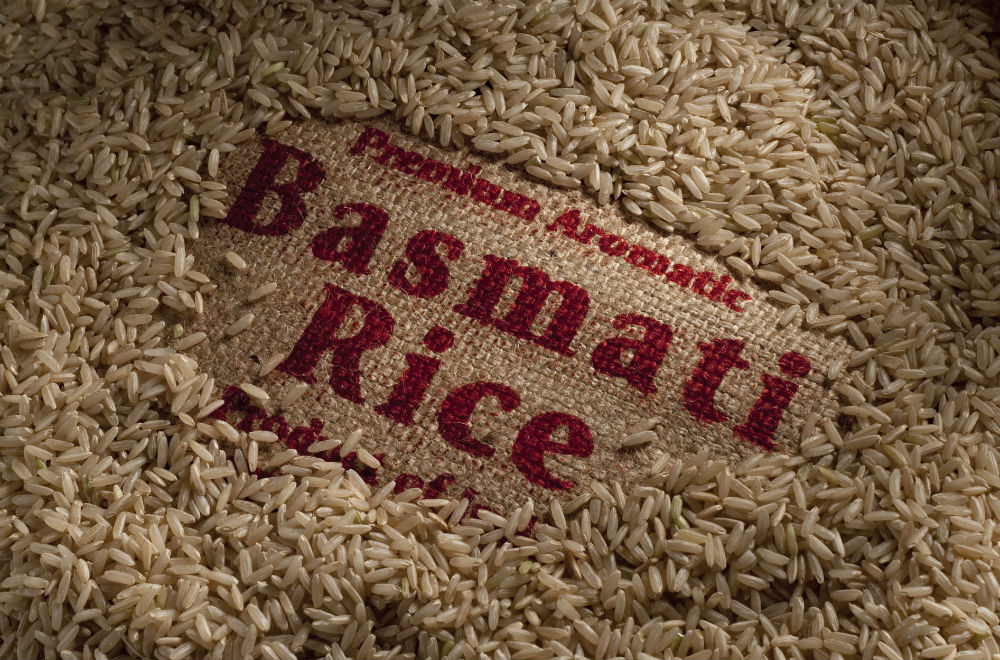
Rice. A Four Letter Word
When I was growing up, the only rice brand I was familiar with was Uncle Ben’s. Maybe we also had some long grain, wild rice from Minnesota on our grocery shelves, but that would have been it.
With the proliferation of products available on the shelves at grocery stores these days, the “rice section” at my local store now takes up half an aisle. A long aisle.
I went looking for rice the other day. I have not eaten rice in over five years, so it was quite a surprise for me to learn some of the new offerings. In my big dinner party days, I had come to depend on Arborio rice for my Italian dishes and Basmati rice for my Indian dishes, but I had never heard of things like Kasmati, Texmati, Jasmati, or sushi rice. Of course brown rice has become more popular and you would not believe the number of rice packets containing the extra spices and herbs to make all kinds of processed food side dishes and entrees. It boggled my mind.
I was in the mood to design a new curry dish, so I decided to take a leap and offer a bit of rice as part of the dish assembly. It’s optional in my mind. The dish tastes great without any rice but since it’s so traditional to curry dishes I thought I’d jump in and delve a little more into rice options.
First off, how much is a portion? For me, a portion is ¼ cup COOKED. The kasmati rice container I bought suggests a portion is ¼ cup DRY. That would make about two cups of cooked rice. Each portion would come in at 34 grams of carbs. (Almost all rice comes in at the same amount of carbs, so factor that in). 34 grams of carbs is about 1/3 - ½ the number of carbs most humans can consume in a day before they start to get fatter. You won’t catch me being sucked into cooking a ¼ cup dry per person. That’s an insane amount of carbohydrate intake in a single ingredient in my meal. I’d rather take my chances with a cupcake! The average-sized chocolate cupcake with chocolate frosting comes in at 29 grams of carbs.
Do you see what I am trying to get across, people? It doesn’t have to have sugar on the ingredients label to be really dangerous to weight maintenance!
So a quarter cup it is.
And how often would I do it? Maybe once a quarter. I allow myself a pasta entree once a quarter, too.
My solution to most additions to a meal like this is baby spinach. If I grab a big handful (or even a smaller handful) of baby spinach and put it raw into the bottom of the bowl I can be fully satisfied eating my curry with the spinach in the bottom. The hot curry dish heats up the spinach and basically cooks it. BIG YUM.
So as the British would say, “Enjoy a good curry.” If I order one in a restaurant I’m going to ask the waiter to leave out the rice. I’ll be much happier without it, and so will my waistline.
Cheers,

Why Aspartame Is Not the Answer
In the late 90's a fearless WTTG Local DC Independent FOX reporter "Aileen Sirgany" did a story on on aspartame. This is the nearly complete original broadcast.
As all copies known to exist beyond this were destroyed by FOX, I strongly encourage you to watch and share.


Why We Get Fat - Gary Taubes
Science writer and physicist Gary Taubes gives a speech at OSUMC (Ohio State University Medical Center) on why we get fat, what causes obesity, and what doesn’t cause obesity.
Mexican Chicken Salad (SUPER EASY)
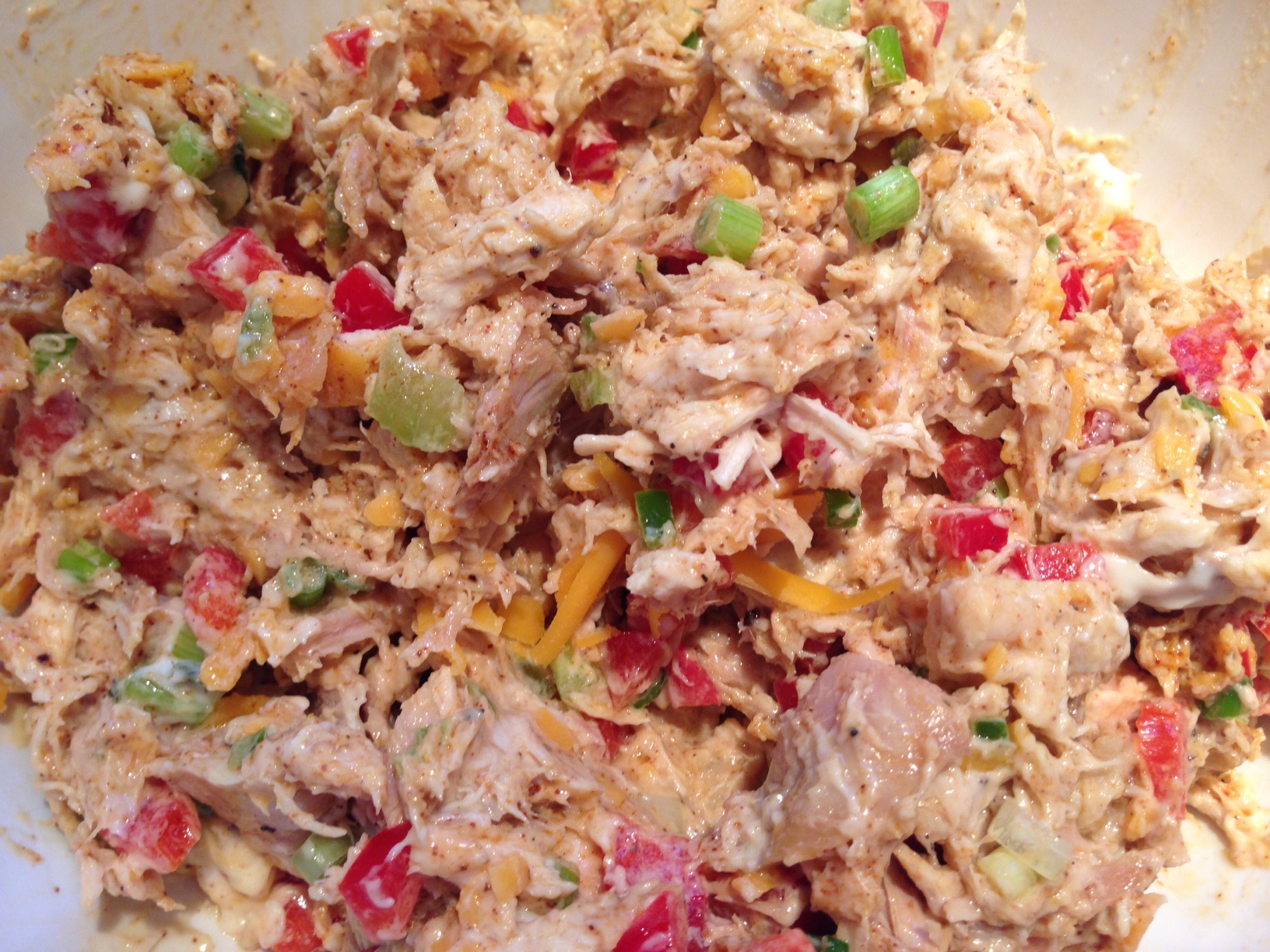
Plan Z Phase: This is a Z3 (ZReboot) Recipe. You don’t even have to cook to make this dish! It’s just pick apart a chicken, chop up the veggies and stir the ingredients together. If your teenaged kids like Mexican, let them make this one!
Servings: Serves 4 (depending on the size of your rotisserie chicken)
Ingredients:
- 1 rotisserie chicken (I use plain, roasted). This will save you time. To save money you can cook up chicken breasts and cut them up or shred them)
- 1 rib of celery, diced
- 4 – 6 scallions, remove root end and chop the whites and part of the greens
- ½ jalapeno, minced. (3 tsp)
- ½ sweet, red, bell pepper (1 cup)
- ½ tsp of ground garlic
- 1 cup of shredded cheddar cheese (preferably off the block)
- 1 cup of mayonnaise (or to your taste)
- 1 tsp of ground cumin
- 1 tsp of chili powder (your choice. I used chipotle so it was smokier)
- ground sea salt to taste
- optional: 1 avocado cut into chunks
Instructions:
While you are taking apart your rotisserie chicken, remove the skin and chop or shred the meat and put it into a bowl. Throw away bones etc.
In the bowl add all of the other ingredients except the avocado. Stir to mix it all up. Taste to see if you want to add more salt, chili powder or cumin.
If it’s good, you’re good to serve. All you have to do is decide how you are going to serve it. Will this be a big scoop of chicken salad served over salad greens? Will it be a scoop serve in a hollowed-out tomato? A big, juicy summer one? Or if you are in Z3.5 you can serve it open-faced over a slice of low carb toast. Butter the toast and pile it on.
Remember that the avocado will turn brown. I don’t stir it into the salad. I just sprinkle on the chunks or mash them onto the bread. The avocado and the butter keep your insulin from spiking when you eat the toast.
Enjoy!
Cheers,
Sugar: The Bitter Truth, by Robert Lustig
If you think Gary Taubes is hard to read or watch, Dr. Robert H. Lustig may not be your cup of tea. But if you are tempted to put sugar in your tea or want to find out what causes sugar cravings, you’ve got to watch this video and share it with your family. As I write this 334,952 people have clicked on this lecture. Whether they watched all 1-hour 29-minutes and 28 seconds of it is another thing.
This is mission critical information for all Plan Z Insiders. It amplifies Taubes’ work and adds powerful new information to fat proof your life. The food companies know what they are doing to us, but they are addicted to profits and not creating healthy foods.
Plan Z Insider Dr. Steve brought this lecture to my attention. I am bringing it to your attention. Watch the first 20-minutes to get his take on “The Coca-Cola Conspiracy.” The middle is filled with a very scientific look at how sugar (glucose and fructose) is metabolized and how your body deals with fructose.
Dr. Lustig’s lecture will help you understand why you never want to go back to eating processed foods again. I suggest you watch the first half hour and then fast forward to his conclusions. Then, if you want to get all of the science, watch the middle.
Watch this and share the video with everyone you care about.
How Cooking Can Change Your Life
Renowned activist and author Michael Pollan argues that cooking is one of the simplest and most important steps people can take to improve their family’s health, build communities, fix our broken food system, and break our growing dependence on corporations. The event was chaired by Tim Lang, professor of Food Policy at City University London.

The Scientist and the Stairmaster
If there’s a little voice in your head (or a know-it-all at work) saying you have to exercise to lose weight, make sure you’re up to speed on this article.
THE SCIENTIST AND THE STAIRMASTER
WHY MOST OF US BELIEVE THAT EXERCISE MAKES US THINNER—AND WHY WE’RE WRONG.
by Gary Taubes
Let us begin with a short quiz: a few questions to ponder during the 30 (or 60 or 90) minutes a day you spend burning off excess calories at the gym, or perhaps while feeling guilty because you’re not so engaged. If lean people are more physically active than fat people—one fact in the often-murky science of weight control that’s been established beyond reasonable doubt— does that mean that working out will make a fat person lean? Does it mean that sitting around will make a lean person fat? How about a mathematical variation on these questions: Let’s say we go to the gym and burn off 3,500 calories every week—that’s 700 calories a session, five times a week. Since a pound of fat is equivalent to 3,500 calories, does that mean we’ll be a pound slimmer for every week we exercise? And will we continue to slim down at this pace for as long as we continue to exercise?
For most of us, fear of flab is the reason we exercise, the motivation that drives us to the gym. It’s also why public-health authorities have taken to encouraging ever more exercise as part of a healthy lifestyle. If we’re fat or fatter than ideal, we work out. Burn calories. Expend energy. Still fat? Burn more. The dietary guidelines of the U.S. Department of Agriculture, for instance, now recommend that we engage in up to 60 minutes daily of “moderate to vigorous intensity” physical activity just to maintain weight—that is, keep us from fattening further. Considering the ubiquity of the message, the hold it has on our lives, and the elegant simplicity of the notion—burn calories, lose weight—wouldn’t it be nice to believe it were true? The catch is that science suggests it’s not, and so the answer to all of the above quiz questions is “no.”
Just last month, the American Heart Association and the American College of Sports Medicine published joint guidelines for physical activity and health. They suggested that 30 minutes of moderate physical activity five days a week is necessary to “promote and maintain health.” What they didn’t say, though, was that more physical activity will lead us to lose weight. Indeed, the best they could say about the relationship between fat and exercise was this: “It is reasonable to assume that persons with relatively high daily energy expenditures would be less likely to gain weight over time, compared with those who have low energy expenditures. So far, data to support this hypothesis are not particularly compelling.” In other words, despite half a century of efforts to prove otherwise, scientists still can’t say that exercise will help keep off the pounds.
The 30 minutes recommended by the AHA-ACSM report is a departure from the recent guidelines of other authoritative organizations—the Institute of Medicine of the National Academies and the International Association for the Study of Obesity—both of which, like the USDA, have recommended that we exercise for up to 60 minutes a day to avoid what the USDA calls “unhealthy weight gain.” But the reason for this 60-minute recommendation is precisely that so little evidence exists to support the notion that exercising less has any effect.
The report that these experts cite most often as grounds for their assessments was published in 2000 by two Finnish researchers who surveyed all the relevant research on exercise and weight of the previous twenty years. Yet the Finnish report, the most scientifically rigorous review of the evidence to date, can hardly be said to have cleared up the matter. When the Finnish investigators looked at the results of the dozen best-constructed experimental trials that addressed weight maintenance—that is, successful dieters who were trying to keep off the pounds they had shed—they found that everyone regains weight. And depending on the type of trial, exercise would either decrease the rate of that gain (by 3.2 ounces per month) or increase its rate (by 1.8 ounces). As the Finns themselves concluded, with characteristic understatement, the relationship between exercise and weight is “more complex” than they might otherwise have imagined.
This is not to say that there aren’t excellent reasons to be physically active, as these reports invariably point out. We might just enjoy exercise. We may increase our overall fitness; we may live longer, perhaps by reducing our risk of heart disease or diabetes; we’ll probably feel better about ourselves. (Of course, this may be purely a cultural phenomenon. It’s hard to imagine that the French, for instance, would improve their self-esteem by spending more time at the gym.) But there’s no reason to think that we will lose any significant amount of weight, and little reason to think we will prevent ourselves from gaining it.

The one thing that might be said about exercise with certainty is that it tends to makes us hungry. Maybe not immediately, but eventually. Burn more calories and the odds are very good that we’ll consume more as well. And this simple fact alone might explain both the scientific evidence and a nation’s worth of sorely disappointing anecdotal experience.
It’s difficult to get health authorities to talk about the disconnect between their official recommendations and the scientific evidence that underlies it because they want to encourage us to exercise, even if their primary reason for doing so is highly debatable. Steve Blair, for instance, a University of South Carolina exercise scientist and a co-author of the AHA-ACSM guidelines, says he was “short, fat, and bald” when he started running in his thirties and he is short, fatter, and balder now, at age 68. In the intervening years, he estimates, he has run close to 80,000 miles and gained about 30 pounds.
When I asked Blair whether he thought he might be leaner had he run even more, he had to think about it. “I don’t see how I could have been more active,” he said. “Thirty years ago, I was running 50 miles a week. I had no time to do more. But if I could have gone out over the last couple of decades for two to three hours a day, maybe I would not have gained this weight.” And maybe he would have anyway. If we trust the AHA-ACSM report he co-authored, there is little reason to believe that the amount he runs makes any difference. Nonetheless, Blair personally believes he would be fatter still if he hadn’t been running. Why?
There was a time when virtually no one believed exercise would help a person lose weight. Until the sixties, clinicians who treated obese and overweight patients dismissed the notion as naïve. When Russell Wilder, an obesity and diabetes specialist at the Mayo Clinic, lectured on obesity in 1932, he said his fat patients tended to lose more weight with bed rest, “while unusually strenuous physical exercise slows the rate of loss.”
The problem, as he and his contemporaries saw it, is that light exercise burns an insignificant number of calories, amounts that are undone by comparatively effortless changes in diet. In 1942, Louis Newburgh of the University of Michigan calculated that a 250-pound man expends only three calories climbing a flight of stairs—the equivalent of depriving himself of a quarter-teaspoon of sugar or a hundredth of an ounce of butter. “He will have to climb twenty flights of stairs to rid himself of the energy contained in one slice of bread!” Newburgh observed. So why not skip the stairs, skip the bread, and call it a day?
More-strenuous exercise, these physicians further argued, doesn’t help matters—because it works up an appetite. “Vigorous muscle exercise usually results in immediate demand for a large meal,” noted Hugo Rony of Northwestern University in his 1940 textbook, Obesity and Leanness.“Consistently high or low energy expenditures result in consistently high or low levels of appetite. Thus men doing heavy physical work spontaneously eat more than men engaged in sedentary occupations. Statistics show that the average daily caloric intake of lumberjacks is more than 5,000 calories, while that of tailors is only about 2,500 calories. Persons who change their occupation from light to heavy work or vice versa soon develop corresponding changes in their appetite.” If a tailor becomes a lumberjack and, by doing so, takes to eating like one, why assume that the same won’t happen, albeit on a lesser scale, to an overweight tailor who decides to work out like a lumberjack for an hour a day?
Credit for why we came to believe otherwise goes to one man, Jean Mayer, who began his career at Harvard in the early fifties, went on to become the most influential nutritionist in the country, and then, for sixteen years, served as president of Tufts University (where there is now a Jean Mayer USDA Human Nutrition Research Center on Aging). As an authority on human weight regulation, Mayer was among the very first of a new breed, a type that has since come to dominate the field. His predecessors—Wilder, Rony, Newburgh, and others—had all been physicians who worked closely with obese and overweight patients. Mayer was not. His training was in physiological chemistry; he had obtained a doctorate at Yale with a dissertation on the interrelationship of vitamins A and C in rats. In the ensuing decades, he would publish hundreds of papers on different aspects of nutrition, including why we get fat, but he never had to reduce obese patients as part of his clinical obligation, and so his hypotheses were less fettered by anecdotal or real-life experience.
As early as 1953, after just a few years of research on laboratory mice, Mayer began extolling the virtues of exercise for weight control. By 1959, the New York Times was crediting him with having “debunked [the] popular theories” that exercise played little role in weight control. Mayer knew that the obese often eat no more than the lean and occasionally even less. This seemed to exclude gluttony as a cause of their weight gain, which meant that these fat people had to be less physically active. Otherwise, how could they take in more calories than they expend and so become fat?
Through the sixties, Mayer documented the relationship between inactivity and the overweight. He noted that fat high-school girls ate “several hundred calories less” than lean classmates. “The laws of thermodynamics were, however, not flouted by this finding,” he wrote, because the obese girls expended less energy than the lean: They were much less active; they spent four times as many hours watching television. Mayer also studied infants. “The striking phenomenon is that the fatter babies were quiet, placid babies that had moderate intake,” Mayer reported, “whereas the babies who had the highest intake tended to be very thin babies, cried a lot, moved a lot, and became very tense.” Thus, Mayer concluded, “some individuals are born very quiet, inactive, and placid and with moderate intake get fat, and some individuals from the very beginning are very active and do not get particularly fat even with high intakes.”
It was Mayer who pioneered the now-ubiquitous practice of implicating sedentary living as the “most important factor” leading to obesity and the chronic diseases that accompany it. Modern Americans, said Mayer, were inert compared with their “pioneer forebears” who were “constantly engaged in hard physical labor.” Every modern convenience, by this logic, from power windows to the electric toothbrush, only serves to minimize the calories we expend. “The development of obesity,” Mayer wrote in 1968, “is to a large extent the result of the lack of foresight of a civilization which spends tens of billions annually on cars, but is unwilling to include a swimming pool and tennis courts in the plans of every high school.”
Mayer’s hypothesis always had shortcomings, but they were ignored for the same reasons they still are—who wants to openly question the idea that physical activity is a panacea? The first issue is a logical one: That conclusion that the fatter we are, the more sedentary we’re likely to be is actually a correlation; it tells us nothing about what is cause and what is effect. “It is a common observation,” noted Rony in 1941, “that many obese persons are lazy, i.e., show decreased impulse to muscle activity. This may be, in part, an effect that excess weight would have on the activity impulse of any normal person.” Equally possible is that obesity and physical inactivity are both symptoms of the same underlying cause.
The one thing that might be said about exercise with certainty is that it tends to make us hungry. Maybe not immediately, but eventually. Burn more calories and the odds are very good that we’ll consume more as well.
This logical problem was then obscured by Mayer’s all-out attack on the role of hunger. Mayer acknowledged that exercise could make us hungrier, but he said it wasn’t necessarily the case. This was the heart of Mayer’s message—a purported loophole in the relationship between appetite and physical activity. “If exercise is decreased below a certain point, food intake no longer decreases,” said Mayer. “In other words, walking one half-hour a day may be equivalent to only four slices of bread, but if you don’t walk the half-hour, you still want to eat the four slices.”
Mayer based this conclusion on two (and only two) of his own studies from the mid-fifties. The first purported to demonstrate that laboratory rats exercised for a few hours every day will eat less than rats that don’t exercise at all. But this would never be replicated. In more recent experiments, the more rats run the more rats eat; weights remain unchanged. And when rats are retired from these exercise programs, they eat more than ever and gain weight with age more rapidly than rats that were allowed to remain sedentary. With hamsters and gerbils, exercise increases body weight and body-fat percentage. So exercising makes these particular rodents fatter, not leaner.
Mayer’s second study was an assessment of the diet, physical activity, and weights of workers and merchants at a mill in West Bengal, India. This article is still cited—by the Institute of Medicine, for instance—as perhaps the only existing evidence that physical activity and appetite do not necessarily go hand in hand. But it, too, has never been replicated, despite (or perhaps because of) a half-century of improvements in methods of assessing diet and energy expenditure in humans.
It helped that Mayer promoted his pro-exercise message with a fervor akin to a moral crusade. In 1966, Mayer was the primary author of a U.S. Public Health Service report advocating increased physical activity along with diet as the best way to lose weight. In 1969, Mayer chaired Richard Nixon’s White House Conference on Food, Nutrition, and Health. “The successful treatment of obesity must involve far-reaching changes in lifestyle,” the conference report concludes. “These changes include alterations of dietary patterns and patterns of physical activity.” In 1972, Mayer began writing a syndicated newspaper column on nutrition: Exercise, Mayer now wrote, sounding suspiciously like a diet doctor selling a patent claim, will make “weight melt away faster,” and “contrary to popular belief, exercise won’t stimulate your appetite.”
Our culture of physical exercise began only in the late sixties, coincident with Mayer’s crusade, which explains why our parents might not have been quite so devoted to the idea of spending their leisure time perspiring profusely. In 1977, the New York Times was covering the “exercise explosion” that had come about because the conventional wisdom of the sixties that exercise was “bad for you” had been transformed into the “new conventional wisdom—that strenuous exercise is good for you.” When the Washington Post estimated in 1980 that 100 million Americans were partaking in the “new fitness revolution”—coincident with the start of the current obesity epidemic—it also noted that most of them “would have been derided as ‘health nuts’” only a decade earlier.
Meanwhile, the evidence simply never came around to support Mayer’s hypothesis, even though our beliefs did. My favorite study of the effect of physical activity on weight loss was published in 1989 by a team of Danish researchers. Over the course of eighteen months the Danes trained nonathletes to run a marathon. At the end of this training period, the eighteen men in the study had lost an average of five pounds of body fat. As for the nine women subjects, the Danes reported, “no change in body composition was observed.” That same year, F. Xavier Pi-Sunyer, then director of the St. Luke’s–Roosevelt Hospital Obesity Research Center in New York, reviewed the studies on exercise and weight, and his conclusion was identical to that of the Finnish review’s eleven years later: “Decreases, increases, and no changes in body weight and body composition have been observed,” Pi-Sunyer reported.
Granted, all this still doesn’t explain why we bought into Mayer’s idea that we could exercise more and not compensate by eating more. One simple reason is that the health reporters bought it, and we were reading their articles, not the research literature itself. In 1977, for instance, the National Institutes of Health hosted its second conference on obesity and weight control. “The importance of exercise in weight control is less than might be believed,” the assembled experts concluded, “because increases in energy expenditure due to exercise also tend to increase food consumption, and it is not possible to predict whether the increased caloric output will be outweighed by the greater food intake.” That same year, The New York Times Magazine reported that there was “now strong evidence that regular exercise can and does result in substantial and—so long as the exercise is continued—permanent weight loss.” By 1990, a year after Pi-Sunyer’s pessimistic assessment of the evidence, Newsweek was declaring exercise an “essential” element of any weight-loss program, and the Times had stated that on those infrequent occasions “when exercise isn’t enough” to lose weight, “you must also make sure you don’t overeat.”
As for the authorities themselves, the primary factor fueling their belief in the weight-maintaining benefits of exercise was their natural reluctance to acknowledge otherwise. Although one couldn’t help but be “underwhelmed by” the evidence, as Mayer’s student Judith Stern, a UC Davis nutritionist, wrote in 1986, it would be “shortsighted” to say that exercise was ineffective because it meant ignoring the possible contributions of exercise to the prevention of obesity and to the maintenance of weight loss that might be induced by diet. These, of course, had never been demonstrated either, but they hadn’t been ruled out. This faith-based philosophy came to dominate scientific discussions on exercise and weight, but it couldn’t be reconciled with the simple notion that appetite and calories consumed will increase with an increase in physical activity. Hence, the idea of working up an appetite was jettisoned. Clinicians, researchers, exercise physiologists, even personal trainers at the local gym took to thinking and talking about hunger as though it were a phenomenon exclusive to the brain, a question of willpower (whatever that is), not the natural consequence of a body trying to replenish itself with energy.
Ultimately, the relationship between physical activity and fatness comes down to the question of cause and effect. Is Lance Armstrong excessively lean because he burns off a few thousand calories a day cycling, or is he driven to expend that energy because his body is constitutionally set against storing calories as fat? If his fat tissue is resistant to accumulating calories, his body has little choice but to burn them as quickly as possible: what Rony and his contemporaries called the “activity impulse”—a physiological drive, not a conscious one. His body is telling him to get on his bike and ride, not his mind. Those of us who run to fat would have the opposite problem. Our fat tissue wants to store calories, leaving our muscles with a relative dearth of energy to burn. It’s not willpower we lack, but fuel.
For the last 60 years, researchers studying obesity and weight regulation have insisted on treating the human body as a thermodynamic black box: Calories go in one side, they come out the other, and the difference (calories in minus calories out) ends up as either more or less fat. The fat tissue, in this thermodynamic model, has nothing to say in the matter. Thus the official recommendations to eat less and exercise more and assuredly you’ll get thinner. (Or at least not fatter.) And in the strict sense this is true—you can starve a human, or a rat, and he will indeed lose weight—but that misses the point. Humans, rats, and all living organisms are ruled by biology, not thermodynamics. When we deprive ourselves of food, we get hungry. When we push ourselves physically, we get tired.
Our bodies, like all living organisms, have evolved a fantastically complex web of feedback loops. These physiological mechanisms serve fundamentally to work against the inevitable pull of thermodynamics (which is entropy, a.k.a. death) and so make life possible. The necessary condition of life, as the great French physiologist Claude Bernard noted 140 years ago, is to keep the internal environment of an organism stable and conducive to life, regardless of what’s happening on the outside. This is what the Harvard physiologist Walter Cannon, in the thirties, called homeostasis—or the “wisdom of the body,” as he put it. “Somehow the unstable stuff of which we are composed,” Cannon wrote, “had learned the trick of maintaining stability.”
The key is that among the many things regulated in this homeostatic system—along with blood pressure and blood sugar, body temperature, respiration, etc.—is the amount of fat we carry. From this biological or homeostatic perspective, lean people are not those who have the willpower to exercise more and eat less. They are people whose bodies are programmed to send the calories they consume to the muscles to be burned rather than to the fat tissue to be stored—the Lance Armstrongs of the world. The rest of us tend to go the other way, shunting off calories to fat tissue, where they accumulate to excess. This shunting of calories toward fat cells to be stored or toward the muscles to be burned is a phenomenon known as fuel partitioning.
The job of determining how fuels (glucose and fatty acids) will be used, whether we will store them as fat or burn them for energy, is carried out primarily by the hormone insulin in concert with an enzyme known technically as lipoprotein lipase—LPL, for short. (Sex hormones also interact with LPL, which is why men and women fatten differently.)
In the eighties, biochemists and physiologists worked out how LPL responds to exercise. They found that during a workout, LPL activity increases in muscle tissue, and so our muscle cells suck up fatty acids to use for fuel. Then, when we’re done exercising, LPL activity in the muscle tissue tapers off and LPL activity in our fat tissue spikes, pulling calories into fat cells. This works to return to the fat cells any fat they might have had to surrender—homeostasis, in other words. The more rigorous the exercise, and the more fat lost from our fat tissue, the greater the subsequent increase in LPL activity in the fat cells. Thus, post-workout, we get hungry: Our fat tissue is devoting itself to restoring calories as fat, depriving other tissues and organs of the fuel they need and triggering a compensatory impulse to eat. The feeling of hunger is the brain’s way of trying to satisfy the demands of the body. Just as sweating makes us thirsty, burning off calories makes us hungry.
This research has never been controversial. It’s simply been considered irrelevant by authorities, all too often lean, who have been dead set on blaming fatness on some combination of gluttony, sloth, and perhaps a little genetic predisposition thrown in on the side. But contemplating the means by which we might lose weight without considering the hormonal regulation of fat tissue is like wondering why children grow taller without considering the role of growth hormones. Or, for that matter, like trying to explain the record-breaking triumphs of modern athletes—Barry Bonds, say—and never considering the possibility that steroid hormones (or human growth hormone or insulin) might be involved.
If it’s biology, and not a lack of willpower, that explains why exercise fails so many of us as a weight-loss tool, then we can still find reason for optimism. Since insulin is the primary hormone affecting the activity of LPL on our cells, it’s not surprising that insulin is the primary regulator of how fat we get. “Fat is mobilized [from fat tissue] when insulin secretion diminishes,” the American Medical Association Council on Foods and Nutrition explained back in 1974, before this fact, too, was deemed irrelevant to the question of why we gain weight or the means to lose it. Because insulin determines fat accumulation, it’s quite possible that we get fat not because we eat too much or exercise too little but because we secrete too much insulin or because our insulin levels remain elevated far longer than might be ideal.
To be sure, this is the same logic that leads to other unconventional ideas. As it turns out, it’s carbohydrates—particularly easily digestible carbohydrates and sugars—that primarily stimulate insulin secretion. “Carbohydrates is driving insulin is driving fat,” as George Cahill Jr., a retired Harvard professor of medicine and expert on insulin, recently phrased it for me. So maybe if we eat fewer carbohydrates—in particular the easily digestible simple carbohydrates and sugars—we might lose considerable fat or at least not gain any more, whether we exercise or not. This would explain the slew of recent clinical trials demonstrating that dieters who restrict carbohydrates but not calories invariably lose more weight than dieters who restrict calories but not necessarily carbohydrates. Put simply, it’s quite possible that the foods—potatoes, pasta, rice, bread, pastries, sweets, soda, and beer—that our parents always thought were fattening (back when the medical specialists treating obesity believed that exercise made us hungry) really are fattening. And so if we avoid these foods specifically, we may find our weights more in line with our desires.
As for those people who insist that exercise has been the key to their weight-loss programs, the one thing we’d have to wonder is whether they changed their diets as well. Rare is the person who decides the time has come to lose weight and doesn’t also decide perhaps it’s time to eat fewer sweets, drink less beer, switch to diet soda, and maybe curtail the kind of carb-rich snacks—the potato chips and the candy bars—that might be singularly responsible for driving up their insulin and so their fat.
For the rest of us, it may be time to take a scientific or biological view of our excesses rather than a biblical one. The benefits of exercise include the joys of virtuousness. I worked out today, therefore I can eat fattening foods to my heart’s content. But maybe the causality is reversed here too. Maybe it’s because we eat foods that fatten us that the workout becomes a necessity, the best we can do in the battle against our own fat tissue.
Gary Taubes is the author of Good Calories, Bad Calories: Challenging the Conventional Wisdom on Diet, Weight Control, and Disease (Knopf, October 2), from which this article is adapted.

Wheat Belly: Whole Grain, Organic, Ciabatta or Twinkie...It's All the Same
https://www.youtube.com/embed/uexJlVLbDzI
My husband is an avid reader. One of the books he brought home is Wheat Belly: Lose the Wheat, Lose the Weight and Find Your Way Back to Health. Dr. William Davis is the author.
I used to think eating a Subway sandwich and a Diet Coke was dieting. Now I know better.
Bread is either the staff of life or the stuff of nightmares.
Watch, learn, lose weight and keep it off forever. It’s just 2-minutes 39 seconds.
Of course, when you search for more Wheat Belly or Dr. William Davis videos on YouTube, you can find much longer videos. I just wanted to get Wheat Belly on your radar.
Wonder Bread Builds Strong Bodies 12 Ways . . . Not.
Aspartame: The Bitter Truth Behind this Toxic Sweetener
My fridge used to be filled with diet soda. I drank it all day. Still, I kept getting fatter. I had bad migraines. I had a couple of scary dizzy spells, too.
I don’t have those symptoms any more. I don’t drink diet soda any more.
Coincidence?
Google “aspartame bad.” You’ll find articles and videos that vilify aspartame. You can also find doctors who will tell you it’s just fine.
Start with this six-minute video on Dr. Mercola’s website.
Do your own research. Mine convinced me that diet sodas don’t help you lose weight. And they may contribute to weight gain.
Six thousand products contain aspartame. Why is there an obesity epidemic if everyone is eating diet food?
Cheers,

Garden Experiences
In the 30-plus years that I’ve been gardening I’ve learned a lot about what I can handle and what I can’t. For instance, I quit planting vegetables and fruits decades ago. Seems odd for a food writer, doesn’t it?
But here’s the story. Early on I planted strawberries. They surrounded my little pond and looked beautiful. I looked forward each day to being able to pick the riper ones. I planned to do it when I got home from work. Well, “somebody” beat me to it, day after day, after day.
I’d drive in my driveway and look up in the tree. There was a big, fat squirrel looking back at me, his face stuffed with strawberries; the same strawberries I had planned to pick. As I waved my fist at him, he'd pop each individual strawberry out of this mouth, hold it in his little paws and munch on it. If squirrels could laugh…
The bunnies ate my lettuce.
The deer ate everything else.
I know, I was supposed to plant one of those gardens surrounded by fencing to keep the critters out of my veggies and fruits. But I was too focused on the aesthetic of my garden and I thought the fencing would look unsightly. I stopped planting fruit and veggies and decided to focus on my flowers, bushes and herbs. That worked for me.
Now I live in the big city. My first apartment had a deck on the 5th floor rooftop. I had to learn how to plant an elevated garden that could handle the breezes you get in Chicago up that high. At first I thought I had to plant sturdy plants. That didn’t work. Plants with large leaves would just whip in the wind and the leaves would get all crispy from flapping around. I had to learn to keep things low and more delicate. Seems counter-intuitive, but my garden thrived much better that way. I just had to make sure it got enough water. At 5 stories up, things really dry out fast.
In just a couple of days I’ll be planting my garden. Now I have a deck on the fourth floor. It’s protected by high walls, so I don’t have to worry about wind. I’m going through the process of planning my garden right now. I’ll update you later on what I decide to do, but I know I'm going to have a lot of herbs.
What are your favorite things to plant?
Do you plant veggies and fruits successfully?
Leave me a message in the comments section at the bottom of this article (below the recipe and related posts). Let’s get a conversation going and share some stories.
Cheers,
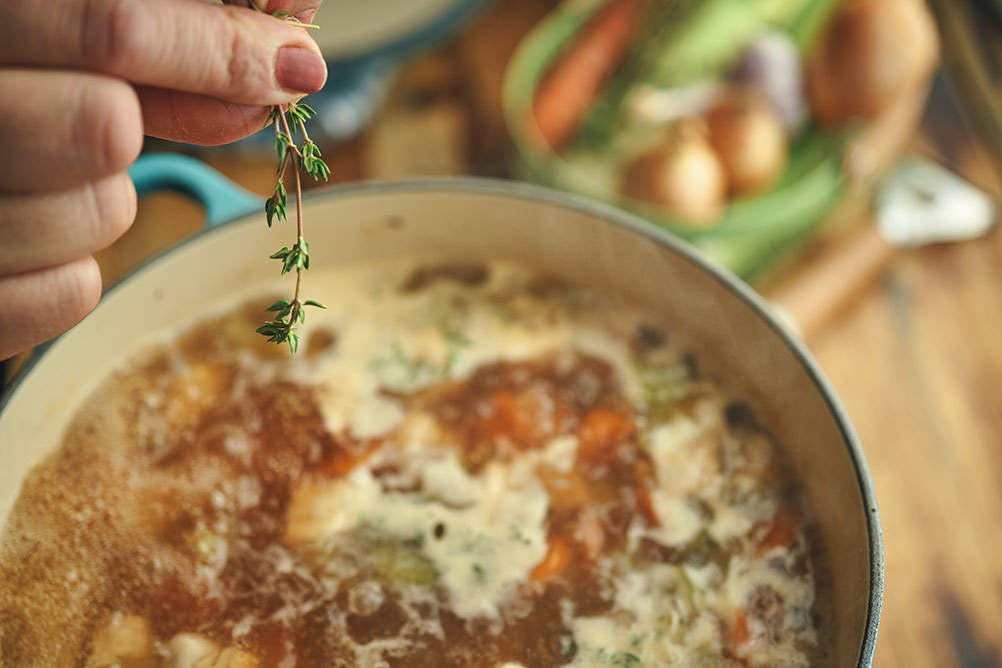
Italian Crockpot Chicken Soup
Plan Z Phase: This is a Z2 (ZReduction) recipe. Dieter Emily sent us this easy to make crock pot weeknight recipe. Emily says, "when I came home from work, it smelled heavenly! This soup has so much flavor and is also quite filling!"
Servings: 1 1/2 cup portions will serve 6. This will count as 1/2 your veggie meal portion. And don't forget you can also have a salad on the side!
Ingredients:
- 3 or 4 large chicken breasts
- 1-2 cups organic chicken broth
- 1/2 cup cream
- 14 oz diced tomatoes
- 1 or 2 cloves chopped garlic (or 2-3 tsp jar garlic)
- 2 tablespoons Italian seasoning
- 1 tablespoon dried basil
- 1/2 onion chopped
- 3-4 stalks celery chopped
- fresh spinach (I used 3/4 of a bag)
Instructions:
Put everything except the cream and the spinach in a crockpot for 6-7 hours on low. With about 30 minutes left use 2 forks to shred the chicken. It is really easy since the breasts have been cooking all day. Then slowly add cream and stir. Add spinach and stir. Leave in the crockpot on low for 30 minutes.
Emily, thank you for that delicious recipe!
Enjoy!
Cheers,
Oh, but Wait! You CAN Maintain Your Weight!
Tips for preventing the yo-yo dieting cycle
You’ve lost a nice chunk of weight. Congratulations! Trouble is most folks just gain it back – and then some. There are tasty ways to prevent weight gain. Make a few minor adjustments and you’re on your way to maintaining your weight loss.
1. Eat 3 times a day. Trick here is to keep from getting too hungry at any point in your day. Start your day with a meal that includes fat. Your brain is mostly made of fat and it runs on fat. So if you want to stay full and focused throughout your morning, target full fat in your breakfast. My go-to is full fat yogurt. Buy the good stuff. Full fat Greek yogurt – plain. Then sweeten it yourself by adding a bit of Truvia instead of all the sugar that is in most yogurt. Add a bit of vanilla. Stir that around. Add your favorite berries -- I even add some nuts on top. Eat that instead of cereal.
2. Snack. After work, the stretch between when I get home and when I get dinner done is too long. I get hungry and don't want to overeat at dinner so I have a little snack. I like to sit and watch the news before I start dinner so I'll eat some nuts. A quarter cup of nuts in a little bowl will do it. You can eat that while you drink your glass of sparkling water, your glass of wine, or your low carb beer. Relax.
 I don’t often eat nuts from a can. Those contain a ton of table salt. Not good. Instead I buy raw nuts and make up a batch of my own snack nuts. Most often I buy walnuts and pecans. I find them in the baking section of the grocery store, not the snack section. Walnuts and pecans are known to be cancer fighters. Raw cashews or macadamia nuts are good, too. Put them in an ovenproof pan. Spray with olive oil spray and then season them. You can use any seasoning mix or sprinkle on things like ground cumin, sea salt, pepper or even cayenne for some zip. They even taste great with your favorite meat rub sprinkled on them. Roast them in your oven at 375 degrees for 10-12 minutes and you’re ready to snack. Make up a big batch on the weekend and keep them in a zip-lock bag and you’re ready for nut snacks all week. The kids can have them after school, too.
3. Use little bowls. You’ll notice I said I sit down with a little bowl of pre-portioned nuts. Little bowls are the secret to making sure you don’t overeat a good thing. Never take the package to the sofa. You’ll eat more than you should. I buy little ramekin-sized bowls for snacks and desserts. I buy smaller bowls for things like my yogurt in the morning, too.
4. Stay away from soda. Soda, whether regular or diet, has been proven to be bad for you. Drink sparkling water if you want fizz. La Croix is one company that makes a ton of great flavors with no artificial sweeteners and no artificial flavors. There are others, too. Read labels. Or just drink plain water. I crave plain water now; just cold, refreshing water.
5. Stay hydrated. Most experts will tell you to take your weight and divide it in half and set a goal to drink that much water in ounces per day, minimum. I drink at least 100 ounces of water at work at my desk. I try to keep a bottle of cold water near me in my garden, too.
Some diet gurus tell you to drink water to stay full. I say, drink the water to keep your system "flowing." Your digestive rate will be more efficient if you have plenty of water in your system.
6. Make what you can eat. This means manage your portions before you sit down to eat. If I’m going to have a chicken dinner with my husband I buy two chicken breast halves, the veggies and my dessert and that’s it. If I’m at the grocery store and I’m buying for more than one day I keep portioning in mind. When dinner is ready, I put on my plate what I am going to eat and I go off to the table and eat it. If I am going to go to the TV room and eat, I do the same thing. I don’t go back to the kitchen to get more food when my plate is clean. If I have made something that has more portions (like a casserole) I pack it up and put it in the fridge or portion it out and put it into storage containers. You can have leftovers around for additional meals if you have the discipline not to dive in a second time the same evening.
7. Think fruit for dessert. It’s as easy as making my raspberry ice cream for dessert. Or take an apple and cut it into cubes or thin slices. Sprinkle it with Truvia and/or pumpkin pie spice or cinnamon. Sit down and watch your favorite TV show eating that. You’ll be amazed how long an apple can last while you’re engrossed in the drama going on in the show. Your kids will be pleasantly surprised with how good fresh fruit can taste.
There are lots of little tricks you can incorporate into your habits to keep your weight in line. These are just a few to get you started.
For This Week's Featured Recipe make yourself a healthy snack to help maintain your weight by trying my Yogurt with Fruit and Nuts.

Enjoy!
Cheers,
Your Cheating Mouth
People are always asking me what the consequences are if they cheat on a diet. I always answer the same way.
It depends.
There are some minor cheats you can make on a diet without putting yourself in the penalty box.
There are other things you can do to cheat on a diet that can have lasting effects and might even sabotage you altogether. The baseline thing you have to remember is that if you cheat you are only hurting yourself. So why do it? If you’re on a diet that has a time limit like Plan Z does (48 days of ZReduction) it’s really not worth it to set yourself back by cheating. You want to maximize your results.
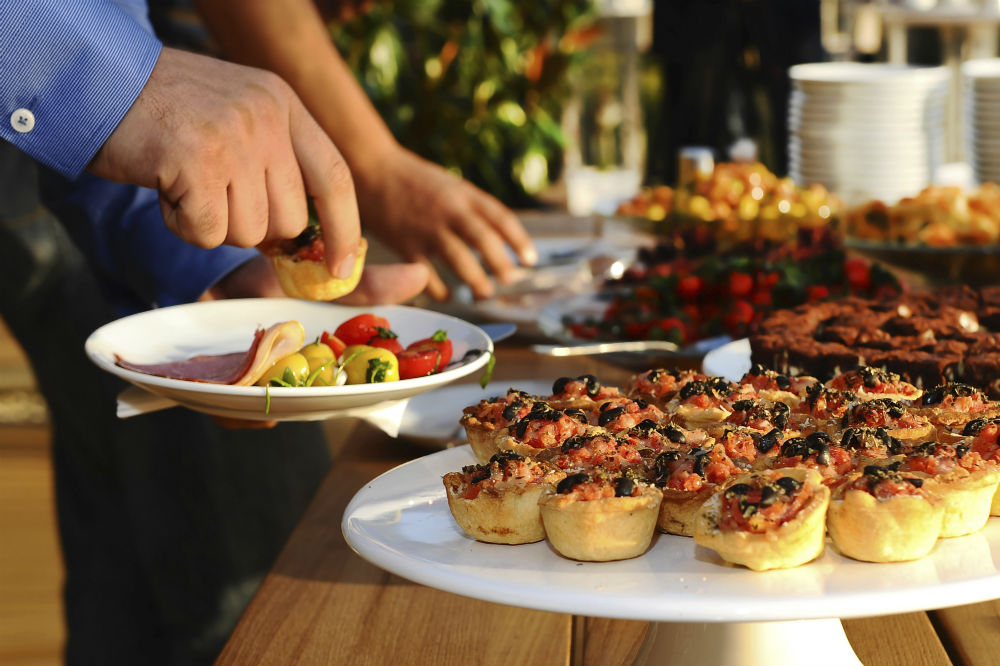
That said, let’s say you’re a guest at a wedding coming up. You know there are going to be temptations all around you. It’s just one day and likely just one meal. If you can’t eat ahead and just socialize, then what’s the strategy if you’re convinced you’re going to cave? Here are some hints on things you can do that you might get away with.
Drinks
If that’s your downfall, your best bet is to have a glass of champagne when they toast the bride and groom, and quit then. That’s about 100 more calories and not a lot of carbs. You’ll probably get away with one glass of any wine. If you don’t like wine and opt for a cocktail, make it a clean one. What do I mean by that? Choose one that’s low carb. That would be a martini, a manhattan or something with soda as a mixer; like vodka/soda. Make it just one. You’re likely to get drunk really fast.
Stay away from the punchbowl, the beer or anything with sugar. Keep one hand full at all other times with a glass of sparkling water with a lime or lemon slice in it. Your pressuring relatives will think you’ve got a vodka-soda in your hand and hopefully leave you alone.
Overeating
If you’re going to over eat, make it the protein and veggies. You can always have a bit of extra steak. Steak energizes your liver and your liver controls your digestive rate. That’s not so bad but make sure it’s lean. I only eat tenderloin when I’m reducing. I know it’s a splurge but it’s the safe bet. You can always have a huge salad; not so much because you feel like you should be a rabbit but because it will take you a long time to eat it and everyone else will be done with their plate and you can just stop. If you are going to over-indulge on any other veggies, pick things like tomatoes, cucumbers and celery. They are all full of water and fiber. Safer bets. Stay very far away from any potatoes.
Appetizers
Head for the shrimp. That’s more low fat protein. The cocktail sauce won't set you back too much, either. Eat just one or two to make it look like you're splurging and then go talk to people and get away from the appetizer buffet.
Dessert
Choose a fruit option, like strawberries and cream, or a fruit custard. If you are hell bent on eating that wedding cake, take just one bite and get up and go to the bathroom or head outside for a breather until they clear the table. If you’ve been going without sugar long enough that stuff isn’t even going to taste good. You might be heading for the nearest planter, or reaching for a napkin to spit it out.
Multiples
This is not about choosing one cheat from each category. It’s really about not cheating but if you must, try to pick your favorite one and not all four. You pick all four and you’ll pay the price. You’ll also be ravenously hungry the next day and will have to go through a bit of detox…again.
I’d rather get an email from you that talks about how proud you are that you didn’t cheat. Those are my favorites and far-and-away the favorites of the people who write them. But, if your cheating mouth is going to get the best of you, at least you have this primer on how to screw up “not so badly.”
For This Week's Featured Recipe we're keeping it light, simple and fresh. My Orange-Strawberry Dessert is super easy to make and will satisfy your sweet tooth without overindulging your waistline.
Enjoy - but don’t enjoy too much.
Cheers,
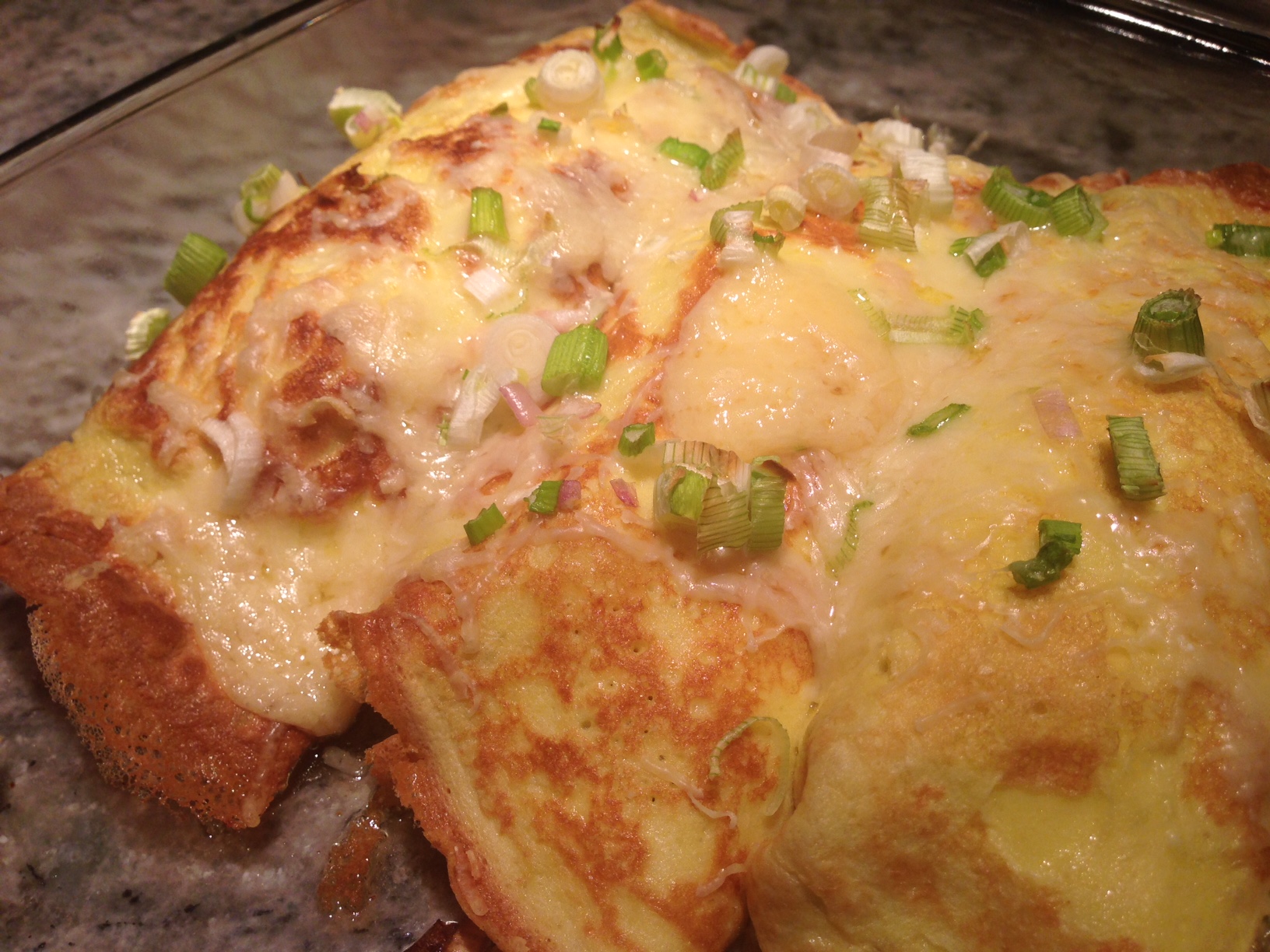
Seafood Crepes
Plan Z Phase: This is a Z3 (ZReboot) recipe. These crepes are very low carb and EASY to make. You can even make them ahead and store them in the refrigerator or freeze them. I made them at the same time I was working on my seafood and sauce for the stuffed crepes but if you’re not that coordinated in the kitchen, you can make the crepes first and just store them. You do have to keep a close eye on the crepes as they cook. Don’t get distracted. It’s much less stressful to make the crepes and then make the sauce. Both come together really fast so you’ll be out of the kitchen in a jiffy anyway.
These make great family or dinner party food. You can make more than one batch for a party.
Servings: Makes 4 entree-sized crepes
Ingredients:
For the Crepes:
- 6 eggs
- ½ cup of heavy cream
- 3 Tbl oil (I use peanut oil or olive oil)
For the Seafood Filling:
- 3 Tbl of butter
- 4 ounces of sliced mushrooms. You can use any ones you like from exotic to plain button mushrooms
- ½ cup of minced shallots
- a whisper of cayenne
- 3 – 4 cups of diced COOKED seafood. You can use scallops, shrimp, crab and/or lobster
- 1/3 cup of whipping cream
- 1 tsp of curry powder (optional)
- 1-1/2 cups of shredded gruyere cheese (or your choice)
- ¼ cup of chopped green onion
Instructions:
Preheat oven to 350 degrees.
For the Crepes:
Whisk ingredients together really well. You can even quickly whiz it with a mixer if you want, or mix it in a blender. Lightly spray butter spray in a medium sauté (8-10”) pan over medium heat. Pour small amount of batter in heated pan and swirl around to spread out thinly. You don’t want to see through it; about 1/8” thick will do it.
Let cook about 2 minutes or until lightly brown at the edges. Carefully flip with a spatula and cook just a few seconds on other side. Remove from pan by flipping it over onto a workspace or large plate. Continue with the rest of the batter, spraying the pan each time.
Stack them on a plate as you get them done. They won’t stick together.
These are not sweet crepes. These are savory ones to be filled as a lunch or dinner entrée.
Note: Most often I end up tossing out the first crepe. This one usually doesn’t turn out quite right so there should be enough filling to get 4 for the entrée. If you have a crepe that tears don’t worry. Just be careful with it and cover the crack with the cheese and no one will be the wiser.
For the Seafood Filling:
Melt the butter in a large saute pan. Add the mushrooms and shallots. Cook on medium until the mushrooms give up their moisture. Add a whisper of cayenne across the top just to give a bit of zing. Then add the seafood, whipping cream, 1 cup of the Gruyere, and optional curry powder. (The curry powder gives the crepes a more exotic flavor. They will be just as yummy without the curry powder. I just thought it made them even more delightful.) Cook on medium high to get the cream bubbling lightly and stir until the cheese melts.
Assembly:
Lightly spray a 9" x 13" ovenproof pan. Take a crepe and place it on your work surface. Place one quarter of the filling slightly over to one side of the crepe. Gently roll up. Place seam-side down in your pan. Just move carefully as you go. Use both hands to make sure the filling doesn’t rush out.
When you have them all in the pan, sprinkle on the rest of your cheese and top with green onion bits.
Bake in your 350 degree oven for 20 minutes; just to make sure they are heated through and bubbly.
Notes: The filled crepes can be assembled earlier in the day and stored in the refrigerator. If that’s the case you might have to bake them a bit longer to make sure they get heated through. It does make for an easy dinner party though.
When you take the crepes out of the pan be sure to use a long spatula and move carefully. But if a crepe breaks don’t fret. This does not have to be that fancy a presentation. You can even serve them in bowls if they fall apart. They will taste just as good!
This dish is also amazing using diced, cooked chicken breast.
Enjoy!
Cheers,
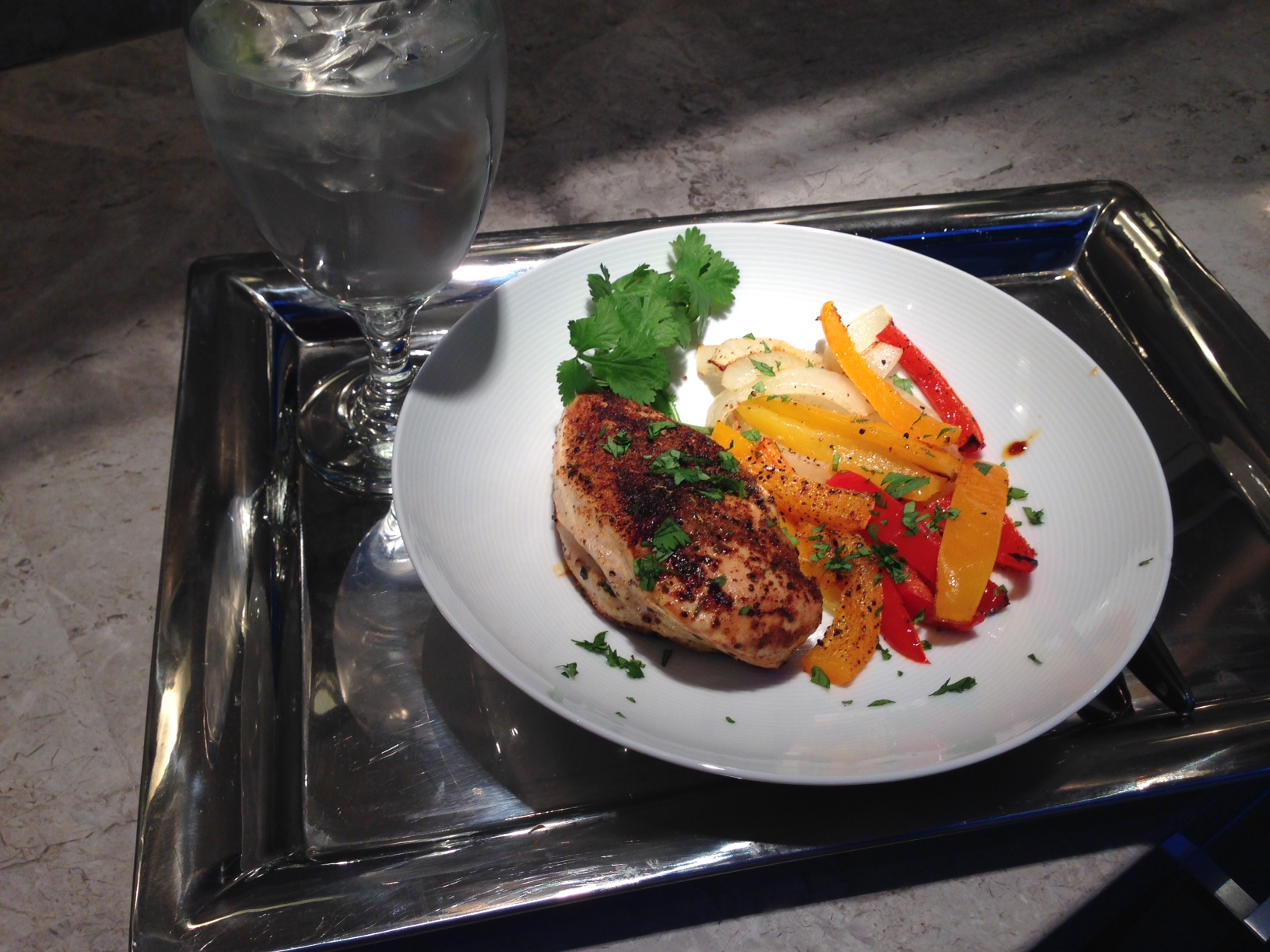
Simple Southwestern Chicken
Plan Z Phase: This is a Z2 (ZReduction) recipe. This spice blend is super easy to mix up and adds a nice bit of zip to your chicken.
Servings: Serves 4
Ingredients:
- 4 chicken breast halves (skinless)
- olive oil spray
- chili powder (you can use smoked or regular)
- garlic powder
- Italian seasoning
- ground cumin
- grated sea salt and pepper
- 2 Tbl of minced cilantro
Instructions:
Preheat oven to 375 degrees.
Assembly:
Place your chicken breast halves upright on a platter. Spray with olive oil spray. Sprinkle on a whisper (or to taste) of the chili powder, garlic powder, Italian seasoning, ground cumin and the salt and pepper. I just put on enough that you can see them all but don’t pour them on thickly.
For the deepest flavor let them set in your refrigerator 15 to 30 minutes for the spices to penetrate or if you’re in a hurry just go to the next stage.
Lightly spray olive oil in an ovenproof pan (if you have one). Otherwise just use a saute pan. Put the chicken breasts in the pan seasoned side down. Heat on medium high for 2 – 3 minutes to lightly brown them and to kick up the flavoring. The heat sort of toasts the spices and activates them.
Then turn over and transfer to the oven to roast. If you do not have a pan that can go from stove to oven you’ll have to transfer them to another pan that can handle the heat (like a Pyrex casserole dish)
Roast 20 – 30 minutes or until no pink remains in the meat. Most breast pieces will be still be juicy but cooked.
Plate the chicken and sprinkle on the minced cilantro.
Serve.
(These chicken pieces were served with roasted pepper strips and onions. There are several side dish ideas you can use too like my roasted plum tomatoes and Chinese eggplant or my Zola-fied Berghoff spinach. To make the roasted pepper strips and onions, just cut up your pepper strips and the onions. Put in an oven proof pan and roast alongside the chicken. Season with grated sea salt and pepper.)
Cheers,
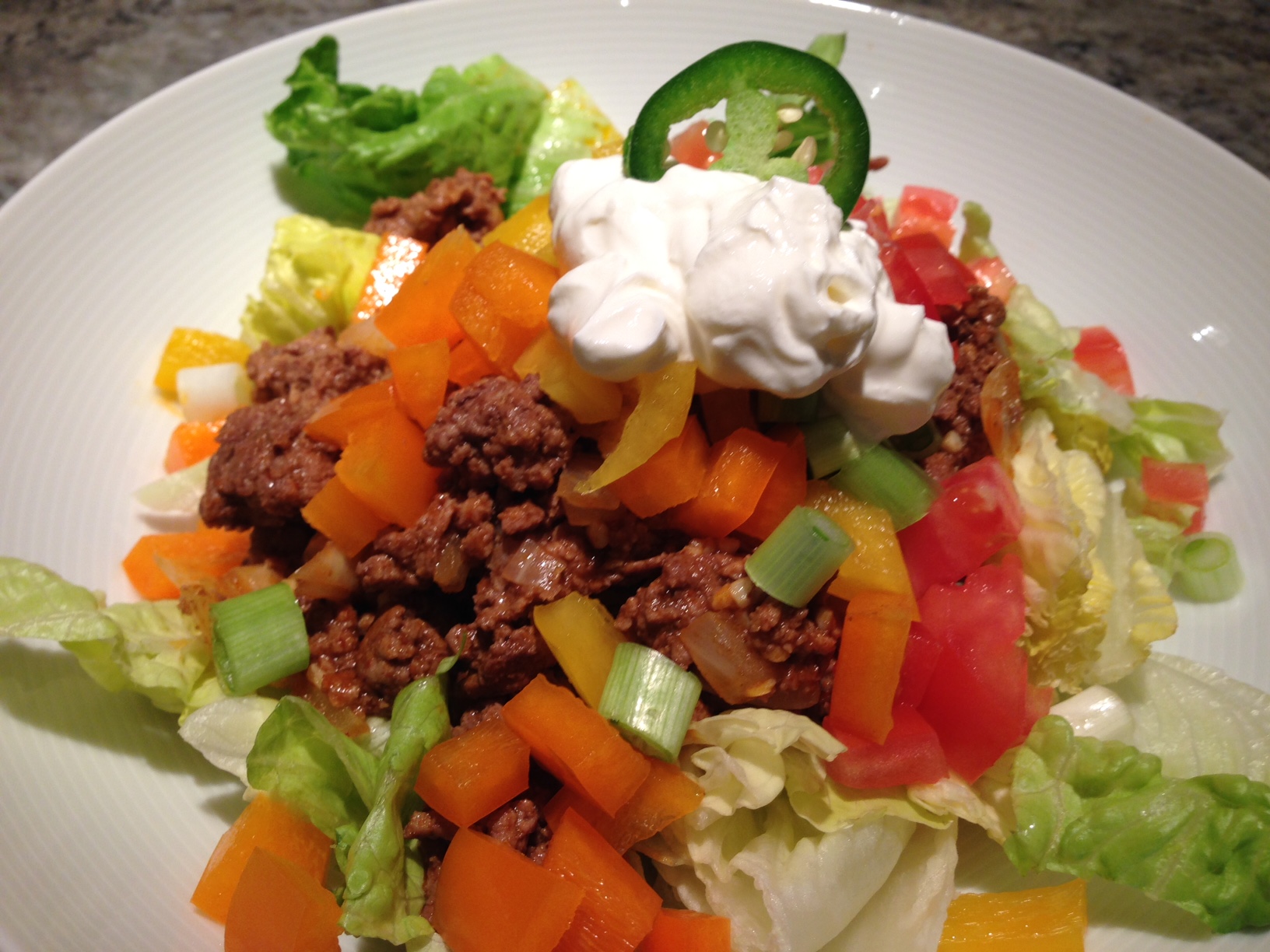
Taco Tres (Taco Salad Recipe #3)
Plan Z Phase: This is a Z2 (ZReduction) recipe.
Dieters rave about taco salad. This one is my new favorite. This meal has a creaminess to the sauce and the addition of the newly approved sour cream makes it taste dreamy. I stir my sour cream into the meat mixture so I get a combo of hot meat and cold sour cream. Very satisfying. A novice can make this one.
Serving Size: 1 cup of meat + 1 cup of veggies
Ingredients:
- 2 lbs of ground sirloin
- 1 cup of diced onion (white, yellow or red - your choice)
- 2 tsp of minced garlic (jar garlic will work)
- 2 tsp of ground cumin
- 1 Tbl of chili powder ( you choose regular or smoked)
- 6 ounces of red enchilada sauce (from a can in the international section of your grocery store)
- 1 cup of veggies per person. Choose from:
- Bell peppers chopped (red, yellow, orange, green or even purple)
- Tomatoes, diced
- Celery, diced
- Green onions, diced
- Jalapenos (minced or sliced)
- Or any other approved veggies you like
- Unlimited greens. I use romaine but you can use your favorite or even cabbage.
- Up to 2 Tbl of sour cream. Remember this is part of your dressing allotment for the day.
- Your allotment of Fritos (optional). You can put them on the side, or crumble and put them on top.
- Hot sauce (optional). Some want to add more zip. Without the hot sauce this is a pretty mild dish so those with a fear of heat/spicy will be fine with this.
Instructions:
Spray a medium soup pot or large saute pan with olive oil spray. Put in your meat. Cook on medium high to brown the meat. Break it up along the way so the size of chunks are what you like. Some like it broken up a lot and some like it with some bigger bits. When the meat is half browned, add your onion and cook them together until the meat has no pink in it. While it’s cooking you can add your garlic, cumin and chili powder. Season with grated sea salt to your taste. When it’s cooked, turn off the heat and stir in your enchilada sauce.
 While the meat is cooking you can be dicing up your various veggies.
You can chop your lettuce to a bite size you like and now you’re ready to serve.
If the meat mixture has been sitting too long, heat it back up but don’t boil it or the enchilada sauce will sort of separate. Just heat it on medium low and then assemble your salad.
Serving size on ZReduction is one heaping cup of meat mixture. Veggies one cup and lettuce unlimited.
I find this salad totally filling. The family should love it, too. Tastes just like a full-flavored taco!
Enjoy!
Cheers,